
Rumination vs Overthinking: What Is the Difference? is not just a wording problem. For someone who keeps returning to the same thought and cannot tell whether thinking is helping, the difficult part is that the mind and body can feel urgent before the situation is fully understood. The goal is to name the pattern accurately, because the right label changes the next move.

This guide keeps the focus narrow. It explains how rumination and overthinking works, what problem it is trying to solve, and how to respond without turning the article into a generic list of signs or tips. The practical thread is simple: understand the loop, reduce the fuel, and choose one next action that fits the real problem.
The Simple Difference
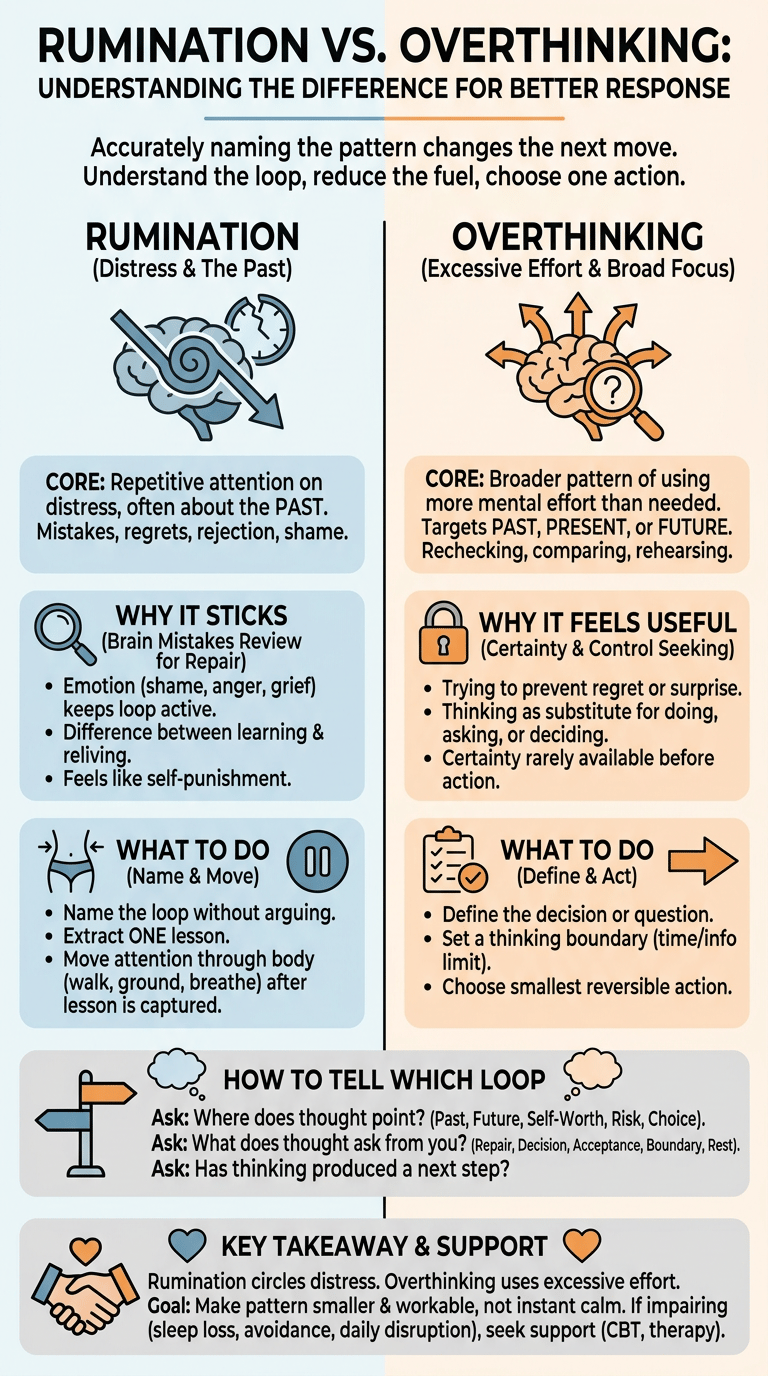
This section focuses on the simple difference because it is where many readers lose the thread. In practice, rumination circles around distress, often about the past, while overthinking is a broader pattern of using more mental effort than the situation can repay. When you can see the mechanism clearly, the experience becomes less mysterious and the next step becomes less dramatic. For a broader clinical or psychology context, Dictionary Rumination is a useful reference point for this part of the pattern.
Rumination loops around the past
Rumination loops around the past matters because it narrows the problem from a vague emotional cloud into something you can work with. For someone who keeps returning to the same thought and cannot tell whether thinking is helping, this distinction prevents the mind from treating every discomfort as the same emergency.
Mistakes, regrets, rejection, shame, and what should have happened
Mistakes, regrets, rejection, shame, and what should have happened is the practical detail that makes the concept usable. Notice what is happening, name it in plain language, and look for the smallest response that changes the loop. In this topic, the common body pattern is tight attention, emotional heaviness, restless checking, and the feeling that one more review will finally create relief. The helpful move is to pause long enough to ask what the situation is actually asking for, then apply this principle: identify the loop, extract the usable lesson, set a thinking boundary, and move into one specific behavior.
For a related next step, see this guide to the psychology of decision paralysis.
For a practical next step, see this guide on how to stop replaying conversations.
Why rumination often feels like self-punishment disguised as analysis
Why rumination often feels like self-punishment disguised as analysis is the practical detail that makes the concept usable. Notice what is happening, name it in plain language, and look for the smallest response that changes the loop. In this topic, the common body pattern is tight attention, emotional heaviness, restless checking, and the feeling that one more review will finally create relief. The helpful move is to pause long enough to ask what the situation is actually asking for, then apply this principle: identify the loop, extract the usable lesson, set a thinking boundary, and move into one specific behavior.
Overthinking can target the past, present, or future
Overthinking can target the past, present, or future matters because it narrows the problem from a vague emotional cloud into something you can work with. For someone who keeps returning to the same thought and cannot tell whether thinking is helping, this distinction prevents the mind from treating every discomfort as the same emergency.
Rechecking, comparing, mentally rehearsing, and trying to remove uncertainty
Rechecking, comparing, mentally rehearsing, and trying to remove uncertainty is the practical detail that makes the concept usable. Notice what is happening, name it in plain language, and look for the smallest response that changes the loop. In this topic, the common body pattern is tight attention, emotional heaviness, restless checking, and the feeling that one more review will finally create relief. The helpful move is to pause long enough to ask what the situation is actually asking for, then apply this principle: identify the loop, extract the usable lesson, set a thinking boundary, and move into one specific behavior.
Why overthinking is broader than rumination
Why overthinking is broader than rumination is the practical detail that makes the concept usable. Notice what is happening, name it in plain language, and look for the smallest response that changes the loop. In this topic, the common body pattern is tight attention, emotional heaviness, restless checking, and the feeling that one more review will finally create relief. The helpful move is to pause long enough to ask what the situation is actually asking for, then apply this principle: identify the loop, extract the usable lesson, set a thinking boundary, and move into one specific behavior.
Rumination, Worry, Overthinking, and Problem-Solving
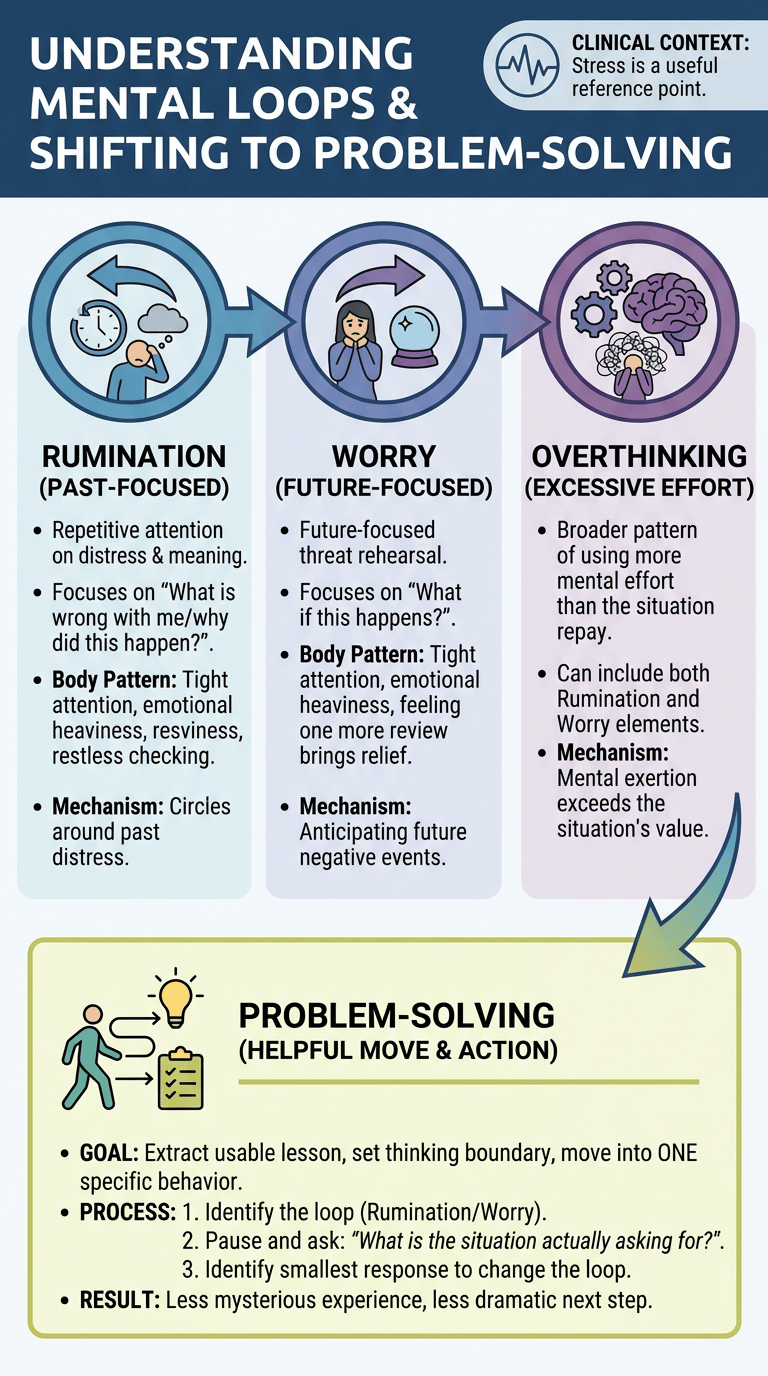
This section focuses on rumination, worry, overthinking, and problem-solving because it is where many readers lose the thread. In practice, rumination circles around distress, often about the past, while overthinking is a broader pattern of using more mental effort than the situation can repay. When you can see the mechanism clearly, the experience becomes less mysterious and the next step becomes less dramatic. For a broader clinical or psychology context, Stress is a useful reference point for this part of the pattern.
Rumination
Rumination matters because it narrows the problem from a vague emotional cloud into something you can work with. For someone who keeps returning to the same thought and cannot tell whether thinking is helping, this distinction prevents the mind from treating every discomfort as the same emergency.
Repetitive attention on distress and meaning
Repetitive attention on distress and meaning is the practical detail that makes the concept usable. Notice what is happening, name it in plain language, and look for the smallest response that changes the loop. In this topic, the common body pattern is tight attention, emotional heaviness, restless checking, and the feeling that one more review will finally create relief. The helpful move is to pause long enough to ask what the situation is actually asking for, then apply this principle: identify the loop, extract the usable lesson, set a thinking boundary, and move into one specific behavior.
Common question: What is wrong with me or why did this happen?
Common question: What is wrong with me or why did this happen? is the practical detail that makes the concept usable. Notice what is happening, name it in plain language, and look for the smallest response that changes the loop. In this topic, the common body pattern is tight attention, emotional heaviness, restless checking, and the feeling that one more review will finally create relief. The helpful move is to pause long enough to ask what the situation is actually asking for, then apply this principle: identify the loop, extract the usable lesson, set a thinking boundary, and move into one specific behavior.
Worry
Worry matters because it narrows the problem from a vague emotional cloud into something you can work with. For someone who keeps returning to the same thought and cannot tell whether thinking is helping, this distinction prevents the mind from treating every discomfort as the same emergency.
Future-focused threat rehearsal
Future-focused threat rehearsal is the practical detail that makes the concept usable. Notice what is happening, name it in plain language, and look for the smallest response that changes the loop. In this topic, the common body pattern is tight attention, emotional heaviness, restless checking, and the feeling that one more review will finally create relief. The helpful move is to pause long enough to ask what the situation is actually asking for, then apply this principle: identify the loop, extract the usable lesson, set a thinking boundary, and move into one specific behavior.
Common question: What if something bad happens?
Common question: What if something bad happens? is the practical detail that makes the concept usable. Notice what is happening, name it in plain language, and look for the smallest response that changes the loop. In this topic, the common body pattern is tight attention, emotional heaviness, restless checking, and the feeling that one more review will finally create relief. The helpful move is to pause long enough to ask what the situation is actually asking for, then apply this principle: identify the loop, extract the usable lesson, set a thinking boundary, and move into one specific behavior.
Overthinking
Overthinking matters because it narrows the problem from a vague emotional cloud into something you can work with. For someone who keeps returning to the same thought and cannot tell whether thinking is helping, this distinction prevents the mind from treating every discomfort as the same emergency.
Excessive mental effort beyond what the problem needs
Excessive mental effort beyond what the problem needs is the practical detail that makes the concept usable. Notice what is happening, name it in plain language, and look for the smallest response that changes the loop. In this topic, the common body pattern is tight attention, emotional heaviness, restless checking, and the feeling that one more review will finally create relief. The helpful move is to pause long enough to ask what the situation is actually asking for, then apply this principle: identify the loop, extract the usable lesson, set a thinking boundary, and move into one specific behavior.
Common question: What is the perfect answer?
Common question: What is the perfect answer? is the practical detail that makes the concept usable. Notice what is happening, name it in plain language, and look for the smallest response that changes the loop. In this topic, the common body pattern is tight attention, emotional heaviness, restless checking, and the feeling that one more review will finally create relief. The helpful move is to pause long enough to ask what the situation is actually asking for, then apply this principle: identify the loop, extract the usable lesson, set a thinking boundary, and move into one specific behavior.
Productive problem-solving
Productive problem-solving matters because it narrows the problem from a vague emotional cloud into something you can work with. For someone who keeps returning to the same thought and cannot tell whether thinking is helping, this distinction prevents the mind from treating every discomfort as the same emergency.
Specific issue, realistic options, next action, and stopping point
Specific issue, realistic options, next action, and stopping point is the practical detail that makes the concept usable. Notice what is happening, name it in plain language, and look for the smallest response that changes the loop. In this topic, the common body pattern is tight attention, emotional heaviness, restless checking, and the feeling that one more review will finally create relief. The helpful move is to pause long enough to ask what the situation is actually asking for, then apply this principle: identify the loop, extract the usable lesson, set a thinking boundary, and move into one specific behavior.
Why useful thinking changes behavior instead of only increasing distress
Why useful thinking changes behavior instead of only increasing distress is the practical detail that makes the concept usable. Notice what is happening, name it in plain language, and look for the smallest response that changes the loop. In this topic, the common body pattern is tight attention, emotional heaviness, restless checking, and the feeling that one more review will finally create relief. The helpful move is to pause long enough to ask what the situation is actually asking for, then apply this principle: identify the loop, extract the usable lesson, set a thinking boundary, and move into one specific behavior.
Why Rumination Feels So Hard to Stop
This section focuses on why rumination feels so hard to stop because it is where many readers lose the thread. In practice, rumination circles around distress, often about the past, while overthinking is a broader pattern of using more mental effort than the situation can repay. When you can see the mechanism clearly, the experience becomes less mysterious and the next step becomes less dramatic. For a broader clinical or psychology context, Anxiety Disorders is a useful reference point for this part of the pattern.
The brain mistakes review for repair
The brain mistakes review for repair matters because it narrows the problem from a vague emotional cloud into something you can work with. For someone who keeps returning to the same thought and cannot tell whether thinking is helping, this distinction prevents the mind from treating every discomfort as the same emergency.
Why replaying can feel responsible even when it is not useful
Why replaying can feel responsible even when it is not useful is the practical detail that makes the concept usable. Notice what is happening, name it in plain language, and look for the smallest response that changes the loop. In this topic, the common body pattern is tight attention, emotional heaviness, restless checking, and the feeling that one more review will finally create relief. The helpful move is to pause long enough to ask what the situation is actually asking for, then apply this principle: identify the loop, extract the usable lesson, set a thinking boundary, and move into one specific behavior.
The difference between learning and reliving
The difference between learning and reliving is the practical detail that makes the concept usable. Notice what is happening, name it in plain language, and look for the smallest response that changes the loop. In this topic, the common body pattern is tight attention, emotional heaviness, restless checking, and the feeling that one more review will finally create relief. The helpful move is to pause long enough to ask what the situation is actually asking for, then apply this principle: identify the loop, extract the usable lesson, set a thinking boundary, and move into one specific behavior.
Emotion keeps the loop active
Emotion keeps the loop active matters because it narrows the problem from a vague emotional cloud into something you can work with. For someone who keeps returning to the same thought and cannot tell whether thinking is helping, this distinction prevents the mind from treating every discomfort as the same emergency.
Shame, anger, grief, fear, and unfinished social pain
Shame, anger, grief, fear, and unfinished social pain is the practical detail that makes the concept usable. Notice what is happening, name it in plain language, and look for the smallest response that changes the loop. In this topic, the common body pattern is tight attention, emotional heaviness, restless checking, and the feeling that one more review will finally create relief. The helpful move is to pause long enough to ask what the situation is actually asking for, then apply this principle: identify the loop, extract the usable lesson, set a thinking boundary, and move into one specific behavior.
Why intensity makes a thought feel important
Why intensity makes a thought feel important is the practical detail that makes the concept usable. Notice what is happening, name it in plain language, and look for the smallest response that changes the loop. In this topic, the common body pattern is tight attention, emotional heaviness, restless checking, and the feeling that one more review will finally create relief. The helpful move is to pause long enough to ask what the situation is actually asking for, then apply this principle: identify the loop, extract the usable lesson, set a thinking boundary, and move into one specific behavior.
Why Overthinking Feels Useful
This section focuses on why overthinking feels useful because it is where many readers lose the thread. In practice, rumination circles around distress, often about the past, while overthinking is a broader pattern of using more mental effort than the situation can repay. When you can see the mechanism clearly, the experience becomes less mysterious and the next step becomes less dramatic. For a broader clinical or psychology context, Association for Behavioral and Cognitive Therapies is a useful reference point for this part of the pattern.
Certainty seeking
Certainty seeking matters because it narrows the problem from a vague emotional cloud into something you can work with. For someone who keeps returning to the same thought and cannot tell whether thinking is helping, this distinction prevents the mind from treating every discomfort as the same emergency.
Trying to prevent regret, criticism, or surprise
Trying to prevent regret, criticism, or surprise is the practical detail that makes the concept usable. Notice what is happening, name it in plain language, and look for the smallest response that changes the loop. In this topic, the common body pattern is tight attention, emotional heaviness, restless checking, and the feeling that one more review will finally create relief. The helpful move is to pause long enough to ask what the situation is actually asking for, then apply this principle: identify the loop, extract the usable lesson, set a thinking boundary, and move into one specific behavior.
Why certainty is rarely available before action
Why certainty is rarely available before action is the practical detail that makes the concept usable. Notice what is happening, name it in plain language, and look for the smallest response that changes the loop. In this topic, the common body pattern is tight attention, emotional heaviness, restless checking, and the feeling that one more review will finally create relief. The helpful move is to pause long enough to ask what the situation is actually asking for, then apply this principle: identify the loop, extract the usable lesson, set a thinking boundary, and move into one specific behavior.
Control seeking
Control seeking matters because it narrows the problem from a vague emotional cloud into something you can work with. For someone who keeps returning to the same thought and cannot tell whether thinking is helping, this distinction prevents the mind from treating every discomfort as the same emergency.
Thinking as a substitute for doing, asking, resting, or deciding
Thinking as a substitute for doing, asking, resting, or deciding is the practical detail that makes the concept usable. Notice what is happening, name it in plain language, and look for the smallest response that changes the loop. In this topic, the common body pattern is tight attention, emotional heaviness, restless checking, and the feeling that one more review will finally create relief. The helpful move is to pause long enough to ask what the situation is actually asking for, then apply this principle: identify the loop, extract the usable lesson, set a thinking boundary, and move into one specific behavior.
How mental checking delays relief
How mental checking delays relief is the practical detail that makes the concept usable. Notice what is happening, name it in plain language, and look for the smallest response that changes the loop. In this topic, the common body pattern is tight attention, emotional heaviness, restless checking, and the feeling that one more review will finally create relief. The helpful move is to pause long enough to ask what the situation is actually asking for, then apply this principle: identify the loop, extract the usable lesson, set a thinking boundary, and move into one specific behavior.
How to Tell Which Loop You Are In
This section focuses on how to tell which loop you are in because it is where many readers lose the thread. In practice, rumination circles around distress, often about the past, while overthinking is a broader pattern of using more mental effort than the situation can repay. When you can see the mechanism clearly, the experience becomes less mysterious and the next step becomes less dramatic.
Ask where the thought points
Past, future, self-worth, risk, or choice
Ask what the thought is asking from you
Repair, decision, acceptance, boundary, information, or rest
Ask whether the thinking has produced a next step
If there is no new information, the loop may need interruption
What to Do for Rumination
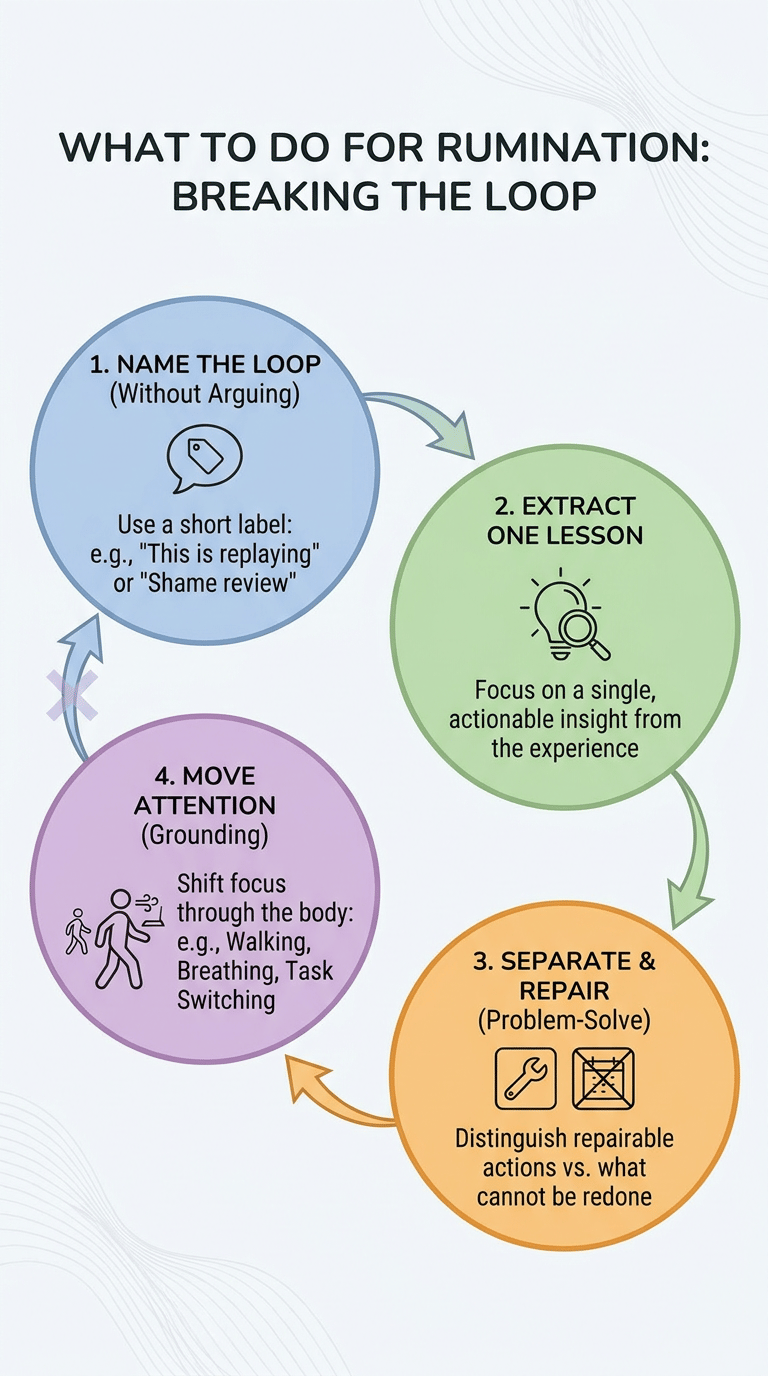
Name the loop without arguing with it
Use a short label such as this is replaying or this is shame review
Extract one lesson
Separate what happened, what you can repair, and what you cannot redo
Move attention through the body
Walking, grounding, breathing, or task switching after the lesson is captured
What to Do for Overthinking
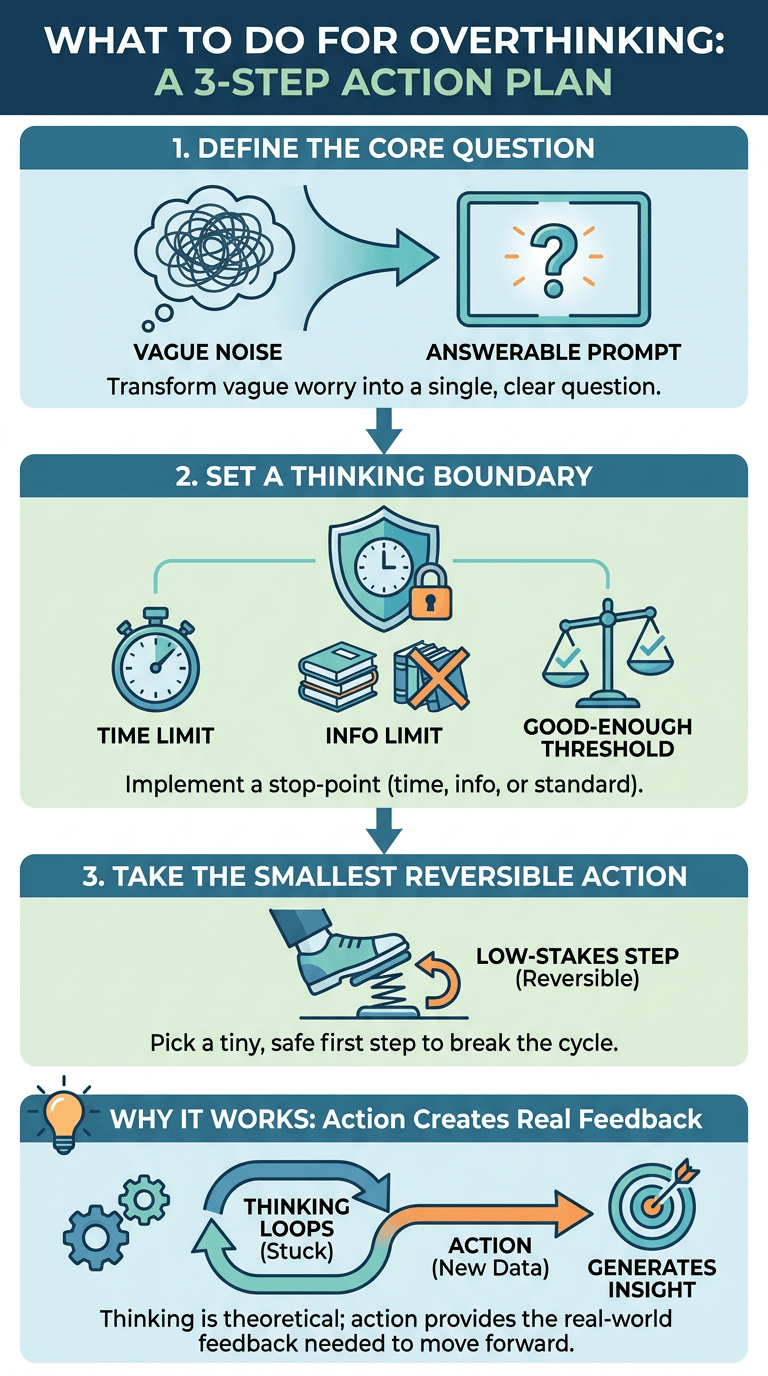
Define the decision or question
Turn vague mental noise into one answerable prompt
Set a thinking boundary
Time limit, information limit, or good-enough threshold
Choose the smallest reversible action
Why action creates feedback that thinking cannot produce
When Repetitive Thinking Needs More Support
Signs the loop is becoming impairing
Sleep loss, avoidance, compulsive checking, panic, depression symptoms, or daily disruption
Support options
CBT, mindfulness-based approaches, therapy, medical evaluation, and crisis support when urgent
FAQ
Is rumination the same as overthinking?
Rumination is one type of overthinking, but the two are not identical. Rumination usually circles around distress, regret, shame, or unanswered questions from the past. Overthinking is broader and can include future worry, decision loops, repeated checking, and trying to think your way into perfect certainty.
Is rumination always about the past?
Most rumination is past-focused, but it can also loop around the meaning of a feeling or event in the present. The key feature is not only time direction. It is the repetitive, emotionally loaded review that does not produce a useful next step.
For broader context, see this guide to signs you overthink everything.
Can overthinking ever be helpful?
Thinking is helpful when it clarifies the problem, compares realistic options, or leads to a next action. It becomes overthinking when the review keeps adding distress without adding new information. A good test is whether the thinking has changed what you will do next.
Why do I keep replaying the same mistake?
The mind often replays mistakes because it wants protection, repair, or a lesson. The problem is that replay can slide into self-punishment. Try separating one useful lesson from the emotional loop, then choose whether the situation needs repair, acceptance, or simply time away from the thought.
Key Takeaways
The main takeaway is that rumination circles around distress, often about the past, while overthinking is a broader pattern of using more mental effort than the situation can repay. The useful response is not to force instant calm, but to make the pattern smaller, more specific, and more workable. When the pattern is frequent or impairing, support is part of responsible care, not a personal failure.

Michael Reed is the Founder and Lead Writer at Psychology Exposed. He writes about human behavior, relationships, emotional patterns, self-awareness, and practical psychology topics using research-informed, easy-to-understand content.
Read More About Michael Reed: https://psychologyexposed.com/michael-reed/