
Why Motivation Fades: The Psychology Behind Losing Drive After You Start is for someone who starts strong and feels confused when drive drops. The goal is not to make you stricter, colder, or constantly productive. It is to explain why follow-through breaks down and how to make the next useful action easier to choose. The central idea is that motivation fades when novelty drops, rewards feel distant, friction rises, and emotion competes with the goal. It treats achievement as a behavior design problem, not a test of personal worth. For someone who starts strong and feels confused when drive drops, the most useful move is to lower the drama of the next step. Make it visible, make it specific, and make the restart plan part of the system from the beginning.

Quick Answer: Why Motivation Fades
This section turns the idea into a usable choice. Notice the cue, cost, reward, or emotion steering the next step. motivation definition.
Motivation often fades when novelty drops and friction becomes visible
This names a small lever inside a larger pattern. Progress depends on making the next action visible and restartable. Look at the moment before the behavior, where cues and feelings decide. The kinder standard is not to feel ready every time. It is to create a structure that still points you toward the next useful action when readiness is low.
The short answer in plain language
This names a small lever inside a larger pattern. Progress depends on making the next action visible and restartable. Use one sentence: when this appears, I will take the next visible step. For someone who starts strong and feels confused when drive drops, the most useful move is to lower the drama of the next step. Make it visible, make it specific, and make the restart plan part of the system from the beginning.
Reassure the reader that this is common, not proof of failure
This names a small lever inside a larger pattern. Progress depends on making the next action visible and restartable. Use one sentence: when this appears, I will take the next visible step. That matters because real life rarely gives you a clean starting line. A plan for fitness plans has to work with stress, interruptions, boredom, and normal changes in energy.
Follow-through needs systems after excitement fades
This names a small lever inside a larger pattern. Progress depends on making the next action visible and restartable. Look at the moment before the behavior, where cues and feelings decide. The kinder standard is not to feel ready every time. It is to create a structure that still points you toward the next useful action when readiness is low.
How This Connects to the Larger Pattern
This names a small lever inside a larger pattern. Progress depends on making the next action visible and restartable. Use one sentence: when this appears, I will take the next visible step. For someone who starts strong and feels confused when drive drops, the most useful move is to lower the drama of the next step. Make it visible, make it specific, and make the restart plan part of the system from the beginning.
Preview practical sections
This names a small lever inside a larger pattern. Progress depends on making the next action visible and restartable. Use one sentence: when this appears, I will take the next visible step.
What Motivation Actually Does
This section turns the idea into a usable choice. Notice the cue, cost, reward, or emotion steering the next step.
Motivation helps you start
If the pattern is persistent, severe, or disrupting work, school, health, or relationships, outside support can help. Look at the moment before the behavior, where cues and feelings decide.
Energy, attention, and emotional urgency
This names a small lever inside a larger pattern. Progress depends on making the next action visible and restartable. Use one sentence: when this appears, I will take the next visible step.
Use examples from fitness, study, creative work, and career goals
A useful example is specific enough to picture. Choose the cue, the action, and the first sign of completion. Use one sentence: when this appears, I will take the next visible step.
For a related next step, see this guide to self-control vs willpower.
For a practical next step, see this guide on how to build consistency.
For broader context, see this guide to self-control psychology.
Motivation does not remove friction forever
This names a small lever inside a larger pattern. Progress depends on making the next action visible and restartable. Look at the moment before the behavior, where cues and feelings decide.
Why real effort appears after the first phase
The reason is usually layered: immediate reward, emotional relief, unclear timing, or a plan that asks too much. Use one sentence: when this appears, I will take the next visible step.
How to Keep This Advice Realistic
This names a small lever inside a larger pattern. Progress depends on making the next action visible and restartable. Use one sentence: when this appears, I will take the next visible step.
Motivation changes with context
This names a small lever inside a larger pattern. Progress depends on making the next action visible and restartable. Look at the moment before the behavior, where cues and feelings decide.
Sleep, stress, rewards, environment, and social pressure
This names a small lever inside a larger pattern. Progress depends on making the next action visible and restartable. Use one sentence: when this appears, I will take the next visible step.
How to Keep the Practice Grounded
This names a small lever inside a larger pattern. Progress depends on making the next action visible and restartable. Use one sentence: when this appears, I will take the next visible step.
Reason 1: Novelty Wears Off
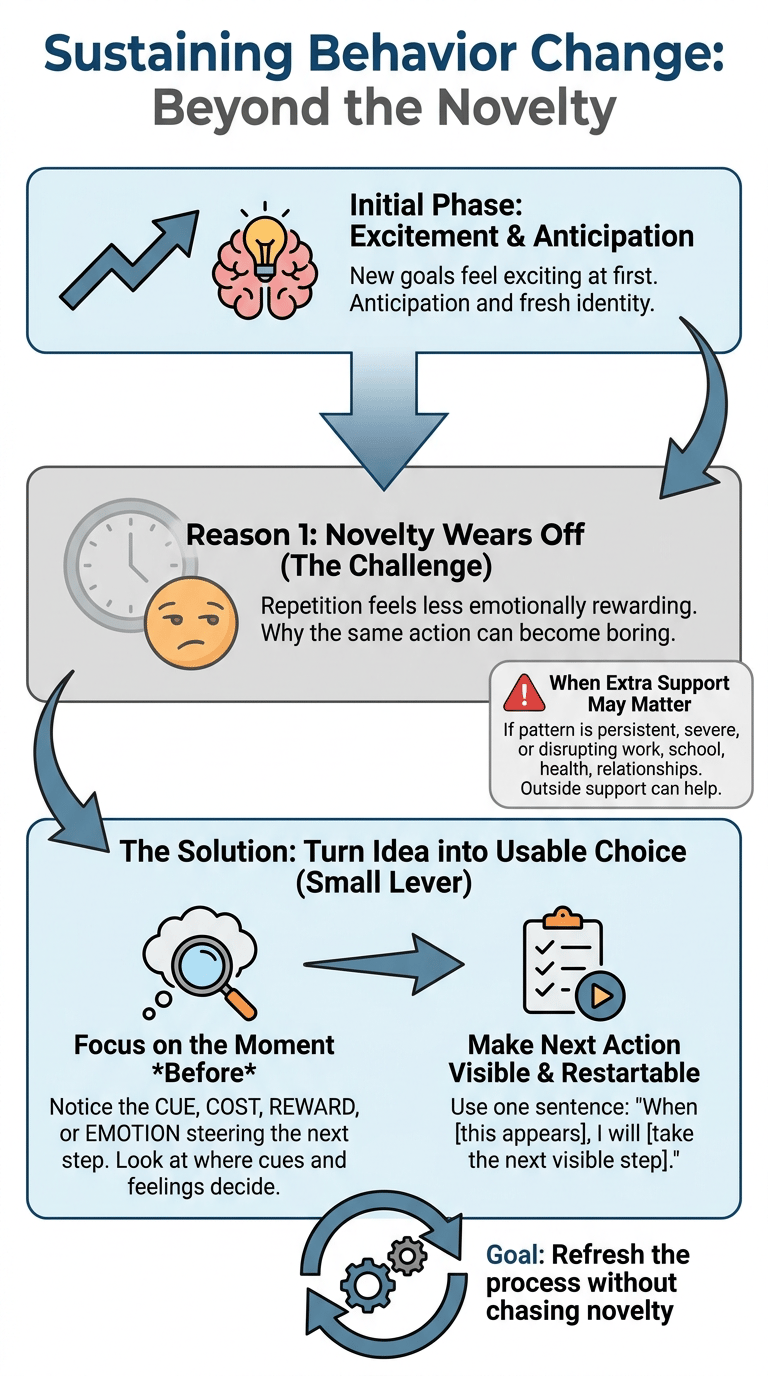
This section turns the idea into a usable choice. Notice the cue, cost, reward, or emotion steering the next step. behavior change research.
New goals feel exciting at first
This names a small lever inside a larger pattern. Progress depends on making the next action visible and restartable. Look at the moment before the behavior, where cues and feelings decide.
Anticipation and fresh identity
This names a small lever inside a larger pattern. Progress depends on making the next action visible and restartable. Use one sentence: when this appears, I will take the next visible step.
When Extra Support May Matter
If the pattern is persistent, severe, or disrupting work, school, health, or relationships, outside support can help. Use one sentence: when this appears, I will take the next visible step.
Repetition feels less emotionally rewarding
This names a small lever inside a larger pattern. Progress depends on making the next action visible and restartable. Look at the moment before the behavior, where cues and feelings decide.
Why the same action can become boring
The reason is usually layered: immediate reward, emotional relief, unclear timing, or a plan that asks too much. Use one sentence: when this appears, I will take the next visible step.
Offer a way to refresh the process without chasing novelty
This names a small lever inside a larger pattern. Progress depends on making the next action visible and restartable. Use one sentence: when this appears, I will take the next visible step.
Reason 2: Rewards Are Too Delayed
This section turns the idea into a usable choice. Notice the cue, cost, reward, or emotion steering the next step.
The brain prefers immediate feedback
This names a small lever inside a larger pattern. Progress depends on making the next action visible and restartable. Look at the moment before the behavior, where cues and feelings decide.
Distant outcomes versus immediate comfort
This names a small lever inside a larger pattern. Progress depends on making the next action visible and restartable. Use one sentence: when this appears, I will take the next visible step.
How This Connects to Future Rewards
This names a small lever inside a larger pattern. Progress depends on making the next action visible and restartable. Use one sentence: when this appears, I will take the next visible step.
Progress can be invisible early
This names a small lever inside a larger pattern. Progress depends on making the next action visible and restartable. Look at the moment before the behavior, where cues and feelings decide.
Why people quit before results become obvious
The reason is usually layered: immediate reward, emotional relief, unclear timing, or a plan that asks too much. Use one sentence: when this appears, I will take the next visible step.
Suggest tracking leading indicators
This names a small lever inside a larger pattern. Progress depends on making the next action visible and restartable. Use one sentence: when this appears, I will take the next visible step.
Reason 3: The Plan Has Too Much Friction
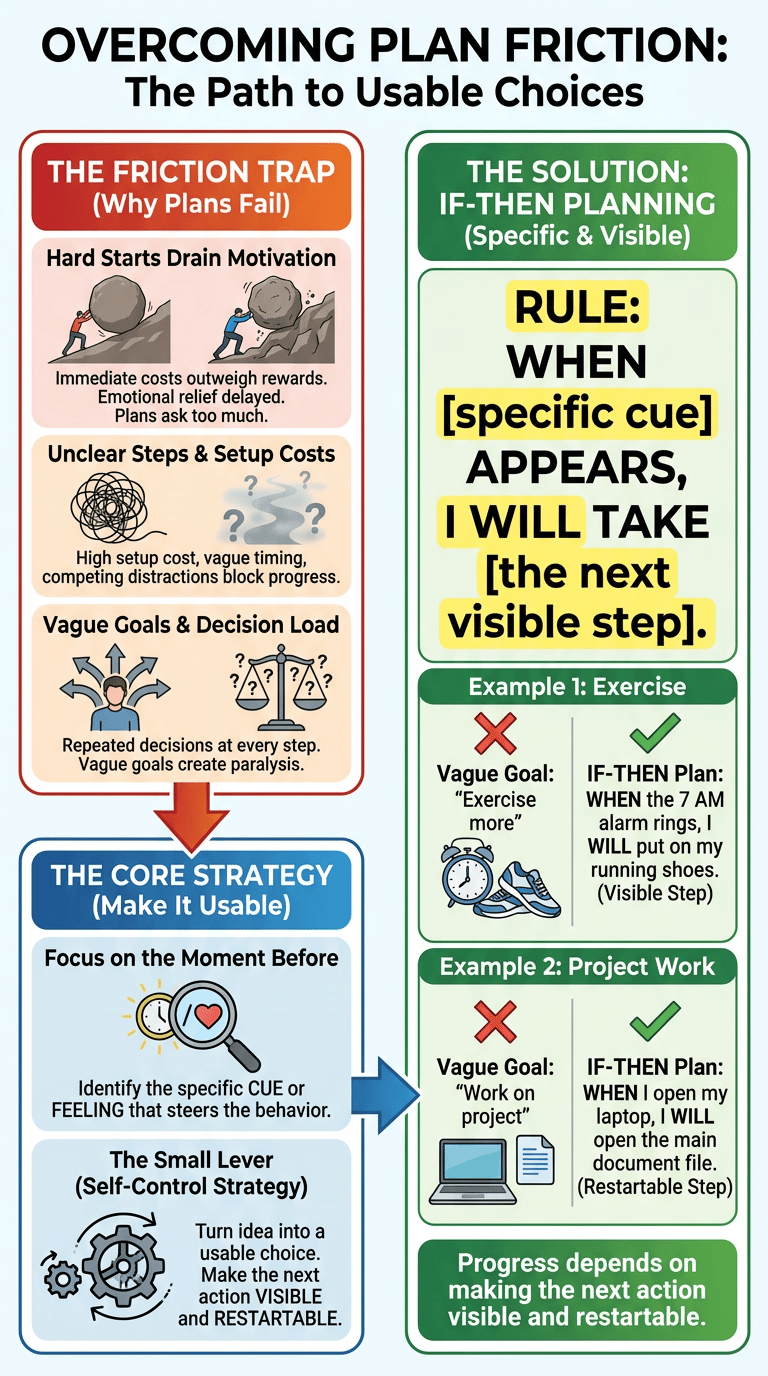
This section turns the idea into a usable choice. Notice the cue, cost, reward, or emotion steering the next step. self-control strategy research.
Hard starts drain motivation
The reason is usually layered: immediate reward, emotional relief, unclear timing, or a plan that asks too much. Look at the moment before the behavior, where cues and feelings decide.
Setup cost, unclear next steps, and competing distractions
This names a small lever inside a larger pattern. Progress depends on making the next action visible and restartable. Use one sentence: when this appears, I will take the next visible step.
Give examples of reducing friction
A useful example is specific enough to picture. Choose the cue, the action, and the first sign of completion. Use one sentence: when this appears, I will take the next visible step.
Vague goals create repeated decisions
This names a small lever inside a larger pattern. Progress depends on making the next action visible and restartable. Look at the moment before the behavior, where cues and feelings decide.
Decision load
This names a small lever inside a larger pattern. Progress depends on making the next action visible and restartable. Use one sentence: when this appears, I will take the next visible step.
How This Connects to If-Then Planning
This names a small lever inside a larger pattern. Progress depends on making the next action visible and restartable. Use one sentence: when this appears, I will take the next visible step.
Reason 4: Emotions Start Competing With the Goal
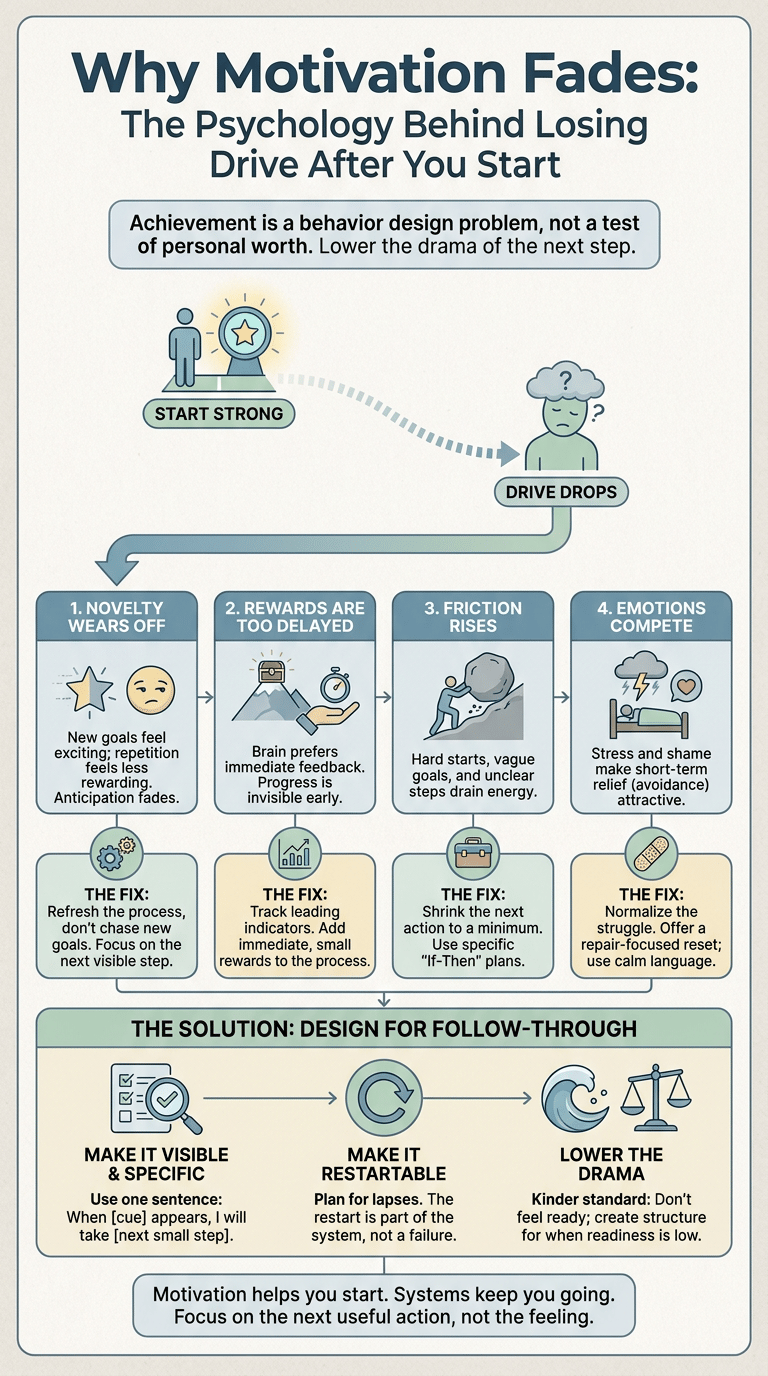
This section turns the idea into a usable choice. Notice the cue, cost, reward, or emotion steering the next step.
Stress makes short-term relief more attractive
This names a small lever inside a larger pattern. Progress depends on making the next action visible and restartable. Look at the moment before the behavior, where cues and feelings decide.
Avoidance, comfort seeking, and emotional regulation
This names a small lever inside a larger pattern. Progress depends on making the next action visible and restartable. Use one sentence: when this appears, I will take the next visible step.
How to Keep This Advice Realistic
This names a small lever inside a larger pattern. Progress depends on making the next action visible and restartable. Use one sentence: when this appears, I will take the next visible step.
Shame can make motivation collapse
This names a small lever inside a larger pattern. Progress depends on making the next action visible and restartable. Look at the moment before the behavior, where cues and feelings decide.
The quit-after-a-lapse pattern
This names a small lever inside a larger pattern. Progress depends on making the next action visible and restartable. Use one sentence: when this appears, I will take the next visible step.
Offer a repair-focused reset
This names a small lever inside a larger pattern. Progress depends on making the next action visible and restartable. Use one sentence: when this appears, I will take the next visible step.
Reason 5: The Goal Does Not Fit Your Real Life
This section turns the idea into a usable choice. Notice the cue, cost, reward, or emotion steering the next step. practical psychology guidance.
The plan may be too idealized
This names a small lever inside a larger pattern. Progress depends on making the next action visible and restartable. Look at the moment before the behavior, where cues and feelings decide.
Planning for an imaginary perfect week
This names a small lever inside a larger pattern. Progress depends on making the next action visible and restartable. Use one sentence: when this appears, I will take the next visible step.
Encourage designing around actual constraints
This names a small lever inside a larger pattern. Progress depends on making the next action visible and restartable. Use one sentence: when this appears, I will take the next visible step.
The goal may conflict with identity or values
This names a small lever inside a larger pattern. Progress depends on making the next action visible and restartable. Look at the moment before the behavior, where cues and feelings decide.
Hidden resistance without overpsychologizing
This names a small lever inside a larger pattern. Progress depends on making the next action visible and restartable. Use one sentence: when this appears, I will take the next visible step.
Suggest revising the reason or method
The reason is usually layered: immediate reward, emotional relief, unclear timing, or a plan that asks too much. Use one sentence: when this appears, I will take the next visible step.
What to Do When Motivation Fades
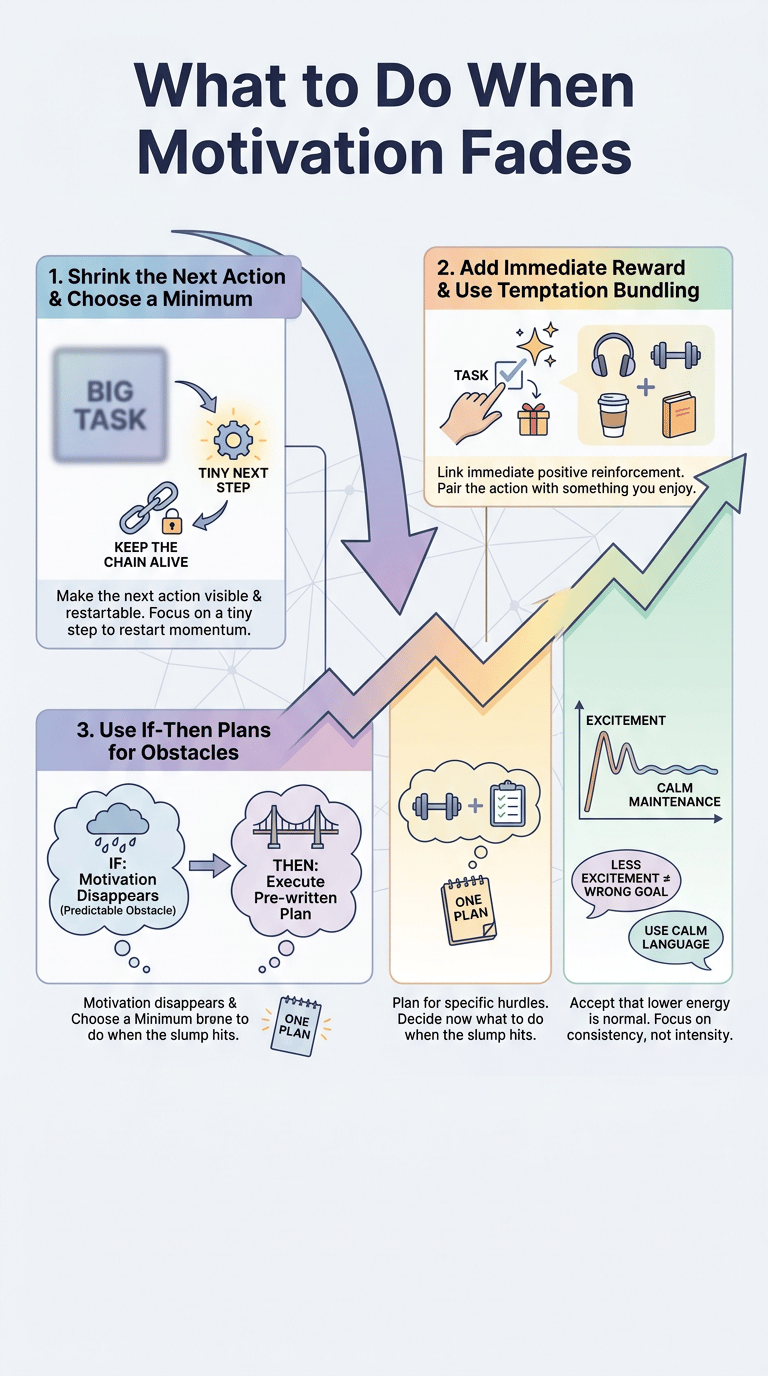
This section turns the idea into a usable choice. Notice the cue, cost, reward, or emotion steering the next step.
Shrink the next action
This names a small lever inside a larger pattern. Progress depends on making the next action visible and restartable. Look at the moment before the behavior, where cues and feelings decide.
Choose a minimum that keeps the chain alive
This names a small lever inside a larger pattern. Progress depends on making the next action visible and restartable. Use one sentence: when this appears, I will take the next visible step.
How This Connects to Consistency
This names a small lever inside a larger pattern. Progress depends on making the next action visible and restartable. Use one sentence: when this appears, I will take the next visible step.
Add immediate reward
This names a small lever inside a larger pattern. Progress depends on making the next action visible and restartable. Look at the moment before the behavior, where cues and feelings decide.
Use temptation bundling when appropriate
This names a small lever inside a larger pattern. Progress depends on making the next action visible and restartable. Use one sentence: when this appears, I will take the next visible step.
How This Connects to Temptation
This names a small lever inside a larger pattern. Progress depends on making the next action visible and restartable. Use one sentence: when this appears, I will take the next visible step.
Use if-then plans for predictable obstacles
This names a small lever inside a larger pattern. Progress depends on making the next action visible and restartable. Look at the moment before the behavior, where cues and feelings decide.
Write one plan for the moment motivation usually disappears
This names a small lever inside a larger pattern. Progress depends on making the next action visible and restartable. Use one sentence: when this appears, I will take the next visible step.
How This Connects to If-Then Planning
This names a small lever inside a larger pattern. Progress depends on making the next action visible and restartable. Use one sentence: when this appears, I will take the next visible step.
Normalize the maintenance phase
This names a small lever inside a larger pattern. Progress depends on making the next action visible and restartable. Look at the moment before the behavior, where cues and feelings decide.
That less excitement does not mean the goal is wrong
This names a small lever inside a larger pattern. Progress depends on making the next action visible and restartable. Use one sentence: when this appears, I will take the next visible step.
Use calm language
This names a small lever inside a larger pattern. Progress depends on making the next action visible and restartable. Use one sentence: when this appears, I will take the next visible step.
Frequently Asked Questions
This section turns the idea into a usable choice. Notice the cue, cost, reward, or emotion steering the next step.
Does losing motivation mean I do not want the goal?
It depends on the pattern, the stakes, and the context. Look at repeated behavior, not one imperfect day. Look at the moment before the behavior, where cues and feelings decide.
Possible meanings without certainty
This names a small lever inside a larger pattern. Progress depends on making the next action visible and restartable. Use one sentence: when this appears, I will take the next visible step.
How do I stay motivated every day?
It depends on the pattern, the stakes, and the context. Look at repeated behavior, not one imperfect day. Look at the moment before the behavior, where cues and feelings decide.
Reframe toward consistency rather than constant motivation
This names a small lever inside a larger pattern. Progress depends on making the next action visible and restartable. Use one sentence: when this appears, I will take the next visible step.
When should I quit a goal?
It depends on the pattern, the stakes, and the context. Look at repeated behavior, not one imperfect day. Look at the moment before the behavior, where cues and feelings decide.
The difference between strategic quitting and avoidance
This names a small lever inside a larger pattern. Progress depends on making the next action visible and restartable. Use one sentence: when this appears, I will take the next visible step.
Final Thoughts
This section turns the idea into a usable choice. Notice the cue, cost, reward, or emotion steering the next step.
Motivation fades, but follow-through can be designed
This names a small lever inside a larger pattern. Progress depends on making the next action visible and restartable. Look at the moment before the behavior, where cues and feelings decide.
How This Connects to the Larger Pattern
This names a small lever inside a larger pattern. Progress depends on making the next action visible and restartable. Use one sentence: when this appears, I will take the next visible step.

Michael Reed is the Founder and Lead Writer at Psychology Exposed. He writes about human behavior, relationships, emotional patterns, self-awareness, and practical psychology topics using research-informed, easy-to-understand content.
Read More About Michael Reed: https://psychologyexposed.com/michael-reed/