
Temptation Bundling Psychology: How Pairing Rewards With Hard Tasks Helps Follow-Through is for someone who wants a reward-based way to start useful actions without harsher discipline. The goal is not to make you stricter, colder, or constantly productive. It is to explain why follow-through breaks down and how to make the next useful action easier to choose. The central idea is that temptation bundling pairs an enjoyable want with a valuable should so starting feels less costly. It treats achievement as a behavior design problem, not a test of personal worth. For someone who wants a reward-based way to start useful actions without harsher discipline, the most useful move is to lower the drama of the next step. Make it visible, make it specific, and make the restart plan part of the system from the beginning.
What Is Temptation Bundling?
This section turns the idea into a usable choice. Notice the cue, cost, reward, or emotion steering the next step. temptation bundling study.
The basic idea
This names a small lever inside a larger pattern. Progress depends on making the next action visible and restartable. Look at the moment before the behavior, where cues and feelings decide. The kinder standard is not to feel ready every time. It is to create a structure that still points you toward the next useful action when readiness is low.
Temptation bundling as pairing a wanted activity with a should-do activity
This names a small lever inside a larger pattern. Progress depends on making the next action visible and restartable. Use one sentence: when this appears, I will take the next visible step. For someone who wants a reward-based way to start useful actions without harsher discipline, the most useful move is to lower the drama of the next step. Make it visible, make it specific, and make the restart plan part of the system from the beginning.
Give a simple example such as listening to an enjoyable podcast only while walking
A useful example is specific enough to picture. Choose the cue, the action, and the first sign of completion. Use one sentence: when this appears, I will take the next visible step. That matters because real life rarely gives you a clean starting line. A plan for walking has to work with stress, interruptions, boredom, and normal changes in energy.
For a practical next step, see this guide on how to build consistency.
For broader context, see this guide to self-control psychology.
Why it is not just bribing yourself
The reason is usually layered: immediate reward, emotional relief, unclear timing, or a plan that asks too much. Look at the moment before the behavior, where cues and feelings decide. The kinder standard is not to feel ready every time. It is to create a structure that still points you toward the next useful action when readiness is low.
Immediate reward, anticipation, and reduced resistance
This names a small lever inside a larger pattern. Progress depends on making the next action visible and restartable. Use one sentence: when this appears, I will take the next visible step. For someone who wants a reward-based way to start useful actions without harsher discipline, the most useful move is to lower the drama of the next step. Make it visible, make it specific, and make the restart plan part of the system from the beginning.
How to Keep the Practice Grounded
This names a small lever inside a larger pattern. Progress depends on making the next action visible and restartable. Use one sentence: when this appears, I will take the next visible step. That matters because real life rarely gives you a clean starting line. A plan for walking has to work with stress, interruptions, boredom, and normal changes in energy.
How it connects to self-control
This names a small lever inside a larger pattern. Progress depends on making the next action visible and restartable. Look at the moment before the behavior, where cues and feelings decide.
That it changes the choice environment instead of demanding more force
This names a small lever inside a larger pattern. Progress depends on making the next action visible and restartable. Use one sentence: when this appears, I will take the next visible step.
How This Connects to the Larger Pattern
This names a small lever inside a larger pattern. Progress depends on making the next action visible and restartable. Use one sentence: when this appears, I will take the next visible step.
Why Temptation Bundling Works
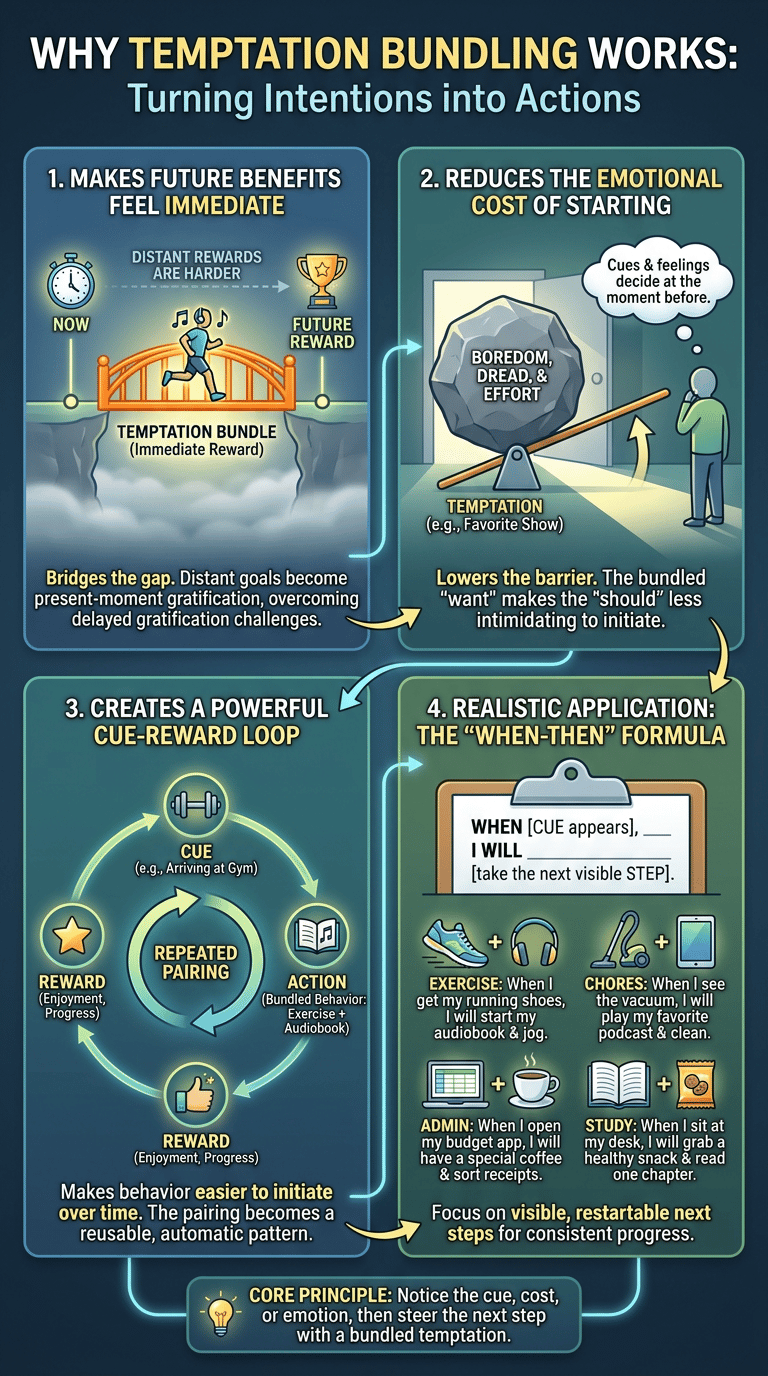
This section turns the idea into a usable choice. Notice the cue, cost, reward, or emotion steering the next step.
It makes future benefits feel more immediate
This names a small lever inside a larger pattern. Progress depends on making the next action visible and restartable. Look at the moment before the behavior, where cues and feelings decide.
Why distant rewards are harder to act on
The reason is usually layered: immediate reward, emotional relief, unclear timing, or a plan that asks too much. Use one sentence: when this appears, I will take the next visible step.
How This Connects to Future Rewards
This names a small lever inside a larger pattern. Progress depends on making the next action visible and restartable. Use one sentence: when this appears, I will take the next visible step.
It reduces the emotional cost of starting
This names a small lever inside a larger pattern. Progress depends on making the next action visible and restartable. Look at the moment before the behavior, where cues and feelings decide.
Boredom, dread, and anticipated effort
This names a small lever inside a larger pattern. Progress depends on making the next action visible and restartable. Use one sentence: when this appears, I will take the next visible step.
Use examples from exercise, chores, admin, and study
A useful example is specific enough to picture. Choose the cue, the action, and the first sign of completion. Use one sentence: when this appears, I will take the next visible step.
It creates a cue-reward loop
This names a small lever inside a larger pattern. Progress depends on making the next action visible and restartable. Look at the moment before the behavior, where cues and feelings decide.
How repeated pairing can make a behavior easier to initiate
This names a small lever inside a larger pattern. Progress depends on making the next action visible and restartable. Use one sentence: when this appears, I will take the next visible step.
How to Keep This Advice Realistic
This names a small lever inside a larger pattern. Progress depends on making the next action visible and restartable. Use one sentence: when this appears, I will take the next visible step.
Temptation Bundling Examples
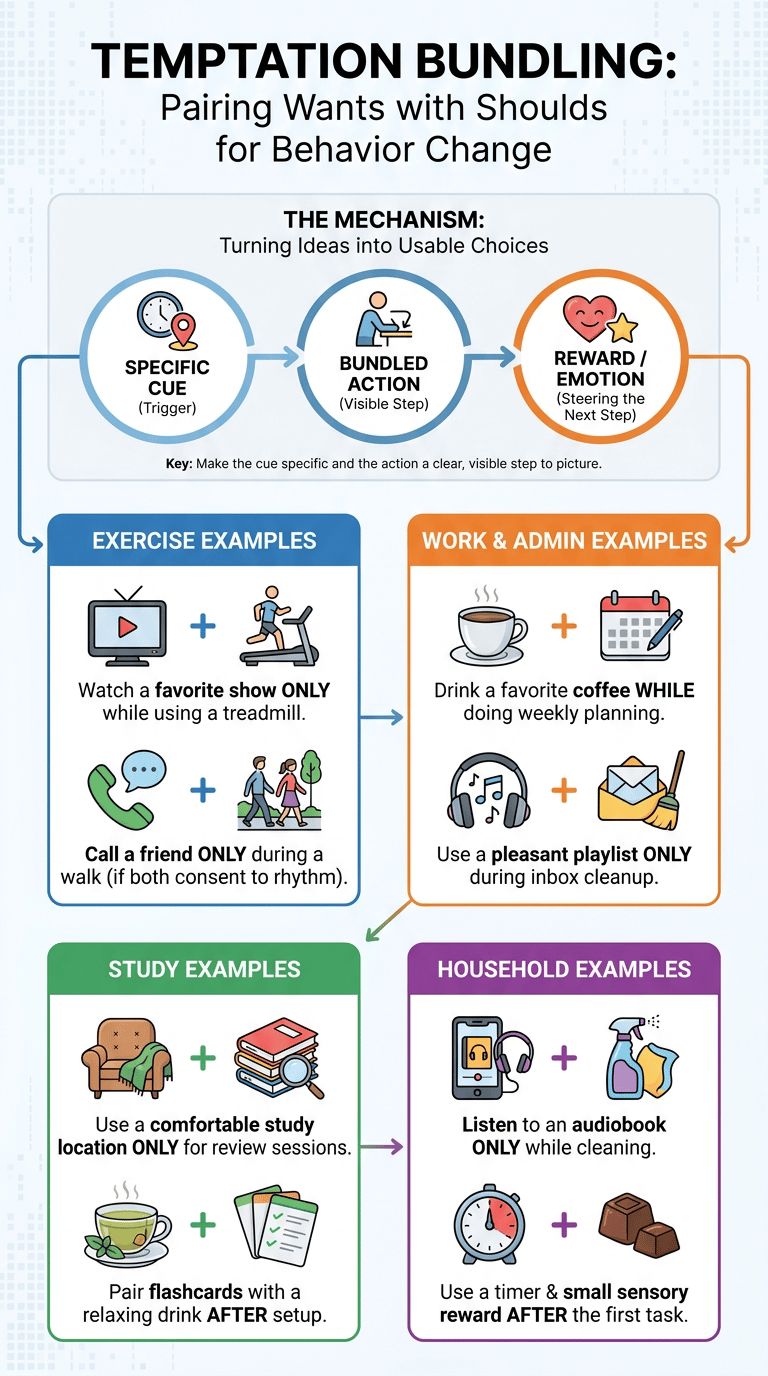
This section turns the idea into a usable choice. Notice the cue, cost, reward, or emotion steering the next step. behavior change research.
Exercise examples
A useful example is specific enough to picture. Choose the cue, the action, and the first sign of completion. Look at the moment before the behavior, where cues and feelings decide.
Watch a favorite show only while using a treadmill
A useful example is specific enough to picture. Choose the cue, the action, and the first sign of completion. Use one sentence: when this appears, I will take the next visible step.
Call a friend only during a walk if both people consent to the rhythm
A useful example is specific enough to picture. Choose the cue, the action, and the first sign of completion. Use one sentence: when this appears, I will take the next visible step.
Work and admin examples
A useful example is specific enough to picture. Choose the cue, the action, and the first sign of completion. Look at the moment before the behavior, where cues and feelings decide.
Drink a favorite coffee while doing weekly planning
A useful example is specific enough to picture. Choose the cue, the action, and the first sign of completion. Use one sentence: when this appears, I will take the next visible step.
Use a pleasant playlist only during inbox cleanup
A useful example is specific enough to picture. Choose the cue, the action, and the first sign of completion. Use one sentence: when this appears, I will take the next visible step.
Study examples
A useful example is specific enough to picture. Choose the cue, the action, and the first sign of completion. Look at the moment before the behavior, where cues and feelings decide.
Use a comfortable study location only for review sessions
A useful example is specific enough to picture. Choose the cue, the action, and the first sign of completion. Use one sentence: when this appears, I will take the next visible step.
Pair flashcards with a relaxing drink after setup
A useful example is specific enough to picture. Choose the cue, the action, and the first sign of completion. Use one sentence: when this appears, I will take the next visible step.
Household examples
A useful example is specific enough to picture. Choose the cue, the action, and the first sign of completion. Look at the moment before the behavior, where cues and feelings decide.
Listen to an audiobook only while cleaning
A useful example is specific enough to picture. Choose the cue, the action, and the first sign of completion. Use one sentence: when this appears, I will take the next visible step.
Use a timer and small sensory reward after the first task
A useful example is specific enough to picture. Choose the cue, the action, and the first sign of completion. Use one sentence: when this appears, I will take the next visible step.
How to Create a Good Temptation Bundle
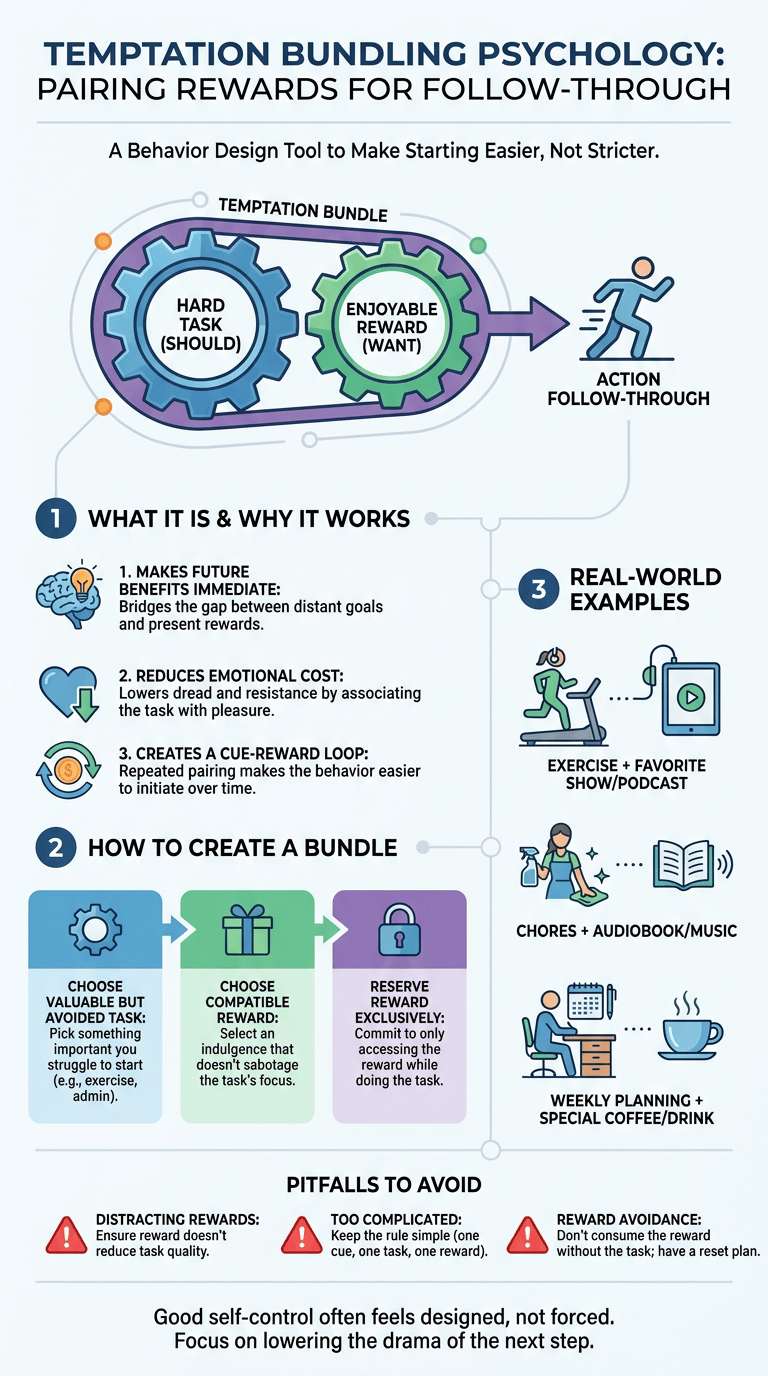
This section turns the idea into a usable choice. Notice the cue, cost, reward, or emotion steering the next step.
Choose a behavior you avoid but value
This names a small lever inside a larger pattern. Progress depends on making the next action visible and restartable. Look at the moment before the behavior, where cues and feelings decide.
Pick a task that matters and repeats
This names a small lever inside a larger pattern. Progress depends on making the next action visible and restartable. Use one sentence: when this appears, I will take the next visible step.
How to Keep This Advice Realistic
This names a small lever inside a larger pattern. Progress depends on making the next action visible and restartable. Use one sentence: when this appears, I will take the next visible step.
Choose a reward that does not sabotage the task
This names a small lever inside a larger pattern. Progress depends on making the next action visible and restartable. Look at the moment before the behavior, where cues and feelings decide.
Match the reward to the attention level required
This names a small lever inside a larger pattern. Progress depends on making the next action visible and restartable. Use one sentence: when this appears, I will take the next visible step.
Give examples of compatible and incompatible pairings
A useful example is specific enough to picture. Choose the cue, the action, and the first sign of completion. Use one sentence: when this appears, I will take the next visible step.
How to Keep the Practice Grounded
This names a small lever inside a larger pattern. Progress depends on making the next action visible and restartable. Look at the moment before the behavior, where cues and feelings decide.
Why the reward should be reserved for the useful behavior
The reason is usually layered: immediate reward, emotional relief, unclear timing, or a plan that asks too much. Use one sentence: when this appears, I will take the next visible step.
When Extra Support May Matter
If the pattern is persistent, severe, or disrupting work, school, health, or relationships, outside support can help. Use one sentence: when this appears, I will take the next visible step.
When Temptation Bundling Backfires
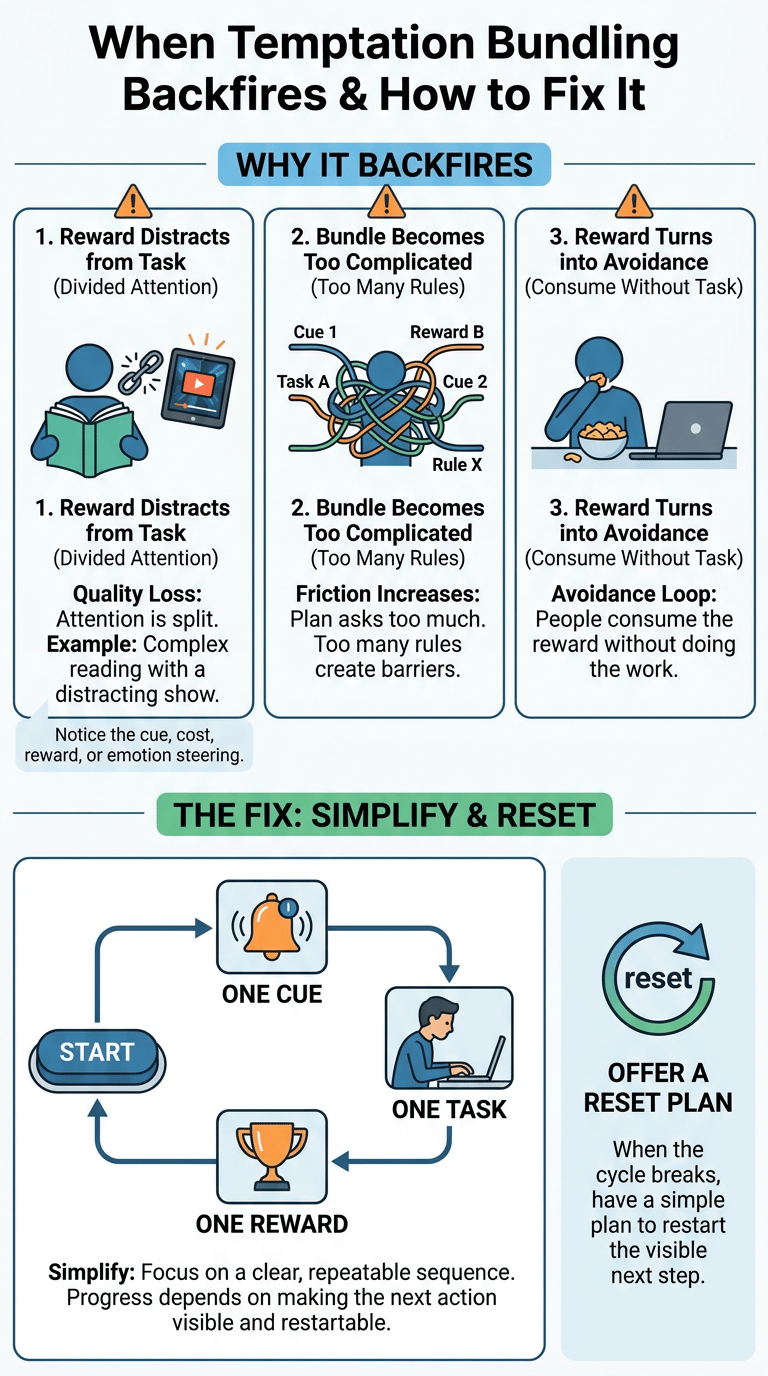
This section turns the idea into a usable choice. Notice the cue, cost, reward, or emotion steering the next step. self-control strategy research.
The reward distracts from the task
This names a small lever inside a larger pattern. Progress depends on making the next action visible and restartable. Look at the moment before the behavior, where cues and feelings decide.
Divided attention and quality loss
This names a small lever inside a larger pattern. Progress depends on making the next action visible and restartable. Use one sentence: when this appears, I will take the next visible step.
Give examples like complex reading with a distracting show
A useful example is specific enough to picture. Choose the cue, the action, and the first sign of completion. Use one sentence: when this appears, I will take the next visible step.
The bundle becomes too complicated
This names a small lever inside a larger pattern. Progress depends on making the next action visible and restartable. Look at the moment before the behavior, where cues and feelings decide.
Why too many rules increase friction
The reason is usually layered: immediate reward, emotional relief, unclear timing, or a plan that asks too much. Use one sentence: when this appears, I will take the next visible step.
Simplify to one cue, one task, one reward
This names a small lever inside a larger pattern. Progress depends on making the next action visible and restartable. Use one sentence: when this appears, I will take the next visible step.
The reward turns into avoidance
This names a small lever inside a larger pattern. Progress depends on making the next action visible and restartable. Look at the moment before the behavior, where cues and feelings decide.
How people may consume the reward without doing the task
This names a small lever inside a larger pattern. Progress depends on making the next action visible and restartable. Use one sentence: when this appears, I will take the next visible step.
Offer a reset plan
This names a small lever inside a larger pattern. Progress depends on making the next action visible and restartable. Use one sentence: when this appears, I will take the next visible step.
Temptation Bundling vs Other Self-Control Strategies
This section turns the idea into a usable choice. Notice the cue, cost, reward, or emotion steering the next step.
Temptation bundling vs implementation intentions
This names a small lever inside a larger pattern. Progress depends on making the next action visible and restartable. Look at the moment before the behavior, where cues and feelings decide.
Reward pairing versus cue-action planning
This names a small lever inside a larger pattern. Progress depends on making the next action visible and restartable. Use one sentence: when this appears, I will take the next visible step.
How This Connects to If-Then Planning
This names a small lever inside a larger pattern. Progress depends on making the next action visible and restartable. Use one sentence: when this appears, I will take the next visible step.
Temptation bundling vs discipline
This names a small lever inside a larger pattern. Progress depends on making the next action visible and restartable. Look at the moment before the behavior, where cues and feelings decide.
That bundles reduce resistance rather than prove toughness
This names a small lever inside a larger pattern. Progress depends on making the next action visible and restartable. Use one sentence: when this appears, I will take the next visible step.
How to Keep This Advice Realistic
This names a small lever inside a larger pattern. Progress depends on making the next action visible and restartable. Use one sentence: when this appears, I will take the next visible step.
Temptation bundling vs habit stacking
This names a small lever inside a larger pattern. Progress depends on making the next action visible and restartable. Look at the moment before the behavior, where cues and feelings decide.
The difference between reward pairing and routine chaining
This names a small lever inside a larger pattern. Progress depends on making the next action visible and restartable. Use one sentence: when this appears, I will take the next visible step.
Frequently Asked Questions
This section turns the idea into a usable choice. Notice the cue, cost, reward, or emotion steering the next step. practical psychology guidance.
Is temptation bundling manipulative?
It depends on the pattern, the stakes, and the context. Look at repeated behavior, not one imperfect day. Look at the moment before the behavior, where cues and feelings decide.
Self-directed choice and ethical use
This names a small lever inside a larger pattern. Progress depends on making the next action visible and restartable. Use one sentence: when this appears, I will take the next visible step.
Can it work for serious goals?
If the pattern is persistent, severe, or disrupting work, school, health, or relationships, outside support can help. Look at the moment before the behavior, where cues and feelings decide.
Where it helps and where deeper support may be needed
If the pattern is persistent, severe, or disrupting work, school, health, or relationships, outside support can help. Use one sentence: when this appears, I will take the next visible step.
What if the reward stops working?
A clear definition keeps the topic grounded. Watch what you notice, what you feel, and what you do next. Look at the moment before the behavior, where cues and feelings decide.
Novelty, rotation, and revising the bundle
This names a small lever inside a larger pattern. Progress depends on making the next action visible and restartable. Use one sentence: when this appears, I will take the next visible step.
Final Thoughts
This section turns the idea into a usable choice. Notice the cue, cost, reward, or emotion steering the next step.
Good self-control often feels designed, not forced
This names a small lever inside a larger pattern. Progress depends on making the next action visible and restartable. Look at the moment before the behavior, where cues and feelings decide.
How This Connects to the Larger Pattern
This names a small lever inside a larger pattern. Progress depends on making the next action visible and restartable. Use one sentence: when this appears, I will take the next visible step.

Michael Reed is the Founder and Lead Writer at Psychology Exposed. He writes about human behavior, relationships, emotional patterns, self-awareness, and practical psychology topics using research-informed, easy-to-understand content.
Read More About Michael Reed: https://psychologyexposed.com/michael-reed/