
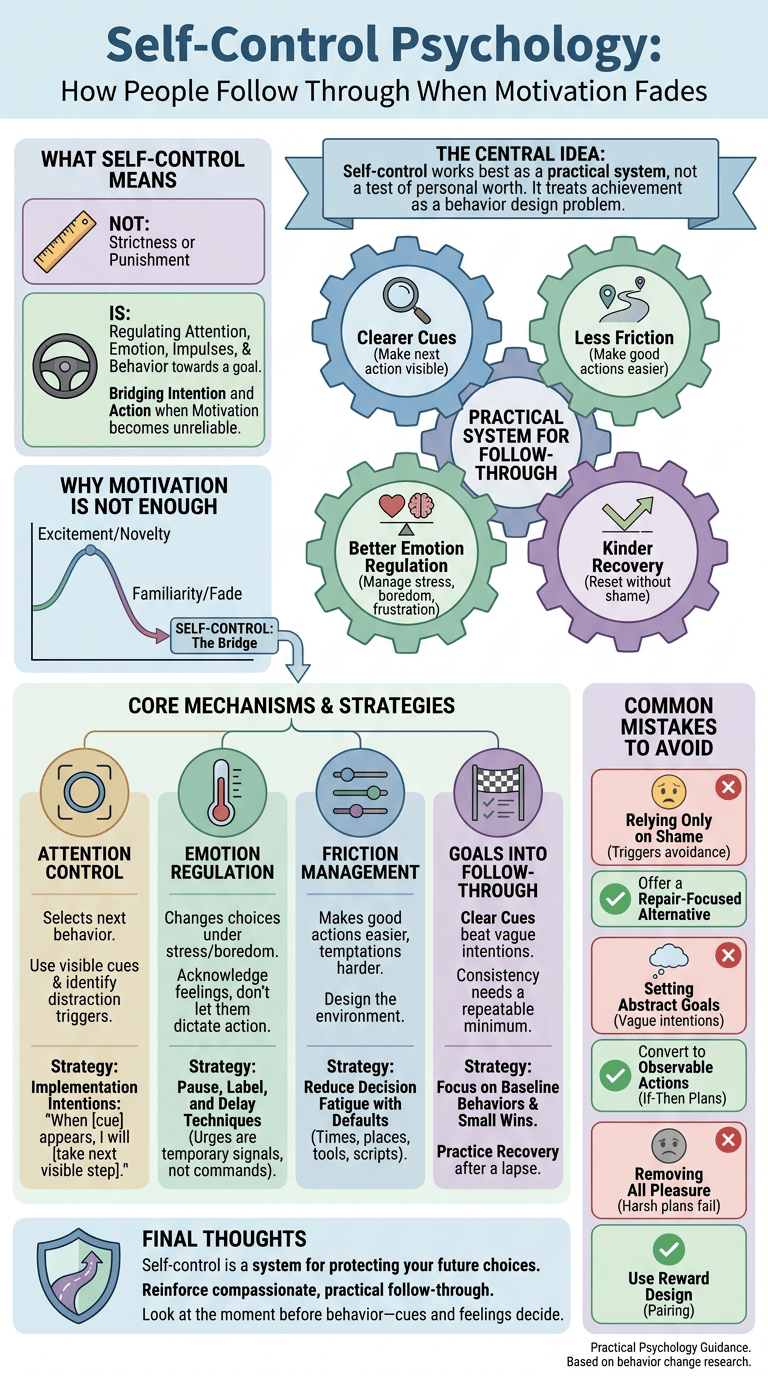
Self-Control Psychology: How People Follow Through When Motivation Fades is for a reader trying to follow through without turning achievement into self-punishment. The goal is not to make you stricter, colder, or constantly productive. It is to explain why follow-through breaks down and how to make the next useful action easier to choose. The central idea is that self-control works best as a practical system: clearer cues, less friction, better emotion regulation, and kinder recovery after lapses. It treats achievement as a behavior design problem, not a test of personal worth.

What Self-Control Means in Psychology
This section turns the idea into a usable choice. Notice the cue, cost, reward, or emotion steering the next step. self-control definition.
Self-control is not the same as being strict with yourself
This names a small lever inside a larger pattern. Progress depends on making the next action visible and restartable. Look at the moment before the behavior, where cues and feelings decide.
Self-control as regulating attention, emotion, impulses, and behavior toward a goal
This names a small lever inside a larger pattern. Progress depends on making the next action visible and restartable. Use one sentence: when this appears, I will take the next visible step.
Why self-control can be supportive instead of punitive
The reason is usually layered: immediate reward, emotional relief, unclear timing, or a plan that asks too much. Use one sentence: when this appears, I will take the next visible step.
Self-control is broader than willpower
This names a small lever inside a larger pattern. Progress depends on making the next action visible and restartable. Look at the moment before the behavior, where cues and feelings decide.
Momentary effort with planning, environment design, and habit structure
This names a small lever inside a larger pattern. Progress depends on making the next action visible and restartable. Use one sentence: when this appears, I will take the next visible step.
How This Connects to Willpower
This names a small lever inside a larger pattern. Progress depends on making the next action visible and restartable. Use one sentence: when this appears, I will take the next visible step.
Achievement depends on repeated regulation, not one heroic decision
This names a small lever inside a larger pattern. Progress depends on making the next action visible and restartable. Look at the moment before the behavior, where cues and feelings decide.
Why small repeated choices matter more than rare intense effort
The reason is usually layered: immediate reward, emotional relief, unclear timing, or a plan that asks too much. Use one sentence: when this appears, I will take the next visible step.
How to Keep the Practice Grounded
This names a small lever inside a larger pattern. Progress depends on making the next action visible and restartable. Use one sentence: when this appears, I will take the next visible step.
Why Motivation Is Not Enough for Achievement
This section turns the idea into a usable choice. Notice the cue, cost, reward, or emotion steering the next step.
Motivation rises and falls with novelty, emotion, and perceived reward
This names a small lever inside a larger pattern. Progress depends on making the next action visible and restartable. Look at the moment before the behavior, where cues and feelings decide.
Why initial excitement fades after the goal becomes familiar
The reason is usually layered: immediate reward, emotional relief, unclear timing, or a plan that asks too much. Use one sentence: when this appears, I will take the next visible step.
How This Connects to Motivation
This names a small lever inside a larger pattern. Progress depends on making the next action visible and restartable. Use one sentence: when this appears, I will take the next visible step.
Mood-dependent action creates inconsistent behavior
This names a small lever inside a larger pattern. Progress depends on making the next action visible and restartable. Look at the moment before the behavior, where cues and feelings decide.
Show how waiting to feel ready weakens follow-through
This names a small lever inside a larger pattern. Progress depends on making the next action visible and restartable. Use one sentence: when this appears, I will take the next visible step.
Offer examples from studying, exercise, writing, and work
A useful example is specific enough to picture. Choose the cue, the action, and the first sign of completion. Use one sentence: when this appears, I will take the next visible step.
For a related next step, see this guide to delayed gratification psychology.
For a related next step, see this guide to self-control vs willpower.
For a related next step, see this guide to grit vs discipline.
For a practical next step, see this guide on how to build consistency.
For a related next step, see this guide to why motivation fades.
For a related next step, see this guide to temptation bundling psychology.
For a practical next step, see these implementation intentions examples.
Self-control begins when motivation becomes unreliable
This names a small lever inside a larger pattern. Progress depends on making the next action visible and restartable. Look at the moment before the behavior, where cues and feelings decide.
Position self-control as a bridge between intention and action
This names a small lever inside a larger pattern. Progress depends on making the next action visible and restartable. Use one sentence: when this appears, I will take the next visible step.
How to Keep This Advice Realistic
This names a small lever inside a larger pattern. Progress depends on making the next action visible and restartable. Use one sentence: when this appears, I will take the next visible step.
The Core Mechanisms of Self-Control
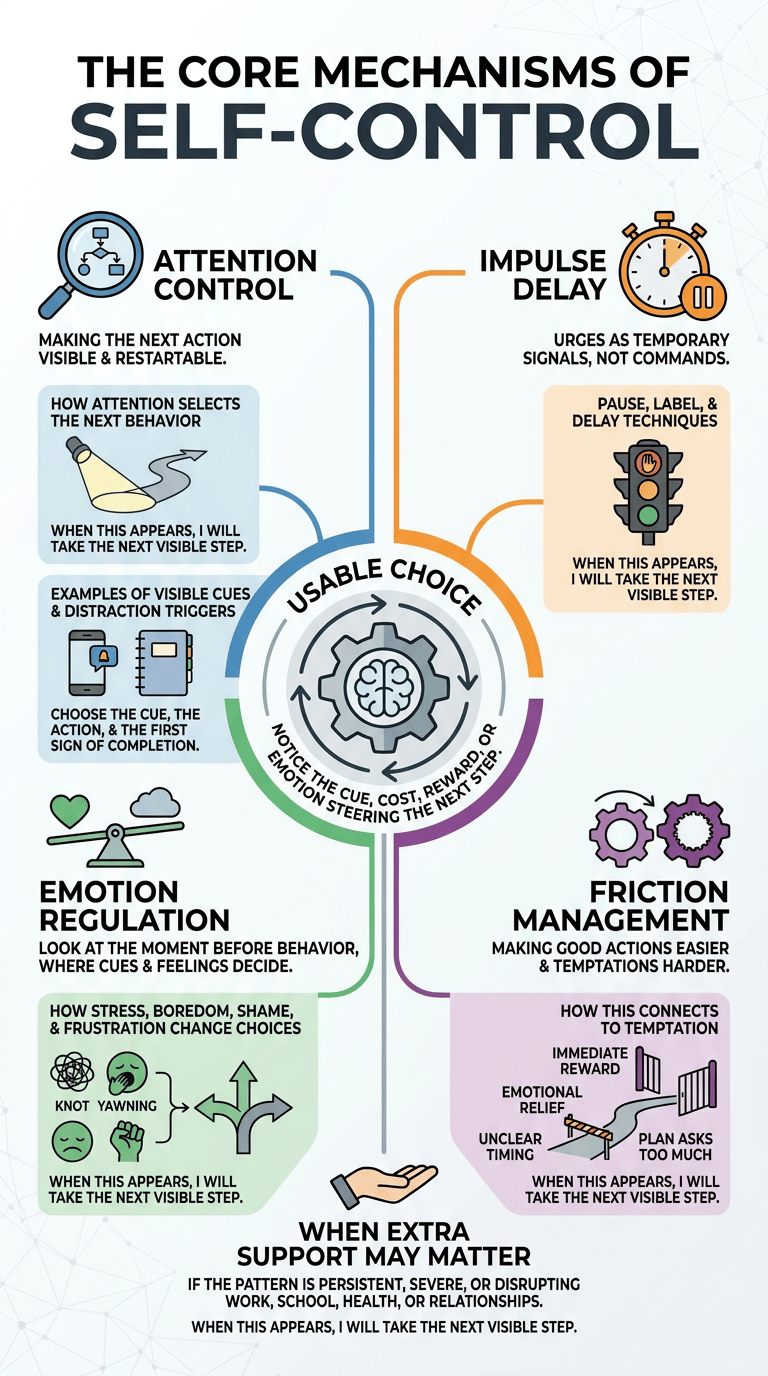
This section turns the idea into a usable choice. Notice the cue, cost, reward, or emotion steering the next step. behavior change research.
Attention control
This names a small lever inside a larger pattern. Progress depends on making the next action visible and restartable. Look at the moment before the behavior, where cues and feelings decide.
How attention selects the next behavior
This names a small lever inside a larger pattern. Progress depends on making the next action visible and restartable. Use one sentence: when this appears, I will take the next visible step.
Examples of visible cues and distraction triggers
A useful example is specific enough to picture. Choose the cue, the action, and the first sign of completion. Use one sentence: when this appears, I will take the next visible step.
Emotion regulation
This names a small lever inside a larger pattern. Progress depends on making the next action visible and restartable. Look at the moment before the behavior, where cues and feelings decide.
How stress, boredom, shame, and frustration change choices
This names a small lever inside a larger pattern. Progress depends on making the next action visible and restartable. Use one sentence: when this appears, I will take the next visible step.
When Extra Support May Matter
If the pattern is persistent, severe, or disrupting work, school, health, or relationships, outside support can help. Use one sentence: when this appears, I will take the next visible step.
Impulse delay
This names a small lever inside a larger pattern. Progress depends on making the next action visible and restartable. Look at the moment before the behavior, where cues and feelings decide.
Urges as temporary signals, not commands
This names a small lever inside a larger pattern. Progress depends on making the next action visible and restartable. Use one sentence: when this appears, I will take the next visible step.
Pause, label, and delay techniques
This names a small lever inside a larger pattern. Progress depends on making the next action visible and restartable. Use one sentence: when this appears, I will take the next visible step.
Friction management
This names a small lever inside a larger pattern. Progress depends on making the next action visible and restartable. Look at the moment before the behavior, where cues and feelings decide.
Making good actions easier and temptations harder
The reason is usually layered: immediate reward, emotional relief, unclear timing, or a plan that asks too much. Use one sentence: when this appears, I will take the next visible step.
How This Connects to Temptation
This names a small lever inside a larger pattern. Progress depends on making the next action visible and restartable. Use one sentence: when this appears, I will take the next visible step.
How Goals Become Follow-Through
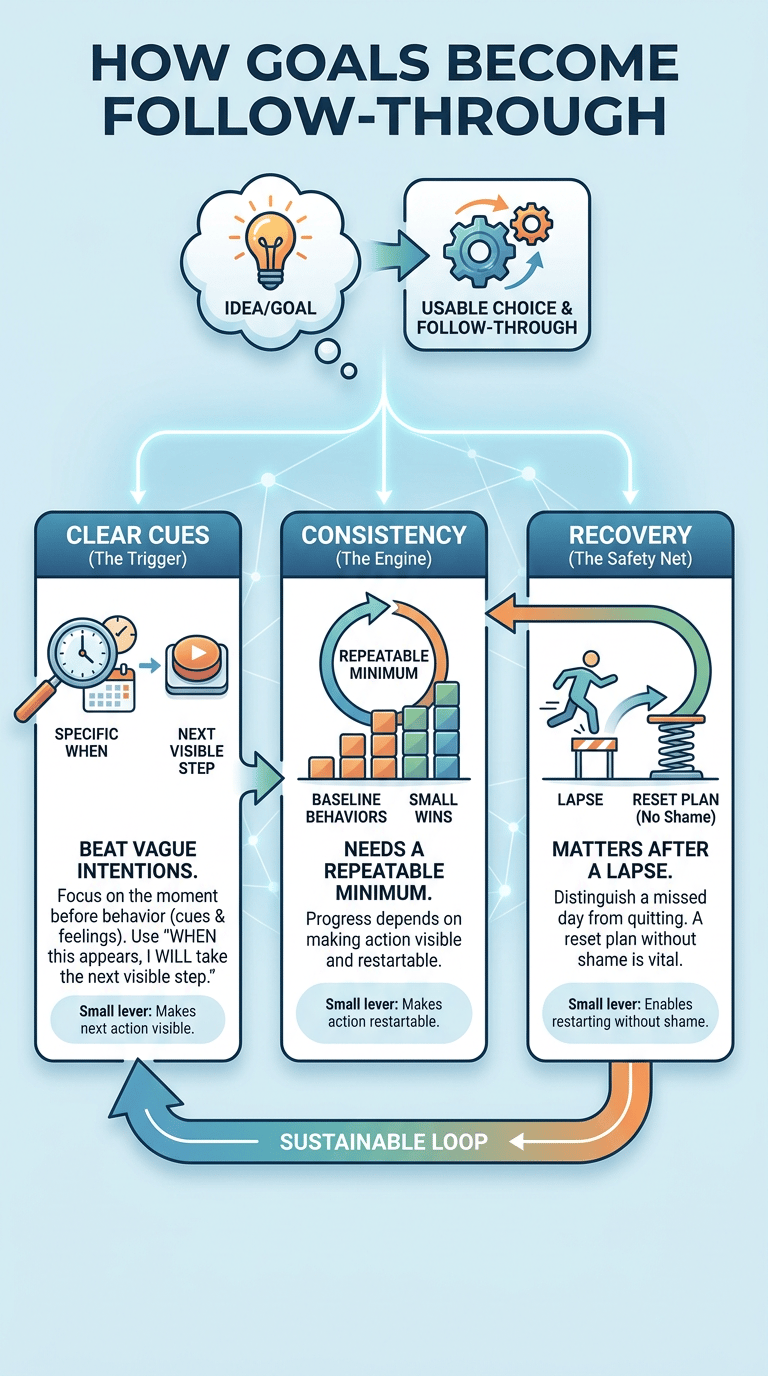
This section turns the idea into a usable choice. Notice the cue, cost, reward, or emotion steering the next step.
Clear cues beat vague intentions
This names a small lever inside a larger pattern. Progress depends on making the next action visible and restartable. Look at the moment before the behavior, where cues and feelings decide.
Why specific when-then plans outperform general goals
The reason is usually layered: immediate reward, emotional relief, unclear timing, or a plan that asks too much. Use one sentence: when this appears, I will take the next visible step.
How This Connects to If-Then Planning
This names a small lever inside a larger pattern. Progress depends on making the next action visible and restartable. Use one sentence: when this appears, I will take the next visible step.
Consistency needs a repeatable minimum
This names a small lever inside a larger pattern. Progress depends on making the next action visible and restartable. Look at the moment before the behavior, where cues and feelings decide.
Baseline behaviors and small wins
This names a small lever inside a larger pattern. Progress depends on making the next action visible and restartable. Use one sentence: when this appears, I will take the next visible step.
How This Connects to Consistency
This names a small lever inside a larger pattern. Progress depends on making the next action visible and restartable. Use one sentence: when this appears, I will take the next visible step.
Recovery matters after a lapse
This names a small lever inside a larger pattern. Progress depends on making the next action visible and restartable. Look at the moment before the behavior, where cues and feelings decide.
The difference between a missed day and quitting
This names a small lever inside a larger pattern. Progress depends on making the next action visible and restartable. Use one sentence: when this appears, I will take the next visible step.
A reset plan without shame
This names a small lever inside a larger pattern. Progress depends on making the next action visible and restartable. Use one sentence: when this appears, I will take the next visible step.
Self-Control, Grit, and Long-Term Achievement
This section turns the idea into a usable choice. Notice the cue, cost, reward, or emotion steering the next step. self-control strategy research.
Grit describes sustained commitment over time
This names a small lever inside a larger pattern. Progress depends on making the next action visible and restartable. Look at the moment before the behavior, where cues and feelings decide.
Passion and perseverance without overclaiming
This names a small lever inside a larger pattern. Progress depends on making the next action visible and restartable. Use one sentence: when this appears, I will take the next visible step.
How This Connects to Grit
This names a small lever inside a larger pattern. Progress depends on making the next action visible and restartable. Use one sentence: when this appears, I will take the next visible step.
Discipline describes structured self-regulation
This names a small lever inside a larger pattern. Progress depends on making the next action visible and restartable. Look at the moment before the behavior, where cues and feelings decide.
Discipline as a system, not a personality badge
This names a small lever inside a larger pattern. Progress depends on making the next action visible and restartable. Use one sentence: when this appears, I will take the next visible step.
How to Keep This Advice Realistic
This names a small lever inside a larger pattern. Progress depends on making the next action visible and restartable. Use one sentence: when this appears, I will take the next visible step.
Achievement requires both persistence and adaptation
This names a small lever inside a larger pattern. Progress depends on making the next action visible and restartable. Look at the moment before the behavior, where cues and feelings decide.
When to persist and when to revise the plan
This names a small lever inside a larger pattern. Progress depends on making the next action visible and restartable. Use one sentence: when this appears, I will take the next visible step.
Examples of changing tactics without abandoning the goal
A useful example is specific enough to picture. Choose the cue, the action, and the first sign of completion. Use one sentence: when this appears, I will take the next visible step.
Practical Self-Control Strategies
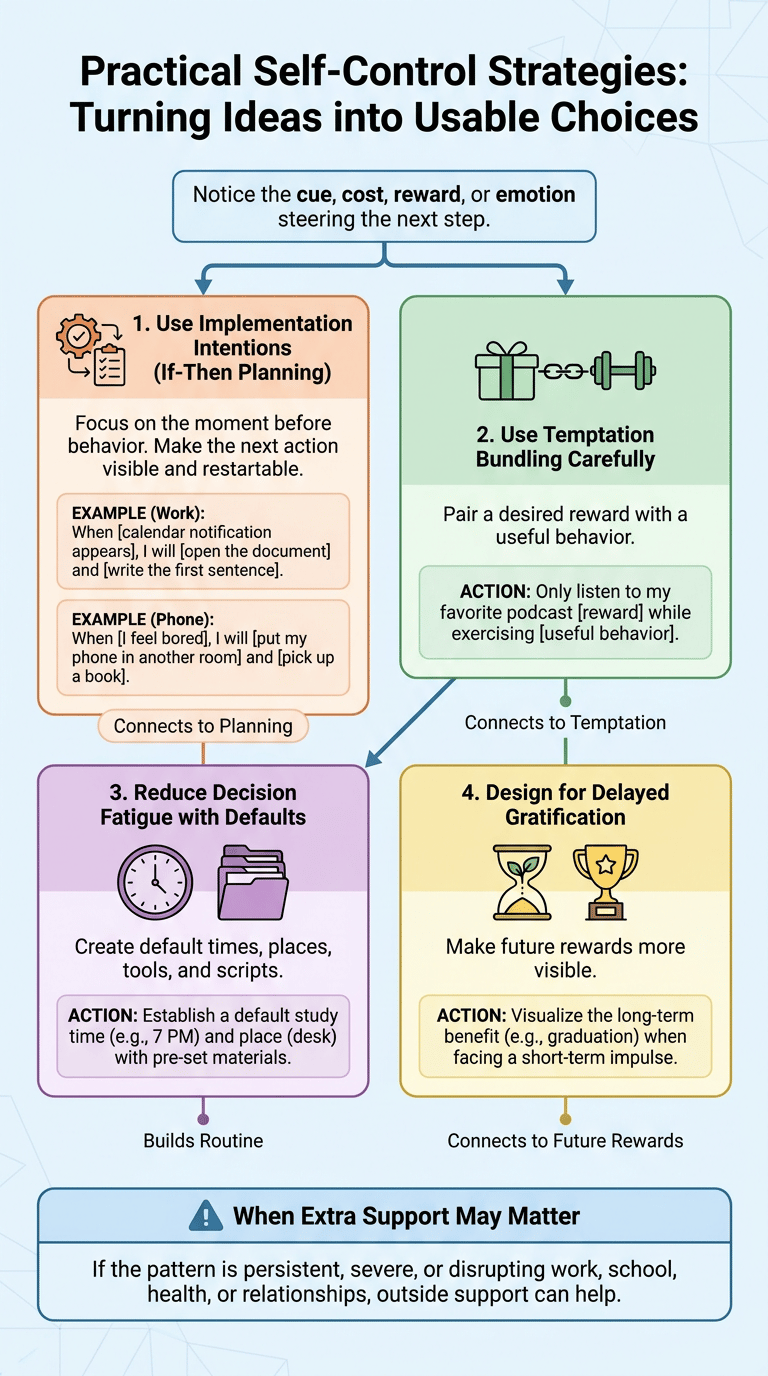
This section turns the idea into a usable choice. Notice the cue, cost, reward, or emotion steering the next step.
Use implementation intentions
This names a small lever inside a larger pattern. Progress depends on making the next action visible and restartable. Look at the moment before the behavior, where cues and feelings decide.
Give if-then examples for work, study, health, and phone use
A useful example is specific enough to picture. Choose the cue, the action, and the first sign of completion. Use one sentence: when this appears, I will take the next visible step.
How This Connects to If-Then Planning
This names a small lever inside a larger pattern. Progress depends on making the next action visible and restartable. Use one sentence: when this appears, I will take the next visible step.
Use temptation bundling carefully
This names a small lever inside a larger pattern. Progress depends on making the next action visible and restartable. Look at the moment before the behavior, where cues and feelings decide.
Pair a desired reward with a useful behavior
This names a small lever inside a larger pattern. Progress depends on making the next action visible and restartable. Use one sentence: when this appears, I will take the next visible step.
How This Connects to Temptation
This names a small lever inside a larger pattern. Progress depends on making the next action visible and restartable. Use one sentence: when this appears, I will take the next visible step.
Reduce decision fatigue with defaults
This names a small lever inside a larger pattern. Progress depends on making the next action visible and restartable. Look at the moment before the behavior, where cues and feelings decide.
Create default times, places, tools, and scripts
This names a small lever inside a larger pattern. Progress depends on making the next action visible and restartable. Use one sentence: when this appears, I will take the next visible step.
When Extra Support May Matter
If the pattern is persistent, severe, or disrupting work, school, health, or relationships, outside support can help. Use one sentence: when this appears, I will take the next visible step.
Design for delayed gratification
This names a small lever inside a larger pattern. Progress depends on making the next action visible and restartable. Look at the moment before the behavior, where cues and feelings decide.
Make future rewards more visible
This names a small lever inside a larger pattern. Progress depends on making the next action visible and restartable. Use one sentence: when this appears, I will take the next visible step.
How This Connects to Future Rewards
This names a small lever inside a larger pattern. Progress depends on making the next action visible and restartable. Use one sentence: when this appears, I will take the next visible step.
Common Self-Control Mistakes
This section turns the idea into a usable choice. Notice the cue, cost, reward, or emotion steering the next step. practical psychology guidance.
Relying only on shame
This names a small lever inside a larger pattern. Progress depends on making the next action visible and restartable. Look at the moment before the behavior, where cues and feelings decide.
Why shame can trigger avoidance
The reason is usually layered: immediate reward, emotional relief, unclear timing, or a plan that asks too much. Use one sentence: when this appears, I will take the next visible step.
Offer a repair-focused alternative
This names a small lever inside a larger pattern. Progress depends on making the next action visible and restartable. Use one sentence: when this appears, I will take the next visible step.
Setting goals that are too abstract
This names a small lever inside a larger pattern. Progress depends on making the next action visible and restartable. Look at the moment before the behavior, where cues and feelings decide.
Convert broad intentions into observable actions
This names a small lever inside a larger pattern. Progress depends on making the next action visible and restartable. Use one sentence: when this appears, I will take the next visible step.
Before-and-after examples
A useful example is specific enough to picture. Choose the cue, the action, and the first sign of completion. Use one sentence: when this appears, I will take the next visible step.
Removing all pleasure from the process
This names a small lever inside a larger pattern. Progress depends on making the next action visible and restartable. Look at the moment before the behavior, where cues and feelings decide.
Why harsh plans often fail
The reason is usually layered: immediate reward, emotional relief, unclear timing, or a plan that asks too much. Use one sentence: when this appears, I will take the next visible step.
Use reward design without promising instant transformation
This names a small lever inside a larger pattern. Progress depends on making the next action visible and restartable. Use one sentence: when this appears, I will take the next visible step.
Frequently Asked Questions
This section turns the idea into a usable choice. Notice the cue, cost, reward, or emotion steering the next step.
Is self-control a skill or a trait?
It depends on the pattern, the stakes, and the context. Look at repeated behavior, not one imperfect day. Look at the moment before the behavior, where cues and feelings decide.
Both individual differences and trainable strategies
This names a small lever inside a larger pattern. Progress depends on making the next action visible and restartable. Use one sentence: when this appears, I will take the next visible step.
Why do I have self-control in one area but not another?
The reason is usually layered: immediate reward, emotional relief, unclear timing, or a plan that asks too much. Look at the moment before the behavior, where cues and feelings decide.
Context, reward, identity, stress, and environment
This names a small lever inside a larger pattern. Progress depends on making the next action visible and restartable. Use one sentence: when this appears, I will take the next visible step.
Can self-control become unhealthy?
If the pattern is persistent, severe, or disrupting work, school, health, or relationships, outside support can help. Look at the moment before the behavior, where cues and feelings decide.
When Extra Support May Matter
If the pattern is persistent, severe, or disrupting work, school, health, or relationships, outside support can help. Use one sentence: when this appears, I will take the next visible step.
Final Thoughts
This section turns the idea into a usable choice. Notice the cue, cost, reward, or emotion steering the next step.
Self-control is a system for protecting your future choices
This names a small lever inside a larger pattern. Progress depends on making the next action visible and restartable. Look at the moment before the behavior, where cues and feelings decide.
Reinforce compassionate, practical follow-through
This names a small lever inside a larger pattern. Progress depends on making the next action visible and restartable. Use one sentence: when this appears, I will take the next visible step.

Michael Reed is the Founder and Lead Writer at Psychology Exposed. He writes about human behavior, relationships, emotional patterns, self-awareness, and practical psychology topics using research-informed, easy-to-understand content.
Read More About Michael Reed: https://psychologyexposed.com/michael-reed/