
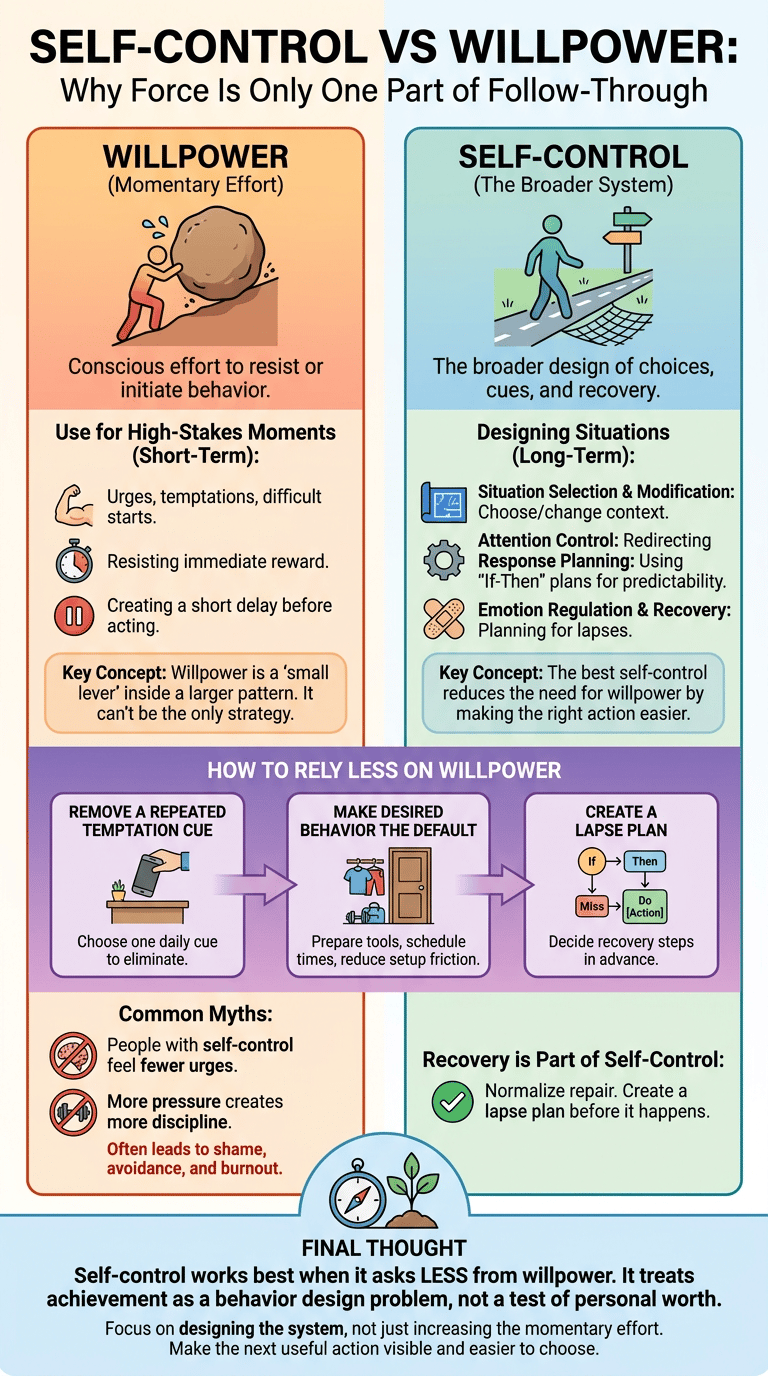
Self-Control vs Willpower: Why Force Is Only One Part of Follow-Through is for someone who blames themselves for not having enough willpower. The goal is not to make you stricter, colder, or constantly productive. It is to explain why follow-through breaks down and how to make the next useful action easier to choose. The central idea is that willpower is momentary effort, while self-control is the broader design of choices, cues, and recovery. It treats achievement as a behavior design problem, not a test of personal worth. For someone who blames themselves for not having enough willpower, the most useful move is to lower the drama of the next step. Make it visible, make it specific, and make the restart plan part of the system from the beginning.

Quick Answer: Self-Control vs Willpower
This section turns the idea into a usable choice. Notice the cue, cost, reward, or emotion steering the next step. willpower overview.
Willpower is effort in the moment
This names a small lever inside a larger pattern. Progress depends on making the next action visible and restartable. Look at the moment before the behavior, where cues and feelings decide. The kinder standard is not to feel ready every time. It is to create a structure that still points you toward the next useful action when readiness is low.
Willpower as conscious effort to resist or initiate behavior
This names a small lever inside a larger pattern. Progress depends on making the next action visible and restartable. Use one sentence: when this appears, I will take the next visible step. For someone who blames themselves for not having enough willpower, the most useful move is to lower the drama of the next step. Make it visible, make it specific, and make the restart plan part of the system from the beginning.
How to Keep the Practice Grounded
This names a small lever inside a larger pattern. Progress depends on making the next action visible and restartable. Use one sentence: when this appears, I will take the next visible step. That matters because real life rarely gives you a clean starting line. A plan for phone use has to work with stress, interruptions, boredom, and normal changes in energy.
Self-control is the broader system
This names a small lever inside a larger pattern. Progress depends on making the next action visible and restartable. Look at the moment before the behavior, where cues and feelings decide. The kinder standard is not to feel ready every time. It is to create a structure that still points you toward the next useful action when readiness is low.
Planning, cues, environment, emotion regulation, and recovery
This names a small lever inside a larger pattern. Progress depends on making the next action visible and restartable. Use one sentence: when this appears, I will take the next visible step. For someone who blames themselves for not having enough willpower, the most useful move is to lower the drama of the next step. Make it visible, make it specific, and make the restart plan part of the system from the beginning.
How This Connects to the Larger Pattern
This names a small lever inside a larger pattern. Progress depends on making the next action visible and restartable. Use one sentence: when this appears, I will take the next visible step. That matters because real life rarely gives you a clean starting line. A plan for phone use has to work with stress, interruptions, boredom, and normal changes in energy.
The best self-control often reduces the need for willpower
This names a small lever inside a larger pattern. Progress depends on making the next action visible and restartable. Look at the moment before the behavior, where cues and feelings decide. The kinder standard is not to feel ready every time. It is to create a structure that still points you toward the next useful action when readiness is low.
Designing situations so the right action is easier
This names a small lever inside a larger pattern. Progress depends on making the next action visible and restartable. Use one sentence: when this appears, I will take the next visible step.
Use a simple example
A useful example is specific enough to picture. Choose the cue, the action, and the first sign of completion. Use one sentence: when this appears, I will take the next visible step.
For a related next step, see this guide to why motivation fades.
For a related next step, see this guide to delayed gratification psychology.
For a related next step, see this guide to grit vs discipline.
For broader context, see this guide to self-control psychology.
What Willpower Gets Right
This section turns the idea into a usable choice. Notice the cue, cost, reward, or emotion steering the next step.
Some moments do require effort
This names a small lever inside a larger pattern. Progress depends on making the next action visible and restartable. Look at the moment before the behavior, where cues and feelings decide.
Urges, temptations, and difficult starts
This names a small lever inside a larger pattern. Progress depends on making the next action visible and restartable. Use one sentence: when this appears, I will take the next visible step.
How to Keep This Advice Realistic
This names a small lever inside a larger pattern. Progress depends on making the next action visible and restartable. Use one sentence: when this appears, I will take the next visible step.
Effort can help create a pause
If the pattern is persistent, severe, or disrupting work, school, health, or relationships, outside support can help. Look at the moment before the behavior, where cues and feelings decide.
The value of a short delay before acting
This names a small lever inside a larger pattern. Progress depends on making the next action visible and restartable. Use one sentence: when this appears, I will take the next visible step.
How This Connects to Future Rewards
This names a small lever inside a larger pattern. Progress depends on making the next action visible and restartable. Use one sentence: when this appears, I will take the next visible step.
Willpower can support values in high-stakes moments
If the pattern is persistent, severe, or disrupting work, school, health, or relationships, outside support can help. Look at the moment before the behavior, where cues and feelings decide.
Use examples without dramatizing
A useful example is specific enough to picture. Choose the cue, the action, and the first sign of completion. Use one sentence: when this appears, I will take the next visible step.
When Extra Support May Matter
If the pattern is persistent, severe, or disrupting work, school, health, or relationships, outside support can help. Use one sentence: when this appears, I will take the next visible step.
Why Willpower Alone Often Fails
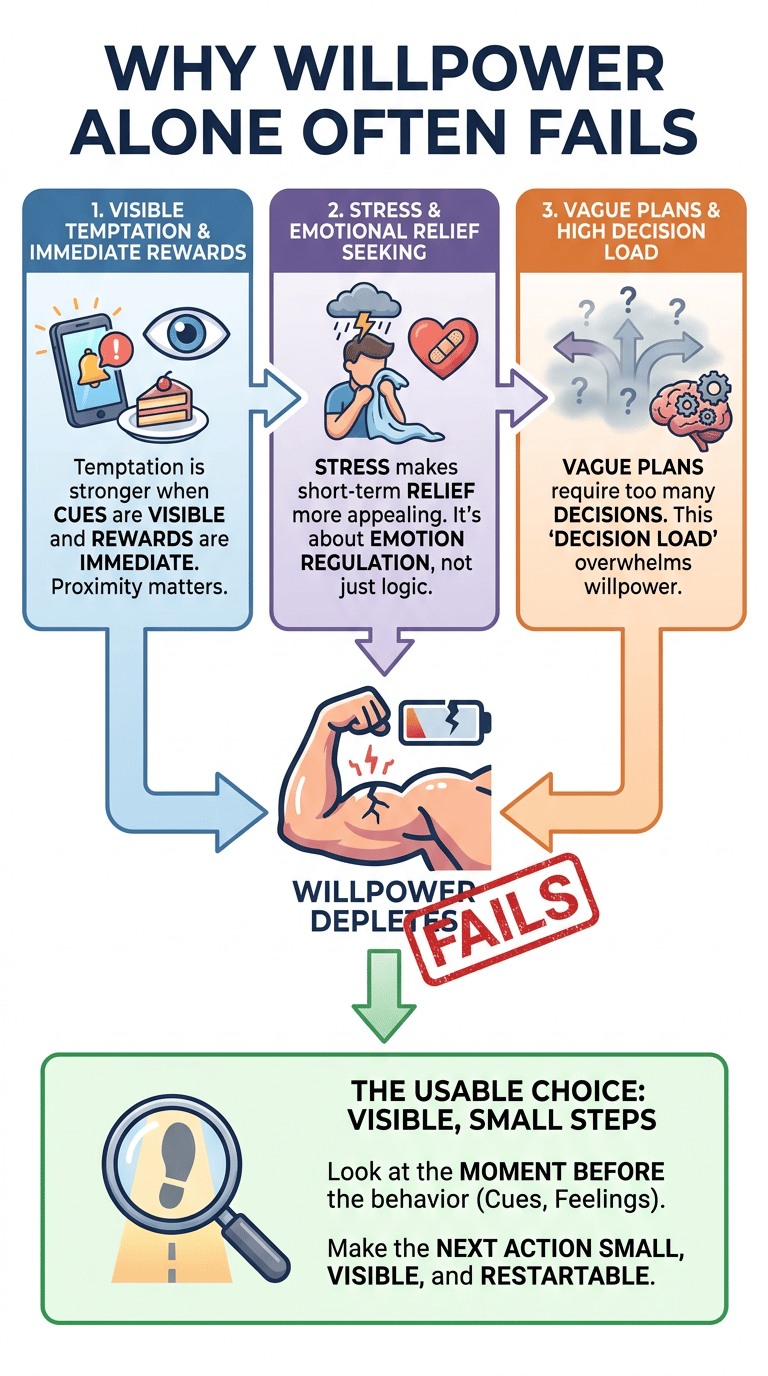
This section turns the idea into a usable choice. Notice the cue, cost, reward, or emotion steering the next step. behavior change research.
Temptation is easier when it is visible and immediate
This names a small lever inside a larger pattern. Progress depends on making the next action visible and restartable. Look at the moment before the behavior, where cues and feelings decide.
Cue exposure and reward proximity
This names a small lever inside a larger pattern. Progress depends on making the next action visible and restartable. Use one sentence: when this appears, I will take the next visible step.
How This Connects to Temptation
This names a small lever inside a larger pattern. Progress depends on making the next action visible and restartable. Use one sentence: when this appears, I will take the next visible step.
Stress makes short-term relief more appealing
This names a small lever inside a larger pattern. Progress depends on making the next action visible and restartable. Look at the moment before the behavior, where cues and feelings decide.
Emotion regulation and relief seeking
This names a small lever inside a larger pattern. Progress depends on making the next action visible and restartable. Use one sentence: when this appears, I will take the next visible step.
How to Keep This Advice Realistic
This names a small lever inside a larger pattern. Progress depends on making the next action visible and restartable. Use one sentence: when this appears, I will take the next visible step.
Vague plans require too many decisions
This names a small lever inside a larger pattern. Progress depends on making the next action visible and restartable. Look at the moment before the behavior, where cues and feelings decide.
Decision load
This names a small lever inside a larger pattern. Progress depends on making the next action visible and restartable. Use one sentence: when this appears, I will take the next visible step.
How This Connects to If-Then Planning
This names a small lever inside a larger pattern. Progress depends on making the next action visible and restartable. Use one sentence: when this appears, I will take the next visible step.
What Self-Control Includes Beyond Willpower
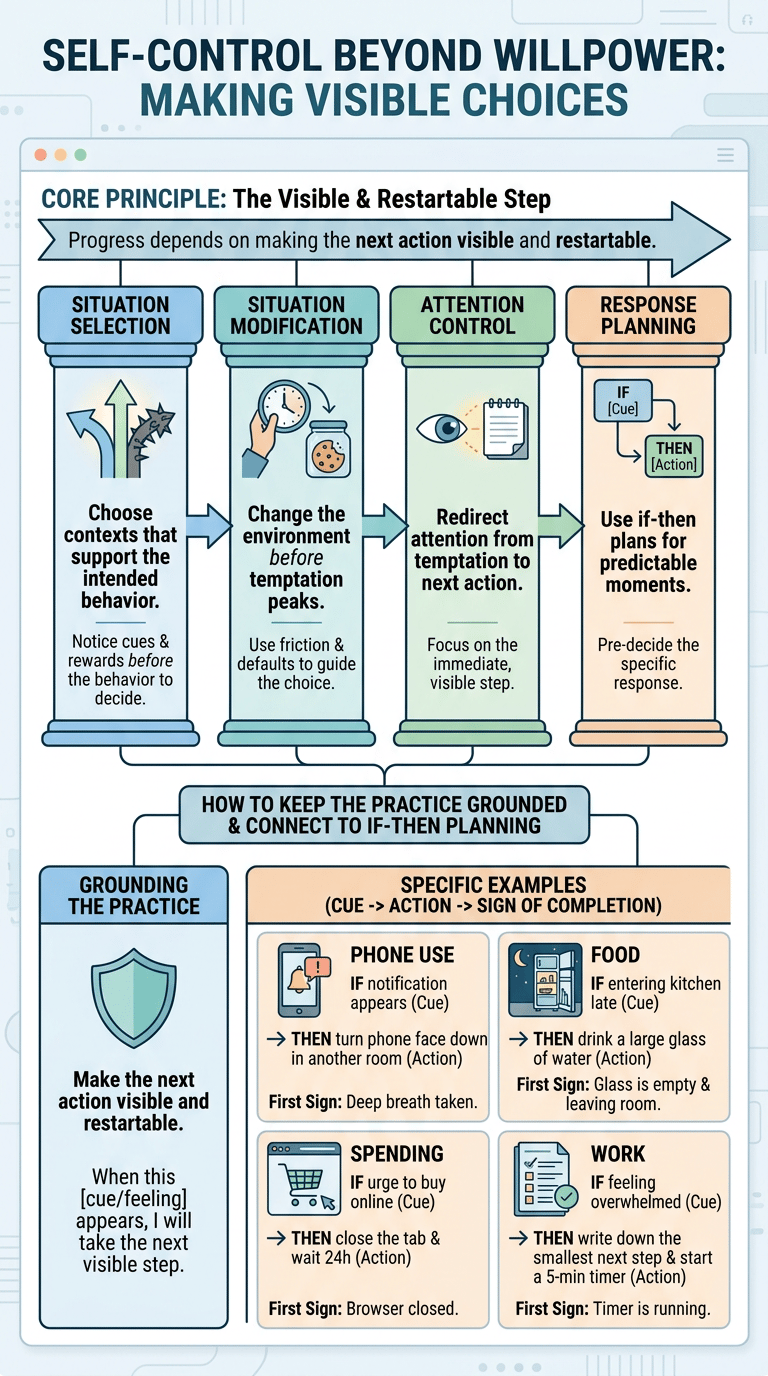
This section turns the idea into a usable choice. Notice the cue, cost, reward, or emotion steering the next step.
Situation selection
This names a small lever inside a larger pattern. Progress depends on making the next action visible and restartable. Look at the moment before the behavior, where cues and feelings decide.
Choose contexts that support the intended behavior
If the pattern is persistent, severe, or disrupting work, school, health, or relationships, outside support can help. Use one sentence: when this appears, I will take the next visible step.
Give examples for phone use, food, spending, and work
A useful example is specific enough to picture. Choose the cue, the action, and the first sign of completion. Use one sentence: when this appears, I will take the next visible step.
Situation modification
This names a small lever inside a larger pattern. Progress depends on making the next action visible and restartable. Look at the moment before the behavior, where cues and feelings decide.
Change the environment before temptation peaks
This names a small lever inside a larger pattern. Progress depends on making the next action visible and restartable. Use one sentence: when this appears, I will take the next visible step.
Friction and defaults
This names a small lever inside a larger pattern. Progress depends on making the next action visible and restartable. Use one sentence: when this appears, I will take the next visible step.
Attention control
This names a small lever inside a larger pattern. Progress depends on making the next action visible and restartable. Look at the moment before the behavior, where cues and feelings decide.
Redirect attention from temptation to next action
This names a small lever inside a larger pattern. Progress depends on making the next action visible and restartable. Use one sentence: when this appears, I will take the next visible step.
How to Keep the Practice Grounded
This names a small lever inside a larger pattern. Progress depends on making the next action visible and restartable. Use one sentence: when this appears, I will take the next visible step.
Response planning
This names a small lever inside a larger pattern. Progress depends on making the next action visible and restartable. Look at the moment before the behavior, where cues and feelings decide.
Use if-then plans for predictable moments
This names a small lever inside a larger pattern. Progress depends on making the next action visible and restartable. Use one sentence: when this appears, I will take the next visible step.
How This Connects to If-Then Planning
This names a small lever inside a larger pattern. Progress depends on making the next action visible and restartable. Use one sentence: when this appears, I will take the next visible step.
How to Rely Less on Willpower
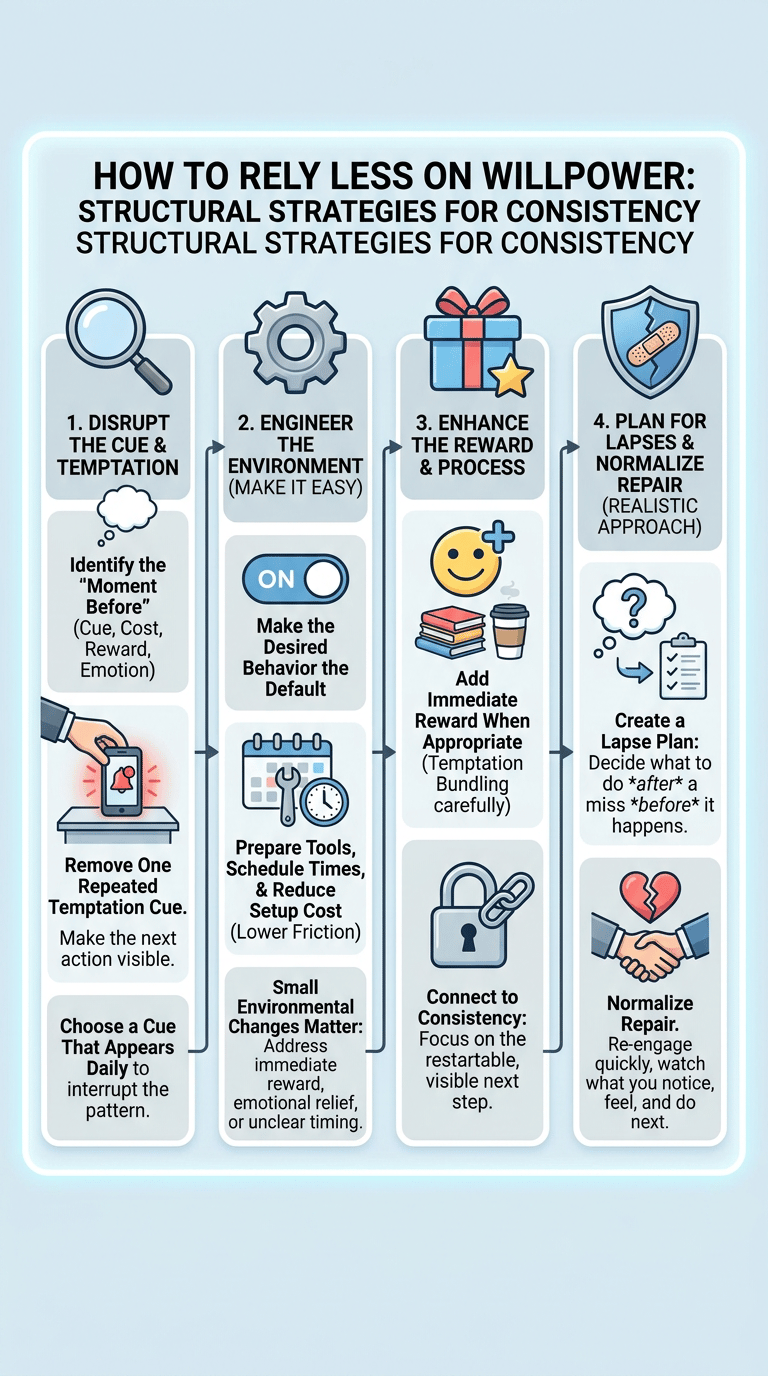
This section turns the idea into a usable choice. Notice the cue, cost, reward, or emotion steering the next step. self-control strategy research.
Remove one repeated temptation cue
This names a small lever inside a larger pattern. Progress depends on making the next action visible and restartable. Look at the moment before the behavior, where cues and feelings decide.
Choose a cue that appears daily
This names a small lever inside a larger pattern. Progress depends on making the next action visible and restartable. Use one sentence: when this appears, I will take the next visible step.
Why small environmental changes matter
The reason is usually layered: immediate reward, emotional relief, unclear timing, or a plan that asks too much. Use one sentence: when this appears, I will take the next visible step.
Make the desired behavior the default
This names a small lever inside a larger pattern. Progress depends on making the next action visible and restartable. Look at the moment before the behavior, where cues and feelings decide.
Prepare tools, schedule times, and reduce setup cost
This names a small lever inside a larger pattern. Progress depends on making the next action visible and restartable. Use one sentence: when this appears, I will take the next visible step.
How This Connects to Consistency
This names a small lever inside a larger pattern. Progress depends on making the next action visible and restartable. Use one sentence: when this appears, I will take the next visible step.
Add immediate reward when appropriate
This names a small lever inside a larger pattern. Progress depends on making the next action visible and restartable. Look at the moment before the behavior, where cues and feelings decide.
Use temptation bundling carefully
This names a small lever inside a larger pattern. Progress depends on making the next action visible and restartable. Use one sentence: when this appears, I will take the next visible step.
How to Keep This Advice Realistic
This names a small lever inside a larger pattern. Progress depends on making the next action visible and restartable. Use one sentence: when this appears, I will take the next visible step.
Create a lapse plan
This names a small lever inside a larger pattern. Progress depends on making the next action visible and restartable. Look at the moment before the behavior, where cues and feelings decide.
Decide what to do after a miss before it happens
A clear definition keeps the topic grounded. Watch what you notice, what you feel, and what you do next. Use one sentence: when this appears, I will take the next visible step.
Normalize repair
This names a small lever inside a larger pattern. Progress depends on making the next action visible and restartable. Use one sentence: when this appears, I will take the next visible step.
Common Myths
This section turns the idea into a usable choice. Notice the cue, cost, reward, or emotion steering the next step.
Myth: People with self-control just feel fewer urges
The common trap is making the plan sound admirable while making it hard to repeat. Pressure cannot replace design. Look at the moment before the behavior, where cues and feelings decide.
That some avoid tempting situations more effectively
This names a small lever inside a larger pattern. Progress depends on making the next action visible and restartable. Use one sentence: when this appears, I will take the next visible step.
Myth: More pressure creates more discipline
The common trap is making the plan sound admirable while making it hard to repeat. Pressure cannot replace design. Look at the moment before the behavior, where cues and feelings decide.
Shame, avoidance, and burnout risks
This names a small lever inside a larger pattern. Progress depends on making the next action visible and restartable. Use one sentence: when this appears, I will take the next visible step.
Myth: If willpower fails once, the goal is over
The reason is usually layered: immediate reward, emotional relief, unclear timing, or a plan that asks too much. Look at the moment before the behavior, where cues and feelings decide.
Recovery as part of self-control
This names a small lever inside a larger pattern. Progress depends on making the next action visible and restartable. Use one sentence: when this appears, I will take the next visible step.
Frequently Asked Questions
This section turns the idea into a usable choice. Notice the cue, cost, reward, or emotion steering the next step. practical psychology guidance.
Can willpower be trained?
It depends on the pattern, the stakes, and the context. Look at repeated behavior, not one imperfect day. Look at the moment before the behavior, where cues and feelings decide.
Answer cautiously and focus on strategies
This names a small lever inside a larger pattern. Progress depends on making the next action visible and restartable. Use one sentence: when this appears, I will take the next visible step.
Why do I have willpower sometimes but not others?
The reason is usually layered: immediate reward, emotional relief, unclear timing, or a plan that asks too much. Look at the moment before the behavior, where cues and feelings decide.
Context, stress, reward, sleep, and environment
This names a small lever inside a larger pattern. Progress depends on making the next action visible and restartable. Use one sentence: when this appears, I will take the next visible step.
Is low willpower a character flaw?
It depends on the pattern, the stakes, and the context. Look at repeated behavior, not one imperfect day. Look at the moment before the behavior, where cues and feelings decide.
Clearly answer no and explain learnable supports
If the pattern is persistent, severe, or disrupting work, school, health, or relationships, outside support can help. Use one sentence: when this appears, I will take the next visible step.
Final Thoughts
This section turns the idea into a usable choice. Notice the cue, cost, reward, or emotion steering the next step.
Self-control works best when it asks less from willpower
This names a small lever inside a larger pattern. Progress depends on making the next action visible and restartable. Look at the moment before the behavior, where cues and feelings decide.
How This Connects to the Larger Pattern
This names a small lever inside a larger pattern. Progress depends on making the next action visible and restartable. Use one sentence: when this appears, I will take the next visible step.

Michael Reed is the Founder and Lead Writer at Psychology Exposed. He writes about human behavior, relationships, emotional patterns, self-awareness, and practical psychology topics using research-informed, easy-to-understand content.
Read More About Michael Reed: https://psychologyexposed.com/michael-reed/