
Implementation Intentions Examples: How If-Then Planning Helps You Follow Through is for someone who has goals but needs exact if-then plans for predictable moments. The goal is not to make you stricter, colder, or constantly productive. It is to explain why follow-through breaks down and how to make the next useful action easier to choose. The central idea is that if-then planning turns vague intention into a visible cue and a next action. It treats achievement as a behavior design problem, not a test of personal worth. For someone who has goals but needs exact if-then plans for predictable moments, the most useful move is to lower the drama of the next step. Make it visible, make it specific, and make the restart plan part of the system from the beginning.
What Are Implementation Intentions?
This section turns the idea into a usable choice. Notice the cue, cost, reward, or emotion steering the next step. if-then planning research.
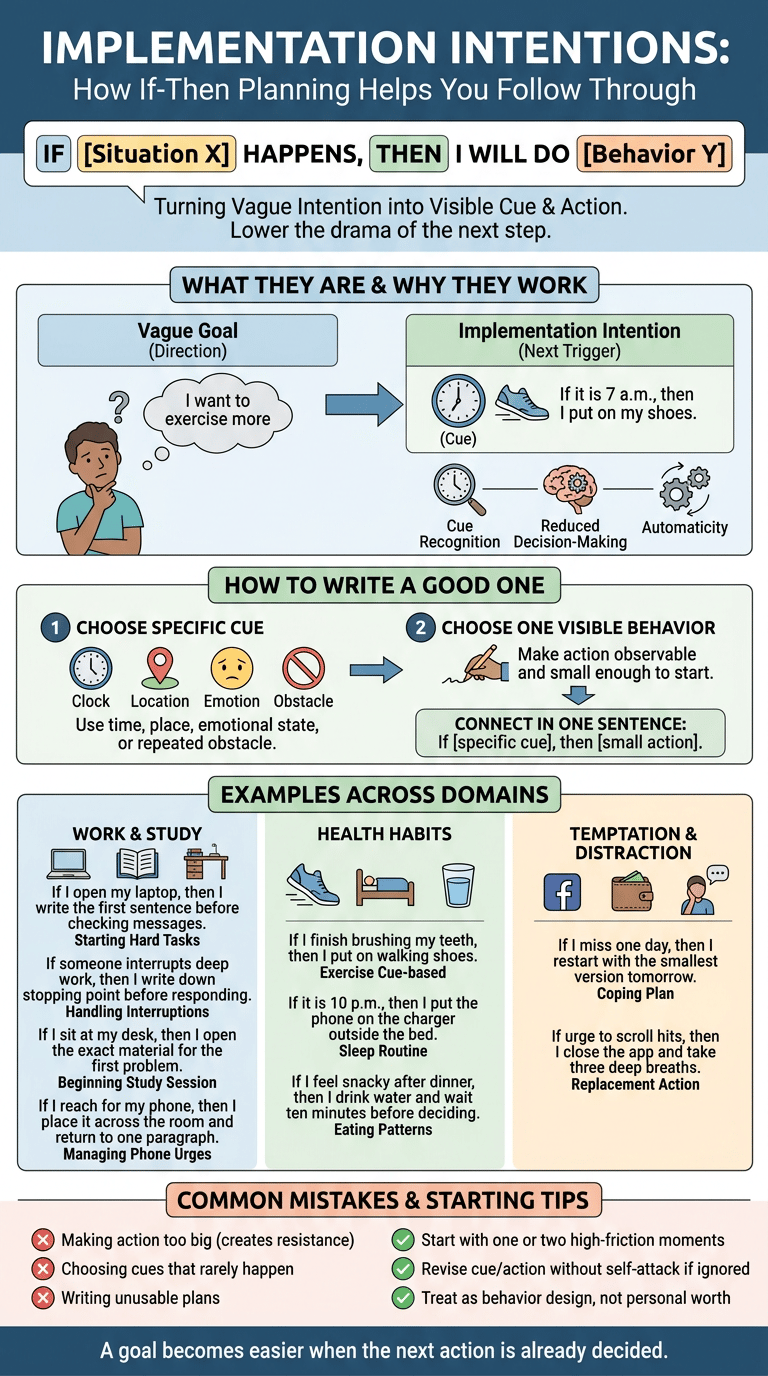
The simple if-then structure
This names a small lever inside a larger pattern. Progress depends on making the next action visible and restartable. Look at the moment before the behavior, where cues and feelings decide.
`If situation X happens, then I will do behavior Y`
This names a small lever inside a larger pattern. Progress depends on making the next action visible and restartable. Use one sentence: when this appears, I will take the next visible step.
Give one simple example before deeper explanation
A useful example is specific enough to picture. Choose the cue, the action, and the first sign of completion. Use one sentence: when this appears, I will take the next visible step.
For a related next step, see this guide to temptation bundling psychology.
For a practical next step, see this guide on how to build consistency.
For broader context, see this guide to self-control psychology.
Why implementation intentions are different from goals
The reason is usually layered: immediate reward, emotional relief, unclear timing, or a plan that asks too much. Look at the moment before the behavior, where cues and feelings decide.
`I want to exercise more` with `If it is 7 a.m., then I put on my shoes`
This names a small lever inside a larger pattern. Progress depends on making the next action visible and restartable. Use one sentence: when this appears, I will take the next visible step.
That goals define direction while implementation intentions define the next trigger
This names a small lever inside a larger pattern. Progress depends on making the next action visible and restartable. Use one sentence: when this appears, I will take the next visible step.
Why they work psychologically
The reason is usually layered: immediate reward, emotional relief, unclear timing, or a plan that asks too much. Look at the moment before the behavior, where cues and feelings decide.
Cue recognition, reduced decision-making, and automaticity
This names a small lever inside a larger pattern. Progress depends on making the next action visible and restartable. Use one sentence: when this appears, I will take the next visible step.
How to Keep the Practice Grounded
This names a small lever inside a larger pattern. Progress depends on making the next action visible and restartable. Use one sentence: when this appears, I will take the next visible step.
How to Write a Good Implementation Intention
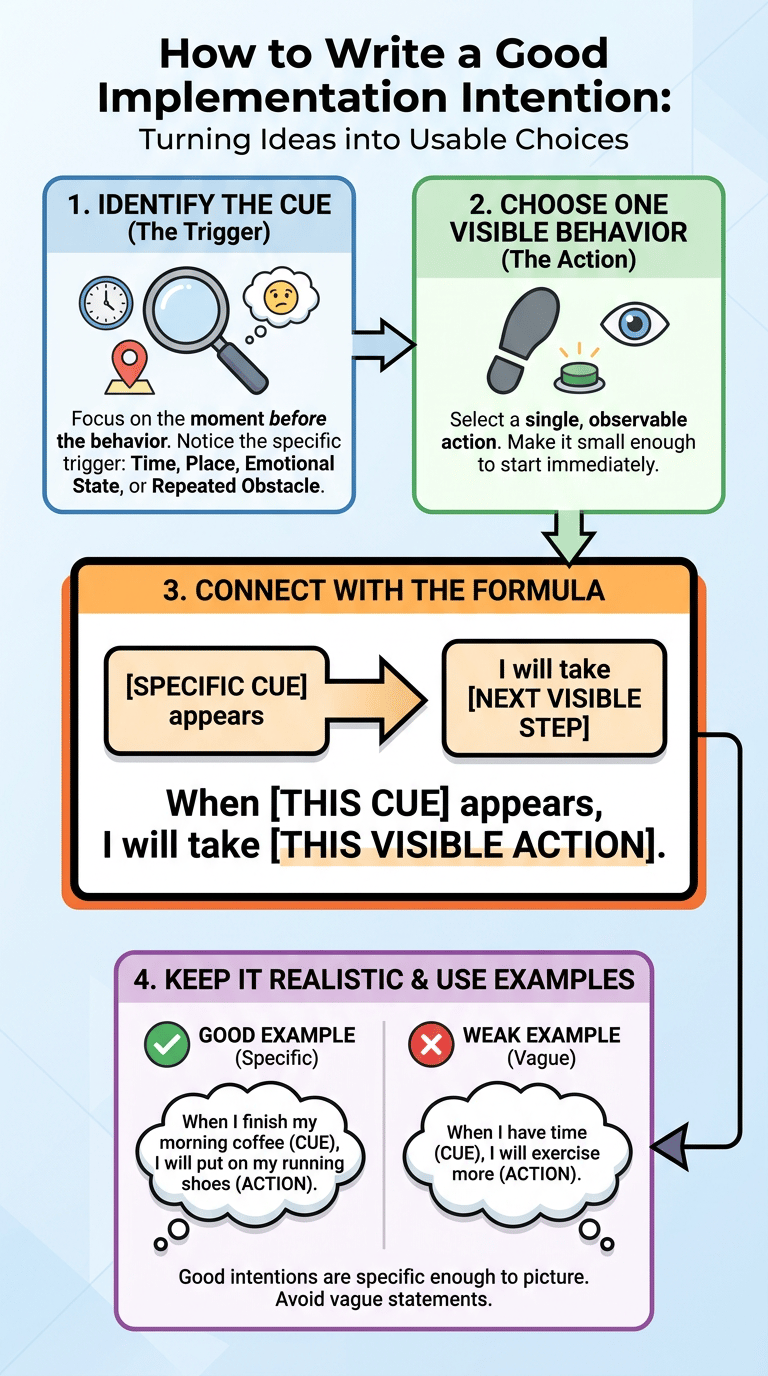
This section turns the idea into a usable choice. Notice the cue, cost, reward, or emotion steering the next step.
Choose a specific cue
This names a small lever inside a larger pattern. Progress depends on making the next action visible and restartable. Look at the moment before the behavior, where cues and feelings decide.
Use time, place, emotional state, or repeated obstacle
This names a small lever inside a larger pattern. Progress depends on making the next action visible and restartable. Use one sentence: when this appears, I will take the next visible step.
How to Keep This Advice Realistic
This names a small lever inside a larger pattern. Progress depends on making the next action visible and restartable. Use one sentence: when this appears, I will take the next visible step.
Choose one visible behavior
This names a small lever inside a larger pattern. Progress depends on making the next action visible and restartable. Look at the moment before the behavior, where cues and feelings decide.
Make the action observable and small enough to start
This names a small lever inside a larger pattern. Progress depends on making the next action visible and restartable. Use one sentence: when this appears, I will take the next visible step.
How to Keep This Advice Realistic
This names a small lever inside a larger pattern. Progress depends on making the next action visible and restartable. Use one sentence: when this appears, I will take the next visible step.
Connect the cue and action in one sentence
This names a small lever inside a larger pattern. Progress depends on making the next action visible and restartable. Look at the moment before the behavior, where cues and feelings decide.
Show the formula readers can copy
This names a small lever inside a larger pattern. Progress depends on making the next action visible and restartable. Use one sentence: when this appears, I will take the next visible step.
Good and weak examples
A useful example is specific enough to picture. Choose the cue, the action, and the first sign of completion. Use one sentence: when this appears, I will take the next visible step.
Implementation Intentions Examples for Work
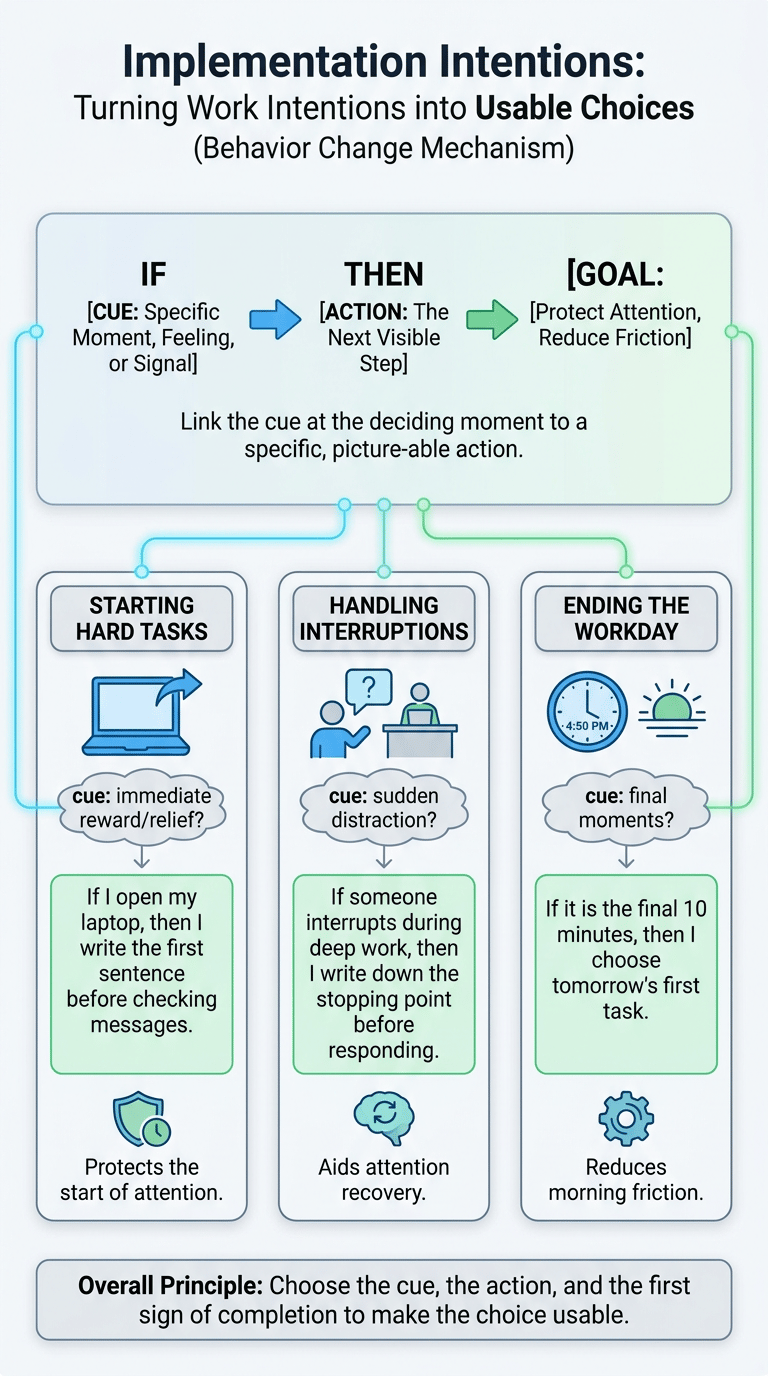
This section turns the idea into a usable choice. Notice the cue, cost, reward, or emotion steering the next step. behavior change research.
Starting hard tasks
The reason is usually layered: immediate reward, emotional relief, unclear timing, or a plan that asks too much. Look at the moment before the behavior, where cues and feelings decide.
If I open my laptop, then I write the first sentence before checking messages
A useful example is specific enough to picture. Choose the cue, the action, and the first sign of completion. Use one sentence: when this appears, I will take the next visible step.
Why this protects the start of attention
The reason is usually layered: immediate reward, emotional relief, unclear timing, or a plan that asks too much. Use one sentence: when this appears, I will take the next visible step.
Handling interruptions
A useful example is specific enough to picture. Choose the cue, the action, and the first sign of completion. Look at the moment before the behavior, where cues and feelings decide.
If someone interrupts during deep work, then I write down the stopping point before responding
A useful example is specific enough to picture. Choose the cue, the action, and the first sign of completion. Use one sentence: when this appears, I will take the next visible step.
Attention recovery
A useful example is specific enough to picture. Choose the cue, the action, and the first sign of completion. Use one sentence: when this appears, I will take the next visible step.
Ending the workday
A useful example is specific enough to picture. Choose the cue, the action, and the first sign of completion. Look at the moment before the behavior, where cues and feelings decide.
If it is the final 10 minutes, then I choose tomorrow’s first task
A useful example is specific enough to picture. Choose the cue, the action, and the first sign of completion. Use one sentence: when this appears, I will take the next visible step.
Reducing morning friction
A useful example is specific enough to picture. Choose the cue, the action, and the first sign of completion. Use one sentence: when this appears, I will take the next visible step.
Implementation Intentions Examples for Study
This section turns the idea into a usable choice. Notice the cue, cost, reward, or emotion steering the next step.
Beginning a study session
A useful example is specific enough to picture. Choose the cue, the action, and the first sign of completion. Look at the moment before the behavior, where cues and feelings decide.
If I sit at my desk, then I open the exact material for the first problem
A useful example is specific enough to picture. Choose the cue, the action, and the first sign of completion. Use one sentence: when this appears, I will take the next visible step.
Cue-based starting
A useful example is specific enough to picture. Choose the cue, the action, and the first sign of completion. Use one sentence: when this appears, I will take the next visible step.
Managing phone urges
A useful example is specific enough to picture. Choose the cue, the action, and the first sign of completion. Look at the moment before the behavior, where cues and feelings decide.
If I reach for my phone, then I place it across the room and return to one paragraph
A useful example is specific enough to picture. Choose the cue, the action, and the first sign of completion. Use one sentence: when this appears, I will take the next visible step.
How to Keep This Advice Realistic
A useful example is specific enough to picture. Choose the cue, the action, and the first sign of completion. Use one sentence: when this appears, I will take the next visible step.
Recovering after confusion
A useful example is specific enough to picture. Choose the cue, the action, and the first sign of completion. Look at the moment before the behavior, where cues and feelings decide.
If I feel stuck for five minutes, then I write one question instead of quitting
A useful example is specific enough to picture. Choose the cue, the action, and the first sign of completion. Use one sentence: when this appears, I will take the next visible step.
Friction reduction
A useful example is specific enough to picture. Choose the cue, the action, and the first sign of completion. Use one sentence: when this appears, I will take the next visible step.
Implementation Intentions Examples for Health Habits
This section turns the idea into a usable choice. Notice the cue, cost, reward, or emotion steering the next step. self-control strategy research.
Exercise
A useful example is specific enough to picture. Choose the cue, the action, and the first sign of completion. Look at the moment before the behavior, where cues and feelings decide.
If I finish brushing my teeth, then I put on walking shoes
A useful example is specific enough to picture. Choose the cue, the action, and the first sign of completion. Use one sentence: when this appears, I will take the next visible step.
Using an existing routine as the cue
A useful example is specific enough to picture. Choose the cue, the action, and the first sign of completion. Use one sentence: when this appears, I will take the next visible step.
Sleep
A useful example is specific enough to picture. Choose the cue, the action, and the first sign of completion. Look at the moment before the behavior, where cues and feelings decide.
If it is 10 p.m., then I put the phone on the charger outside the bed
A useful example is specific enough to picture. Choose the cue, the action, and the first sign of completion. Use one sentence: when this appears, I will take the next visible step.
How to Keep This Advice Realistic
A useful example is specific enough to picture. Choose the cue, the action, and the first sign of completion. Use one sentence: when this appears, I will take the next visible step.
Eating patterns
A useful example is specific enough to picture. Choose the cue, the action, and the first sign of completion. Look at the moment before the behavior, where cues and feelings decide.
If I feel snacky after dinner, then I drink water and wait ten minutes before deciding
A useful example is specific enough to picture. Choose the cue, the action, and the first sign of completion. Use one sentence: when this appears, I will take the next visible step.
How to Keep This Advice Realistic
A useful example is specific enough to picture. Choose the cue, the action, and the first sign of completion. Use one sentence: when this appears, I will take the next visible step.
Implementation Intentions for Temptation and Distraction
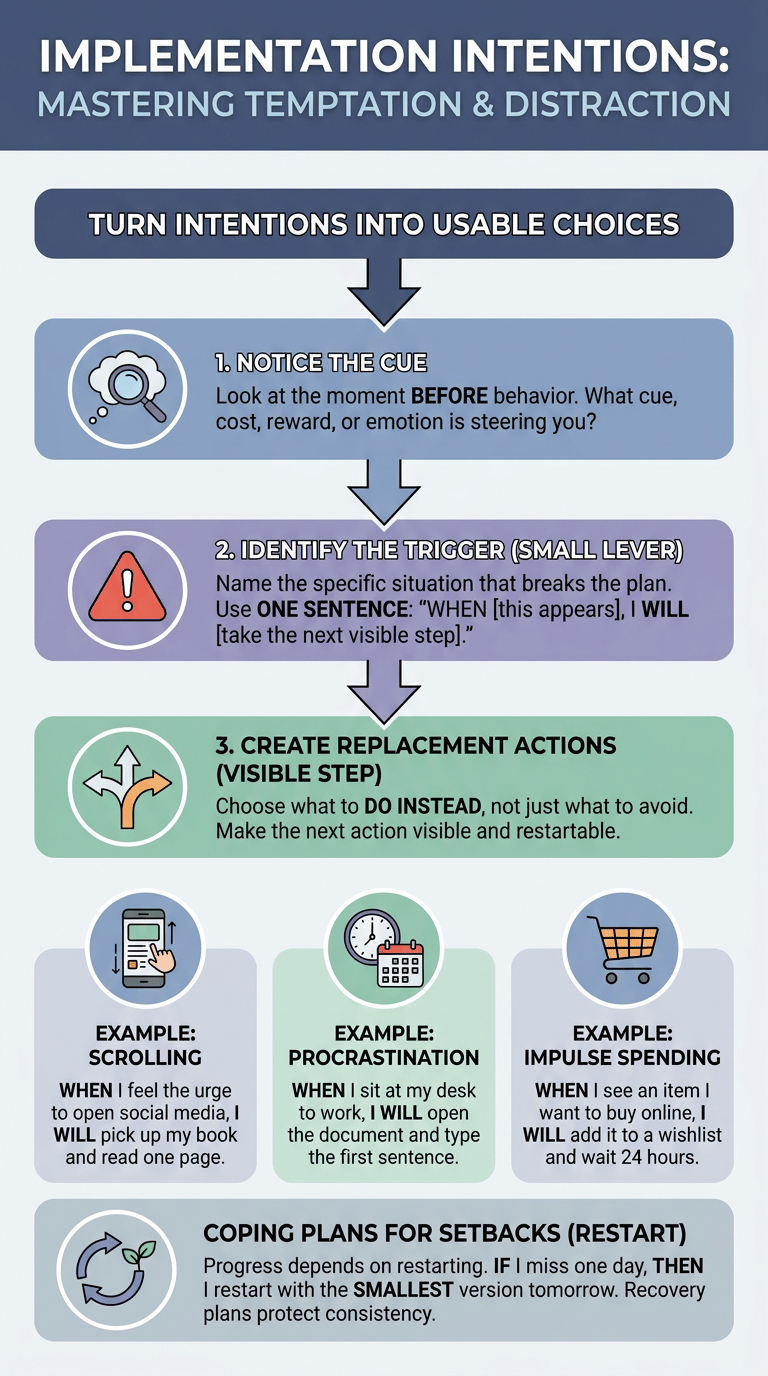
This section turns the idea into a usable choice. Notice the cue, cost, reward, or emotion steering the next step.
Planning for predictable temptation
This names a small lever inside a larger pattern. Progress depends on making the next action visible and restartable. Look at the moment before the behavior, where cues and feelings decide.
Identify the situation that usually breaks the plan
This names a small lever inside a larger pattern. Progress depends on making the next action visible and restartable. Use one sentence: when this appears, I will take the next visible step.
How This Connects to Temptation
This names a small lever inside a larger pattern. Progress depends on making the next action visible and restartable. Use one sentence: when this appears, I will take the next visible step.
Creating replacement actions
This names a small lever inside a larger pattern. Progress depends on making the next action visible and restartable. Look at the moment before the behavior, where cues and feelings decide.
Choose what to do instead, not only what to avoid
A clear definition keeps the topic grounded. Watch what you notice, what you feel, and what you do next. Use one sentence: when this appears, I will take the next visible step.
Examples for scrolling, procrastination, and impulse spending
A useful example is specific enough to picture. Choose the cue, the action, and the first sign of completion. Use one sentence: when this appears, I will take the next visible step.
Using coping plans after setbacks
This names a small lever inside a larger pattern. Progress depends on making the next action visible and restartable. Look at the moment before the behavior, where cues and feelings decide.
If I miss one day, then I restart with the smallest version tomorrow
This names a small lever inside a larger pattern. Progress depends on making the next action visible and restartable. Use one sentence: when this appears, I will take the next visible step.
Why recovery plans protect consistency
The reason is usually layered: immediate reward, emotional relief, unclear timing, or a plan that asks too much. Use one sentence: when this appears, I will take the next visible step.
Common Mistakes
This section turns the idea into a usable choice. Notice the cue, cost, reward, or emotion steering the next step. practical psychology guidance.
Making the action too big
This names a small lever inside a larger pattern. Progress depends on making the next action visible and restartable. Look at the moment before the behavior, where cues and feelings decide.
Show how oversized plans create resistance
This names a small lever inside a larger pattern. Progress depends on making the next action visible and restartable. Use one sentence: when this appears, I will take the next visible step.
Choosing cues that rarely happen
This names a small lever inside a larger pattern. Progress depends on making the next action visible and restartable. Look at the moment before the behavior, where cues and feelings decide.
Why reliable cues matter
The reason is usually layered: immediate reward, emotional relief, unclear timing, or a plan that asks too much. Use one sentence: when this appears, I will take the next visible step.
Writing plans that sound impressive but are not usable
This names a small lever inside a larger pattern. Progress depends on making the next action visible and restartable. Look at the moment before the behavior, where cues and feelings decide.
Convert abstract intentions into behavioral scripts
This names a small lever inside a larger pattern. Progress depends on making the next action visible and restartable. Use one sentence: when this appears, I will take the next visible step.
Frequently Asked Questions
This section turns the idea into a usable choice. Notice the cue, cost, reward, or emotion steering the next step.
Do implementation intentions work for every goal?
It depends on the pattern, the stakes, and the context. Look at repeated behavior, not one imperfect day. Look at the moment before the behavior, where cues and feelings decide.
Best-fit situations and limits
This names a small lever inside a larger pattern. Progress depends on making the next action visible and restartable. Use one sentence: when this appears, I will take the next visible step.
How many if-then plans should I use?
It depends on the pattern, the stakes, and the context. Look at repeated behavior, not one imperfect day. Look at the moment before the behavior, where cues and feelings decide.
Recommend starting with one or two high-friction moments
This names a small lever inside a larger pattern. Progress depends on making the next action visible and restartable. Use one sentence: when this appears, I will take the next visible step.
What if I ignore the plan?
A clear definition keeps the topic grounded. Watch what you notice, what you feel, and what you do next. Look at the moment before the behavior, where cues and feelings decide.
Revising cue, action, or environment without self-attack
This names a small lever inside a larger pattern. Progress depends on making the next action visible and restartable. Use one sentence: when this appears, I will take the next visible step.
Final Thoughts
This section turns the idea into a usable choice. Notice the cue, cost, reward, or emotion steering the next step.
A goal becomes easier when the next action is already decided
This names a small lever inside a larger pattern. Progress depends on making the next action visible and restartable. Look at the moment before the behavior, where cues and feelings decide.
How This Connects to the Larger Pattern
This names a small lever inside a larger pattern. Progress depends on making the next action visible and restartable. Use one sentence: when this appears, I will take the next visible step.

Michael Reed is the Founder and Lead Writer at Psychology Exposed. He writes about human behavior, relationships, emotional patterns, self-awareness, and practical psychology topics using research-informed, easy-to-understand content.
Read More About Michael Reed: https://psychologyexposed.com/michael-reed/