
Decision Paralysis Psychology: Why You Freeze When Choosing is not just a wording problem. For someone who freezes when choosing and keeps searching for the option with no downside, the difficult part is that the mind and body can feel urgent before the situation is fully understood. The goal is to name the pattern accurately, because the right label changes the next move.

This guide keeps the focus narrow. It explains how decision paralysis works, what problem it is trying to solve, and how to respond without turning the article into a generic list of signs or tips. The practical thread is simple: understand the loop, reduce the fuel, and choose one next action that fits the real problem.
What Is Decision Paralysis?
This section focuses on what is decision paralysis? because it is where many readers lose the thread. In practice, decision paralysis happens when uncertainty, possible loss, regret anticipation, and too many criteria make choosing feel more dangerous than staying stuck. When you can see the mechanism clearly, the experience becomes less mysterious and the next step becomes less dramatic. For a broader clinical or psychology context, Stress is a useful reference point for this part of the pattern.
A simple definition
A simple definition matters because it narrows the problem from a vague emotional cloud into something you can work with. For someone who freezes when choosing and keeps searching for the option with no downside, this distinction prevents the mind from treating every discomfort as the same emergency.
When thinking about a choice blocks the choice itself
When thinking about a choice blocks the choice itself is the practical detail that makes the concept usable. Notice what is happening, name it in plain language, and look for the smallest response that changes the loop. In this topic, the common body pattern is mental fog, pressure in the chest, endless tabs or notes, reassurance seeking, and a sense that the wrong choice will define everything. The helpful move is to pause long enough to ask what the situation is actually asking for, then apply this principle: name the real decision, separate reversible from irreversible choices, limit criteria, set an information stop rule, and choose the next testable step.
How decision paralysis differs from careful reflection
How decision paralysis differs from careful reflection is the practical detail that makes the concept usable. Notice what is happening, name it in plain language, and look for the smallest response that changes the loop. In this topic, the common body pattern is mental fog, pressure in the chest, endless tabs or notes, reassurance seeking, and a sense that the wrong choice will define everything. The helpful move is to pause long enough to ask what the situation is actually asking for, then apply this principle: name the real decision, separate reversible from irreversible choices, limit criteria, set an information stop rule, and choose the next testable step.
What it can look like
What it can look like matters because it narrows the problem from a vague emotional cloud into something you can work with. For someone who freezes when choosing and keeps searching for the option with no downside, this distinction prevents the mind from treating every discomfort as the same emergency.
Comparing endlessly, asking everyone, avoiding the choice, or restarting the research
Comparing endlessly, asking everyone, avoiding the choice, or restarting the research is the practical detail that makes the concept usable. Notice what is happening, name it in plain language, and look for the smallest response that changes the loop. In this topic, the common body pattern is mental fog, pressure in the chest, endless tabs or notes, reassurance seeking, and a sense that the wrong choice will define everything. The helpful move is to pause long enough to ask what the situation is actually asking for, then apply this principle: name the real decision, separate reversible from irreversible choices, limit criteria, set an information stop rule, and choose the next testable step. The mistake is treating more pressure as the solution. Pressure may create movement, but it often increases fear, shame, or checking.
Why Decisions Can Feel So Threatening
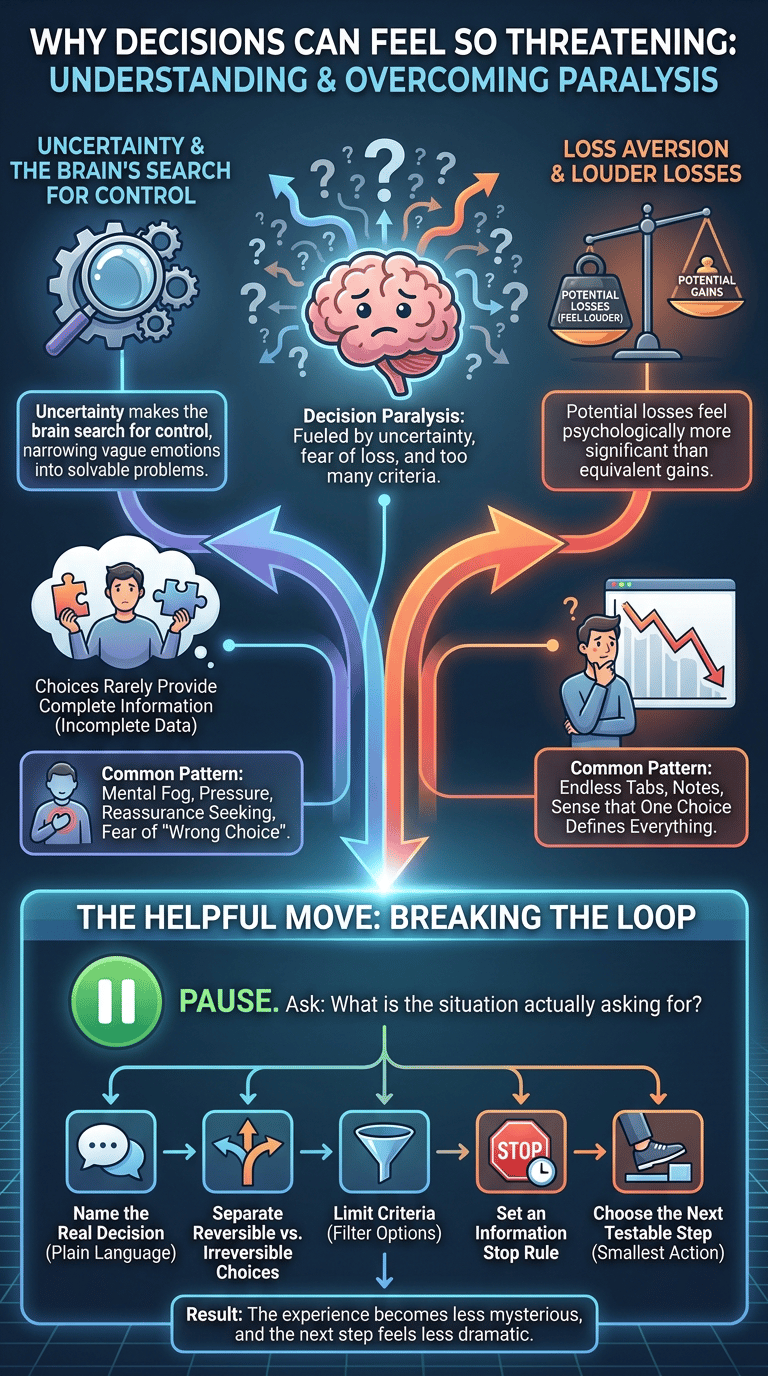
This section focuses on why decisions can feel so threatening because it is where many readers lose the thread. In practice, decision paralysis happens when uncertainty, possible loss, regret anticipation, and too many criteria make choosing feel more dangerous than staying stuck. When you can see the mechanism clearly, the experience becomes less mysterious and the next step becomes less dramatic. For a broader clinical or psychology context, Anxiety Disorders is a useful reference point for this part of the pattern.
Uncertainty makes the brain search for control
Uncertainty makes the brain search for control matters because it narrows the problem from a vague emotional cloud into something you can work with. For someone who freezes when choosing and keeps searching for the option with no downside, this distinction prevents the mind from treating every discomfort as the same emergency.
Why choices rarely provide complete information
Why choices rarely provide complete information is the practical detail that makes the concept usable. Notice what is happening, name it in plain language, and look for the smallest response that changes the loop. In this topic, the common body pattern is mental fog, pressure in the chest, endless tabs or notes, reassurance seeking, and a sense that the wrong choice will define everything. The helpful move is to pause long enough to ask what the situation is actually asking for, then apply this principle: name the real decision, separate reversible from irreversible choices, limit criteria, set an information stop rule, and choose the next testable step.
How the need for certainty delays action
How the need for certainty delays action is the practical detail that makes the concept usable. Notice what is happening, name it in plain language, and look for the smallest response that changes the loop. In this topic, the common body pattern is mental fog, pressure in the chest, endless tabs or notes, reassurance seeking, and a sense that the wrong choice will define everything. The helpful move is to pause long enough to ask what the situation is actually asking for, then apply this principle: name the real decision, separate reversible from irreversible choices, limit criteria, set an information stop rule, and choose the next testable step.
Loss aversion
Loss aversion matters because it narrows the problem from a vague emotional cloud into something you can work with. For someone who freezes when choosing and keeps searching for the option with no downside, this distinction prevents the mind from treating every discomfort as the same emergency.
Potential losses feel louder than potential gains
Potential losses feel louder than potential gains is the practical detail that makes the concept usable. Notice what is happening, name it in plain language, and look for the smallest response that changes the loop. In this topic, the common body pattern is mental fog, pressure in the chest, endless tabs or notes, reassurance seeking, and a sense that the wrong choice will define everything. The helpful move is to pause long enough to ask what the situation is actually asking for, then apply this principle: name the real decision, separate reversible from irreversible choices, limit criteria, set an information stop rule, and choose the next testable step.
Why every option can feel like giving something up
Why every option can feel like giving something up is the practical detail that makes the concept usable. Notice what is happening, name it in plain language, and look for the smallest response that changes the loop. In this topic, the common body pattern is mental fog, pressure in the chest, endless tabs or notes, reassurance seeking, and a sense that the wrong choice will define everything. The helpful move is to pause long enough to ask what the situation is actually asking for, then apply this principle: name the real decision, separate reversible from irreversible choices, limit criteria, set an information stop rule, and choose the next testable step.
Regret anticipation
Regret anticipation matters because it narrows the problem from a vague emotional cloud into something you can work with. For someone who freezes when choosing and keeps searching for the option with no downside, this distinction prevents the mind from treating every discomfort as the same emergency.
Imagining future blame before the decision is made
Imagining future blame before the decision is made is the practical detail that makes the concept usable. Notice what is happening, name it in plain language, and look for the smallest response that changes the loop. In this topic, the common body pattern is mental fog, pressure in the chest, endless tabs or notes, reassurance seeking, and a sense that the wrong choice will define everything. The helpful move is to pause long enough to ask what the situation is actually asking for, then apply this principle: name the real decision, separate reversible from irreversible choices, limit criteria, set an information stop rule, and choose the next testable step.
How fear of future self-criticism creates present freeze
How fear of future self-criticism creates present freeze is the practical detail that makes the concept usable. Notice what is happening, name it in plain language, and look for the smallest response that changes the loop. In this topic, the common body pattern is mental fog, pressure in the chest, endless tabs or notes, reassurance seeking, and a sense that the wrong choice will define everything. The helpful move is to pause long enough to ask what the situation is actually asking for, then apply this principle: name the real decision, separate reversible from irreversible choices, limit criteria, set an information stop rule, and choose the next testable step.
The Overthinking Loop Behind Decision Paralysis
This section focuses on the overthinking loop behind decision paralysis because it is where many readers lose the thread. In practice, decision paralysis happens when uncertainty, possible loss, regret anticipation, and too many criteria make choosing feel more dangerous than staying stuck. When you can see the mechanism clearly, the experience becomes less mysterious and the next step becomes less dramatic. For a broader clinical or psychology context, Association for Behavioral and Cognitive Therapies is a useful reference point for this part of the pattern.
More research stops helping after a point
More research stops helping after a point matters because it narrows the problem from a vague emotional cloud into something you can work with. For someone who freezes when choosing and keeps searching for the option with no downside, this distinction prevents the mind from treating every discomfort as the same emergency.
The difference between useful information and reassurance seeking
The difference between useful information and reassurance seeking is the practical detail that makes the concept usable. Notice what is happening, name it in plain language, and look for the smallest response that changes the loop. In this topic, the common body pattern is mental fog, pressure in the chest, endless tabs or notes, reassurance seeking, and a sense that the wrong choice will define everything. The helpful move is to pause long enough to ask what the situation is actually asking for, then apply this principle: name the real decision, separate reversible from irreversible choices, limit criteria, set an information stop rule, and choose the next testable step.
Too many criteria overload the choice
Too many criteria overload the choice matters because it narrows the problem from a vague emotional cloud into something you can work with. For someone who freezes when choosing and keeps searching for the option with no downside, this distinction prevents the mind from treating every discomfort as the same emergency.
Why every new factor makes the decision feel less clear
Why every new factor makes the decision feel less clear is the practical detail that makes the concept usable. Notice what is happening, name it in plain language, and look for the smallest response that changes the loop. In this topic, the common body pattern is mental fog, pressure in the chest, endless tabs or notes, reassurance seeking, and a sense that the wrong choice will define everything. The helpful move is to pause long enough to ask what the situation is actually asking for, then apply this principle: name the real decision, separate reversible from irreversible choices, limit criteria, set an information stop rule, and choose the next testable step.
Perfectionism raises the threshold for action
Perfectionism raises the threshold for action matters because it narrows the problem from a vague emotional cloud into something you can work with. For someone who freezes when choosing and keeps searching for the option with no downside, this distinction prevents the mind from treating every discomfort as the same emergency.
Waiting for the option with no downside
Waiting for the option with no downside is the practical detail that makes the concept usable. Notice what is happening, name it in plain language, and look for the smallest response that changes the loop. In this topic, the common body pattern is mental fog, pressure in the chest, endless tabs or notes, reassurance seeking, and a sense that the wrong choice will define everything. The helpful move is to pause long enough to ask what the situation is actually asking for, then apply this principle: name the real decision, separate reversible from irreversible choices, limit criteria, set an information stop rule, and choose the next testable step.
Decision Paralysis vs Procrastination vs Intuition
This section focuses on decision paralysis vs procrastination vs intuition because it is where many readers lose the thread. In practice, decision paralysis happens when uncertainty, possible loss, regret anticipation, and too many criteria make choosing feel more dangerous than staying stuck. When you can see the mechanism clearly, the experience becomes less mysterious and the next step becomes less dramatic. For a broader clinical or psychology context, Cleveland Clinic Anxiety Disorders is a useful reference point for this part of the pattern.
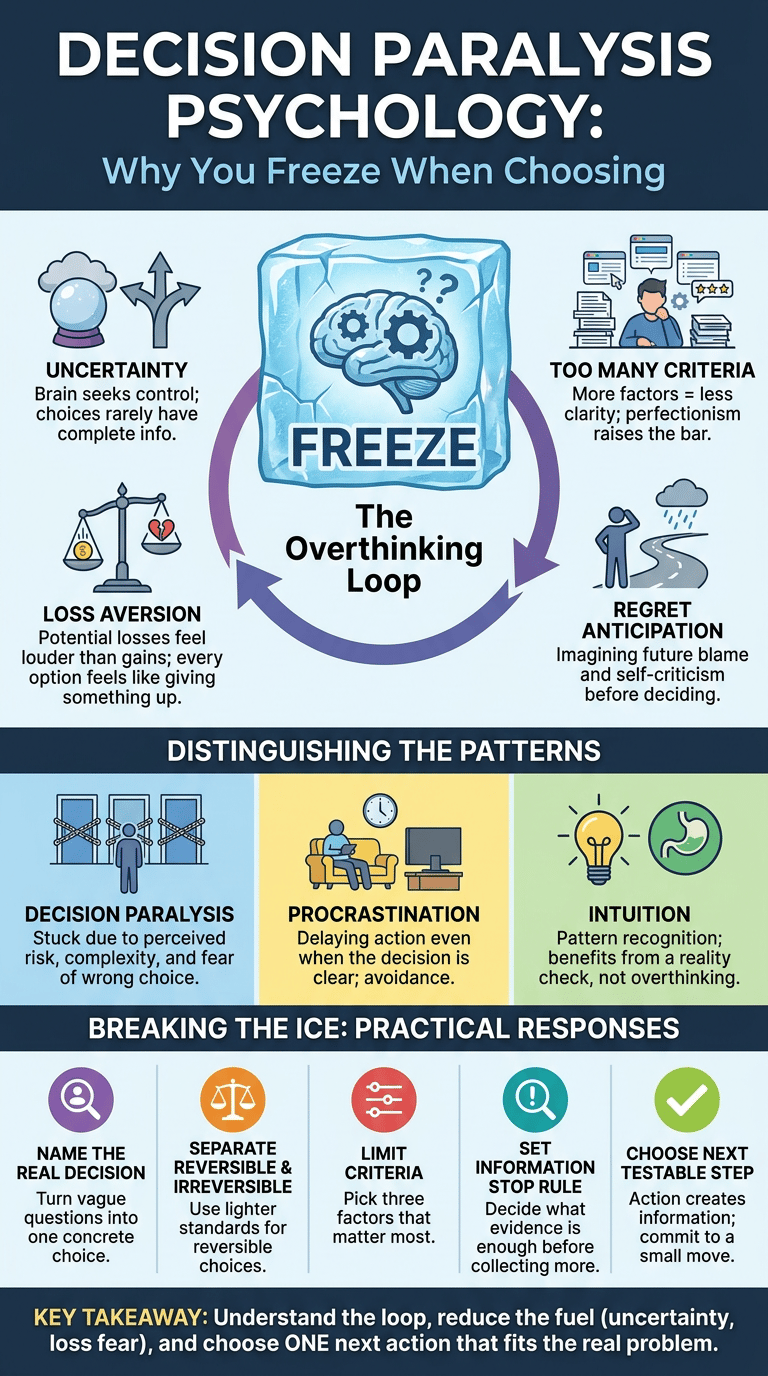
Decision paralysis
Decision paralysis matters because it narrows the problem from a vague emotional cloud into something you can work with. For someone who freezes when choosing and keeps searching for the option with no downside, this distinction prevents the mind from treating every discomfort as the same emergency.
Stuck because the choice feels too risky or complex
Stuck because the choice feels too risky or complex is the practical detail that makes the concept usable. Notice what is happening, name it in plain language, and look for the smallest response that changes the loop. In this topic, the common body pattern is mental fog, pressure in the chest, endless tabs or notes, reassurance seeking, and a sense that the wrong choice will define everything. The helpful move is to pause long enough to ask what the situation is actually asking for, then apply this principle: name the real decision, separate reversible from irreversible choices, limit criteria, set an information stop rule, and choose the next testable step.
Procrastination
Procrastination matters because it narrows the problem from a vague emotional cloud into something you can work with. For someone who freezes when choosing and keeps searching for the option with no downside, this distinction prevents the mind from treating every discomfort as the same emergency.
Delaying action even when the decision is already clear
Delaying action even when the decision is already clear is the practical detail that makes the concept usable. Notice what is happening, name it in plain language, and look for the smallest response that changes the loop. In this topic, the common body pattern is mental fog, pressure in the chest, endless tabs or notes, reassurance seeking, and a sense that the wrong choice will define everything. The helpful move is to pause long enough to ask what the situation is actually asking for, then apply this principle: name the real decision, separate reversible from irreversible choices, limit criteria, set an information stop rule, and choose the next testable step.
Intuition
Intuition matters because it narrows the problem from a vague emotional cloud into something you can work with. For someone who freezes when choosing and keeps searching for the option with no downside, this distinction prevents the mind from treating every discomfort as the same emergency.
Pattern recognition that still benefits from a reality check
Pattern recognition that still benefits from a reality check is the practical detail that makes the concept usable. Notice what is happening, name it in plain language, and look for the smallest response that changes the loop. In this topic, the common body pattern is mental fog, pressure in the chest, endless tabs or notes, reassurance seeking, and a sense that the wrong choice will define everything. The helpful move is to pause long enough to ask what the situation is actually asking for, then apply this principle: name the real decision, separate reversible from irreversible choices, limit criteria, set an information stop rule, and choose the next testable step.
How to Break Decision Paralysis
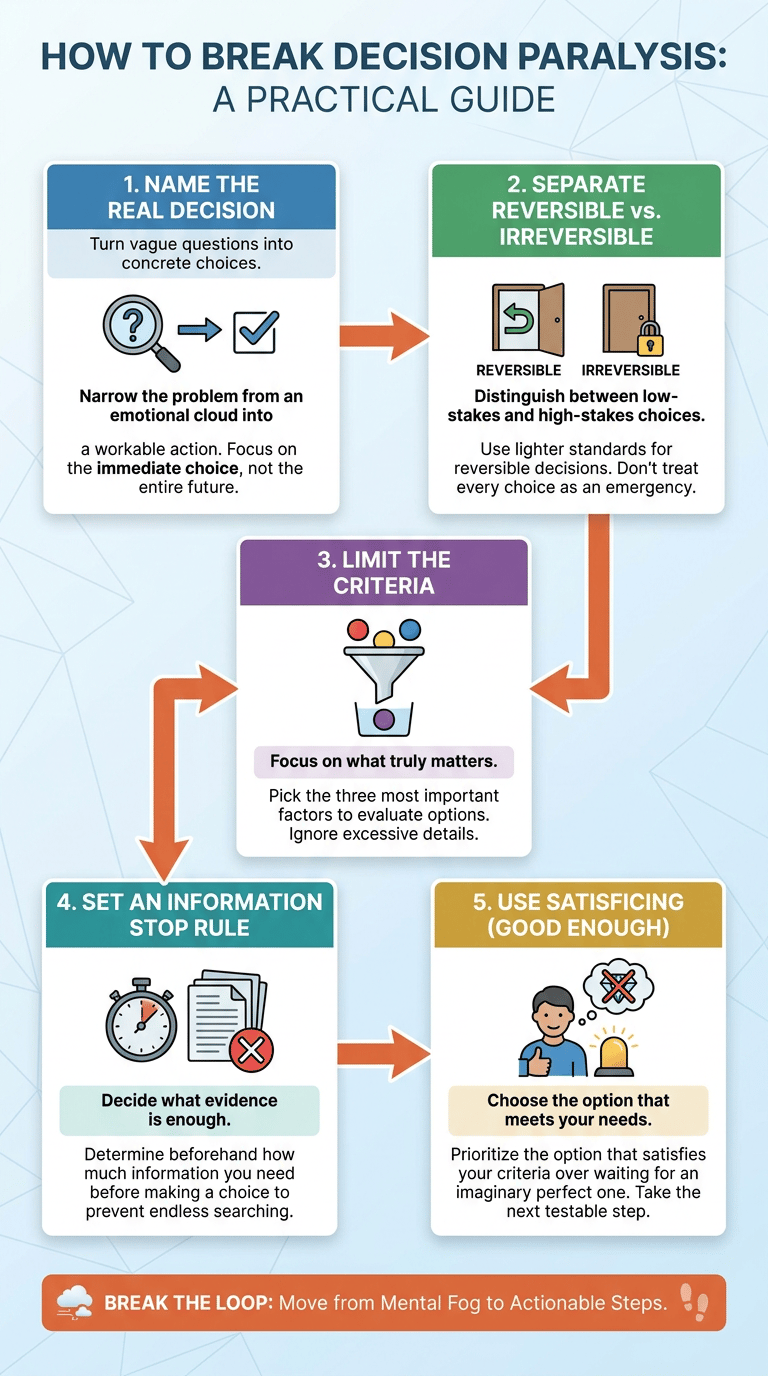
This section focuses on how to break decision paralysis because it is where many readers lose the thread. In practice, decision paralysis happens when uncertainty, possible loss, regret anticipation, and too many criteria make choosing feel more dangerous than staying stuck. When you can see the mechanism clearly, the experience becomes less mysterious and the next step becomes less dramatic.
Name the real decision
Name the real decision matters because it narrows the problem from a vague emotional cloud into something you can work with. For someone who freezes when choosing and keeps searching for the option with no downside, this distinction prevents the mind from treating every discomfort as the same emergency.
Turn a vague life question into one concrete choice
Turn a vague life question into one concrete choice is the practical detail that makes the concept usable. Notice what is happening, name it in plain language, and look for the smallest response that changes the loop. In this topic, the common body pattern is mental fog, pressure in the chest, endless tabs or notes, reassurance seeking, and a sense that the wrong choice will define everything. The helpful move is to pause long enough to ask what the situation is actually asking for, then apply this principle: name the real decision, separate reversible from irreversible choices, limit criteria, set an information stop rule, and choose the next testable step.
Separate reversible and irreversible decisions
Separate reversible and irreversible decisions matters because it narrows the problem from a vague emotional cloud into something you can work with. For someone who freezes when choosing and keeps searching for the option with no downside, this distinction prevents the mind from treating every discomfort as the same emergency.
Use lighter standards for reversible choices
Use lighter standards for reversible choices is the practical detail that makes the concept usable. Notice what is happening, name it in plain language, and look for the smallest response that changes the loop. In this topic, the common body pattern is mental fog, pressure in the chest, endless tabs or notes, reassurance seeking, and a sense that the wrong choice will define everything. The helpful move is to pause long enough to ask what the situation is actually asking for, then apply this principle: name the real decision, separate reversible from irreversible choices, limit criteria, set an information stop rule, and choose the next testable step.
Limit the criteria
Pick three factors that matter most
Set an information stop rule
Decide what evidence is enough before collecting more
Use satisficing
Choose the option that meets your needs instead of the imaginary perfect option
Tools for Different Types of Decisions
Small daily decisions
Defaults, routines, and time boxes
Medium decisions
Pros and cons, values filter, and reversible experiments
Big decisions
Scenario planning, trusted input, deadlines, and support
What to Do After You Decide
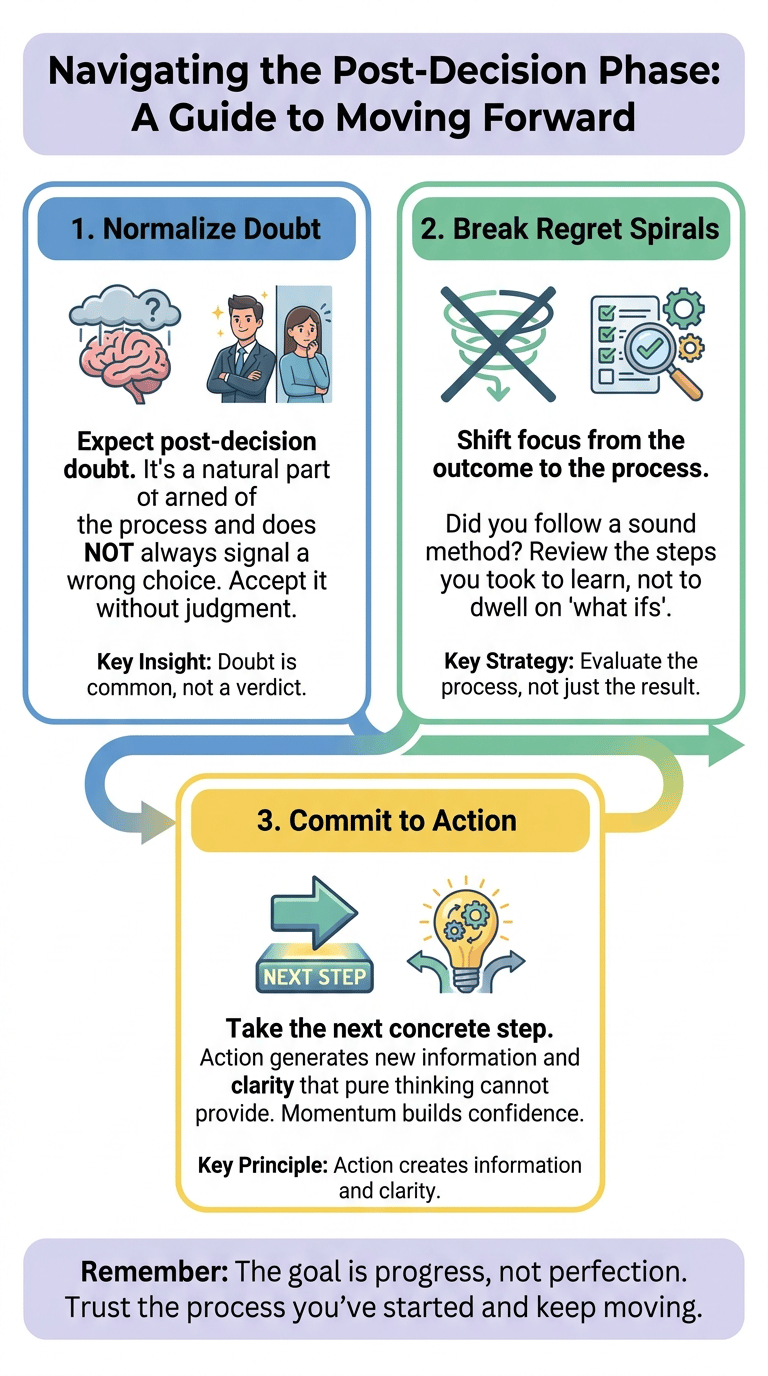
Expect post-decision doubt
Doubt does not always mean the decision was wrong
Reduce regret spirals
Review the process, not only the outcome
Commit to the next step
Action creates information that thinking cannot provide
When Decision Paralysis Needs Support
Signs it is affecting daily life
Avoidance, panic, compulsive checking, relationship strain, or major life impairment
Support options
CBT, therapy for anxiety or perfectionism, coaching for practical decisions, and medical support when needed
FAQ
Why do I freeze when making decisions?
You may freeze because the choice feels like a threat instead of a task. Uncertainty, fear of regret, too many criteria, and the pressure to choose perfectly can make staying undecided feel safer than moving. The way out is usually to make the decision smaller, not to force total confidence.
Is decision paralysis the same as overthinking?
Decision paralysis is a specific form of overthinking. It happens when repeated analysis blocks movement on a choice. Overthinking can also involve replaying conversations, worrying about the future, or reviewing mistakes, but decision paralysis is centered on choosing and the fear of choosing wrong.
How do I know when I have enough information?
Decide what enough means before you keep researching. For many choices, enough information means you understand the main options, the likely tradeoffs, the cost of waiting, and the first reversible step. If new research is only repeating the same facts, it may be reassurance seeking rather than useful preparation.
What if I choose wrong?
Some choices will turn out imperfectly, but that does not mean the process failed. Review whether the decision was reasonable with the information you had at the time. Then focus on the next adjustable step. A good decision process cannot remove all regret, but it can reduce avoidable confusion.
For a related next step, see this guide to rumination vs overthinking.
For broader context, see this guide to signs you overthink everything.
Key Takeaways
The main takeaway is that decision paralysis happens when uncertainty, possible loss, regret anticipation, and too many criteria make choosing feel more dangerous than staying stuck. The useful response is not to force instant calm, but to make the pattern smaller, more specific, and more workable. When the pattern is frequent or impairing, support is part of responsible care, not a personal failure.

Michael Reed is the Founder and Lead Writer at Psychology Exposed. He writes about human behavior, relationships, emotional patterns, self-awareness, and practical psychology topics using research-informed, easy-to-understand content.
Read More About Michael Reed: https://psychologyexposed.com/michael-reed/