Aggression Escalation Psychology: How Conflict Turns Into Harm

Aggression Escalation Psychology: How Conflict Turns Into Harm thumbnail
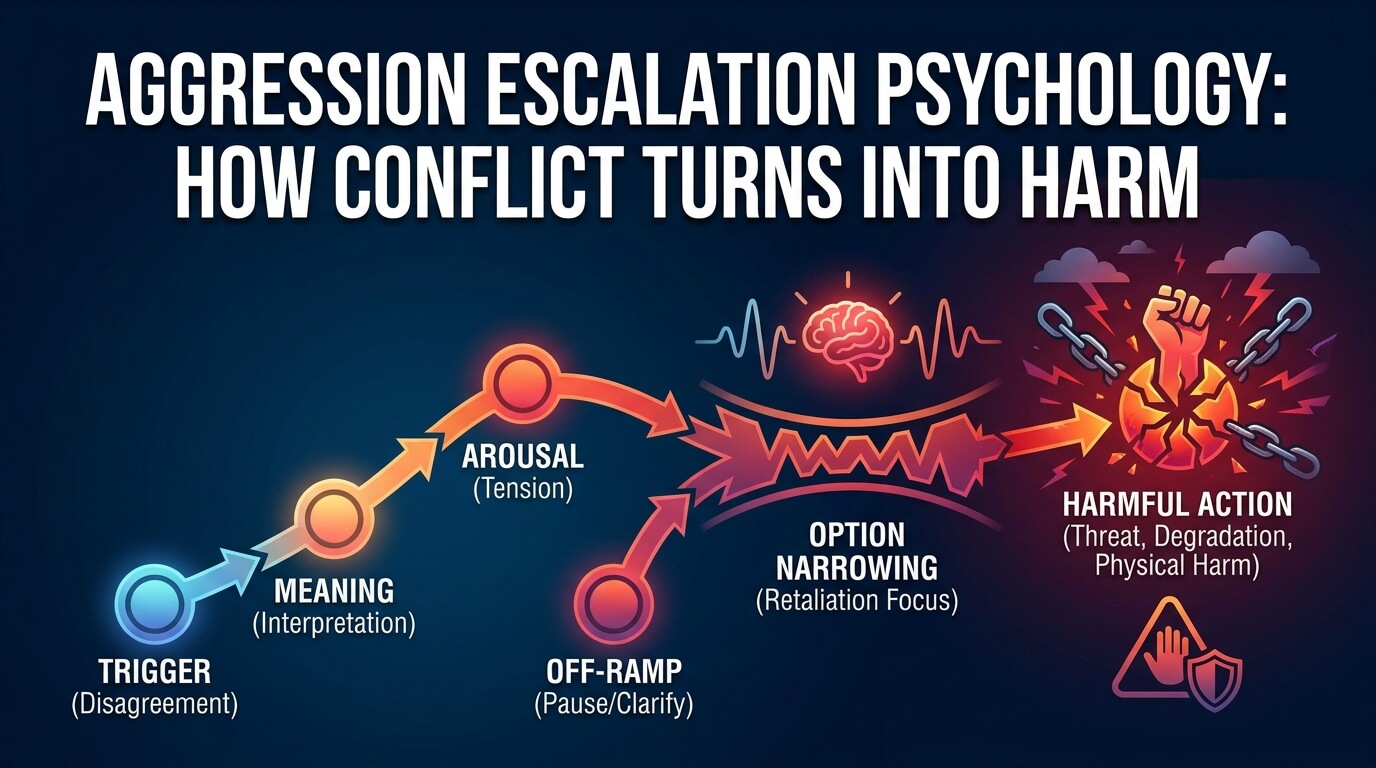
A tense interaction does not become aggressive simply because voices rise, people disagree, or someone feels angry. Escalation becomes more concerning when the exchange shifts toward intentional harm, such as humiliating, threatening, intimidating, degrading, retaliating against, or physically harming another person. That shift can happen quickly, but it is rarely explained by one feeling or … Read more

Aggression vs Violence: What Is the Difference in Psychology?

Aggression vs Violence: What Is the Difference in Psychology? thumbnail

Someone can insult, threaten, humiliate, shove, exclude, or physically attack another person, yet those behaviors do not all belong to exactly the same category. In everyday speech, aggression and violence are often used as if they mean the same thing. In psychology and public health, the distinction is usually more careful. Aggression is a broad … Read more

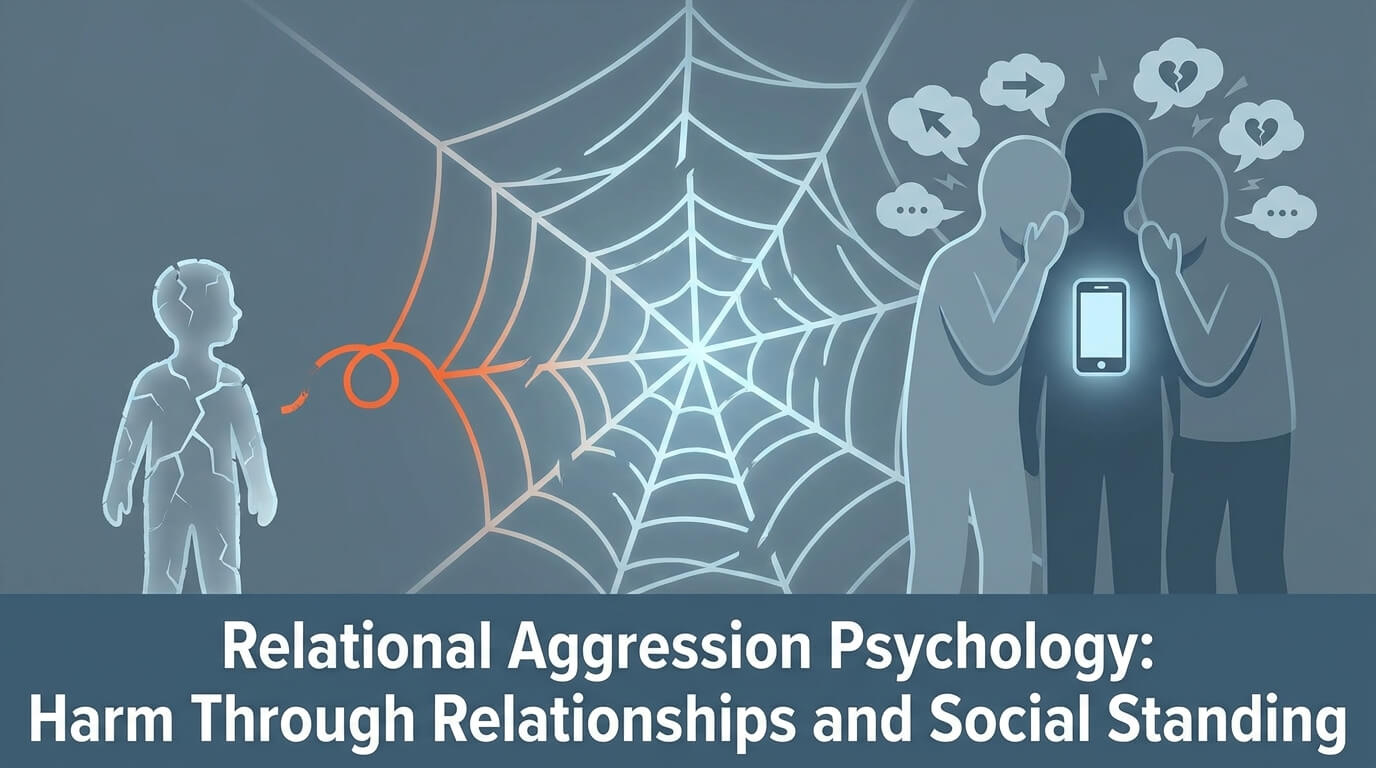
Relational Aggression Psychology: Harm Through Relationships and Social Standing

Relational Aggression Psychology: Harm Through Relationships and Social Standing thumbnail

Some forms of aggression are easy to recognize because the harm is direct. Relational aggression is harder to see because the relationship itself, a person’s place in a group, or their reputation can become the means of harm. A person may be deliberately excluded to punish them, threatened with loss of friendship unless they comply, … Read more

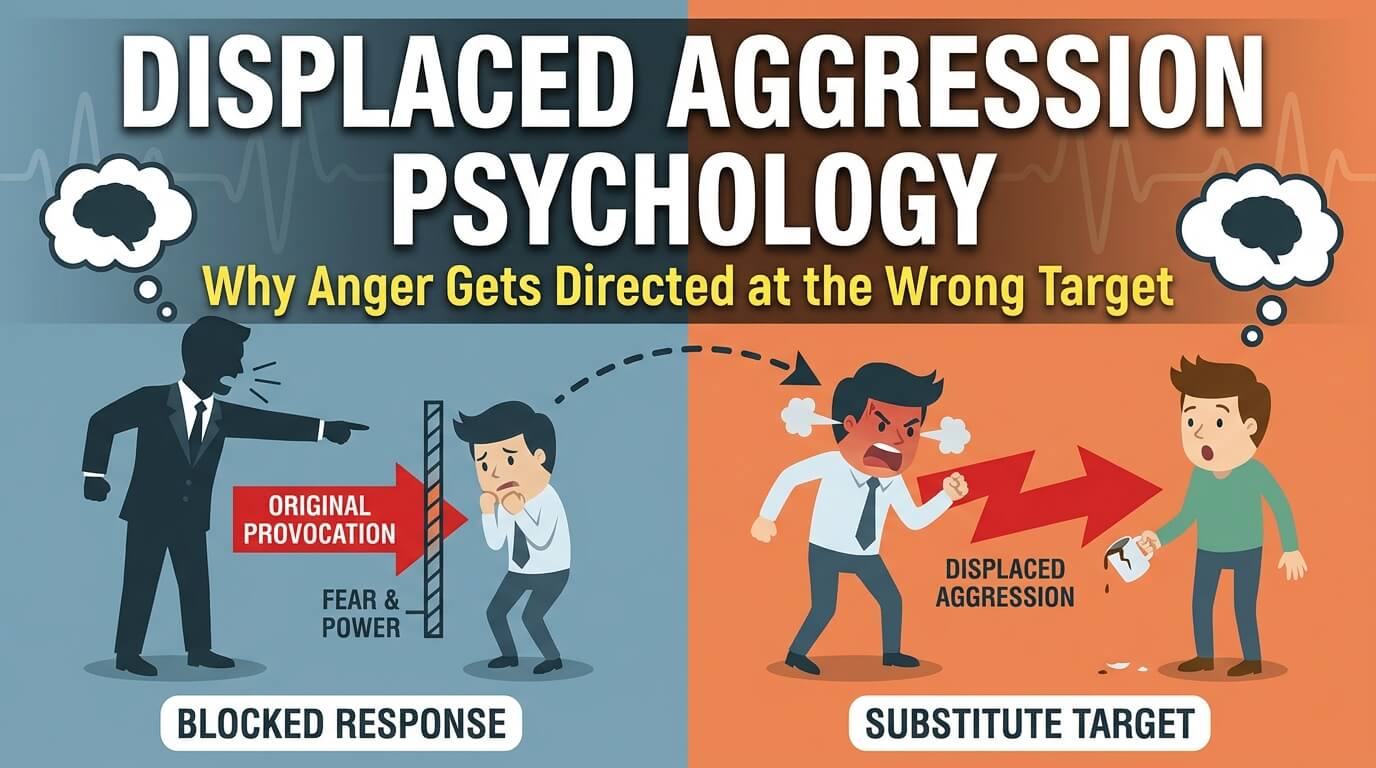
Displaced Aggression Psychology: Why Anger Gets Directed at the Wrong Target

Displaced Aggression Psychology: Why Anger Gets Directed at the Wrong Target thumbnail

Someone gets humiliated in a meeting, says nothing to the person who did it, then snaps at a friend over a small mistake that evening. A customer cannot challenge a powerful official, then becomes unusually harsh with a service worker. A student absorbs a public insult from someone intimidating, then picks a fight with a … Read more

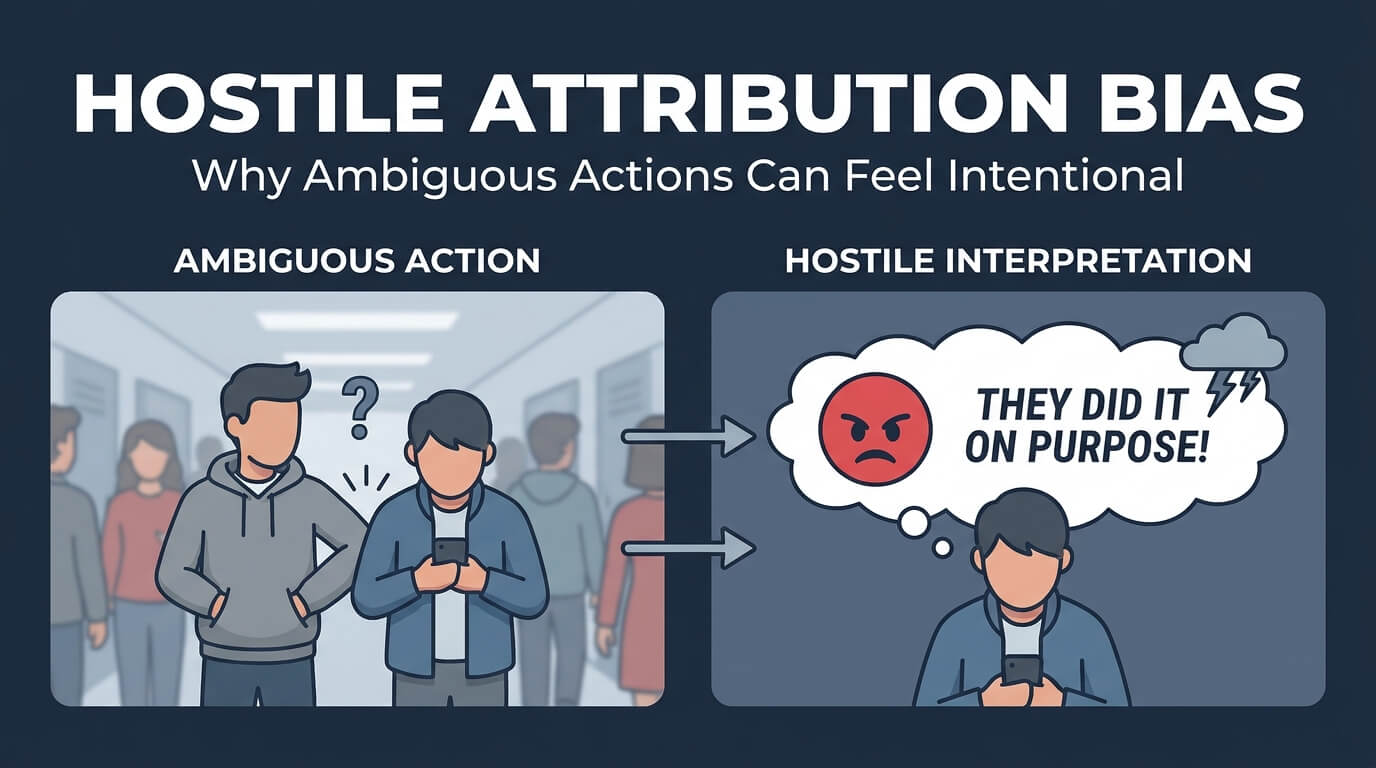
Hostile Attribution Bias: Why Ambiguous Actions Can Feel Intentional

Hostile Attribution Bias: Why Ambiguous Actions Can Feel Intentional thumbnail

Someone bumps into you without apologizing. A coworker gives a short reply. A friend leaves you out of a plan. A stranger cuts ahead, then looks away. In each case, the behavior may feel disrespectful, but one key piece of information is missing: you do not yet know what the other person intended. That gap … Read more

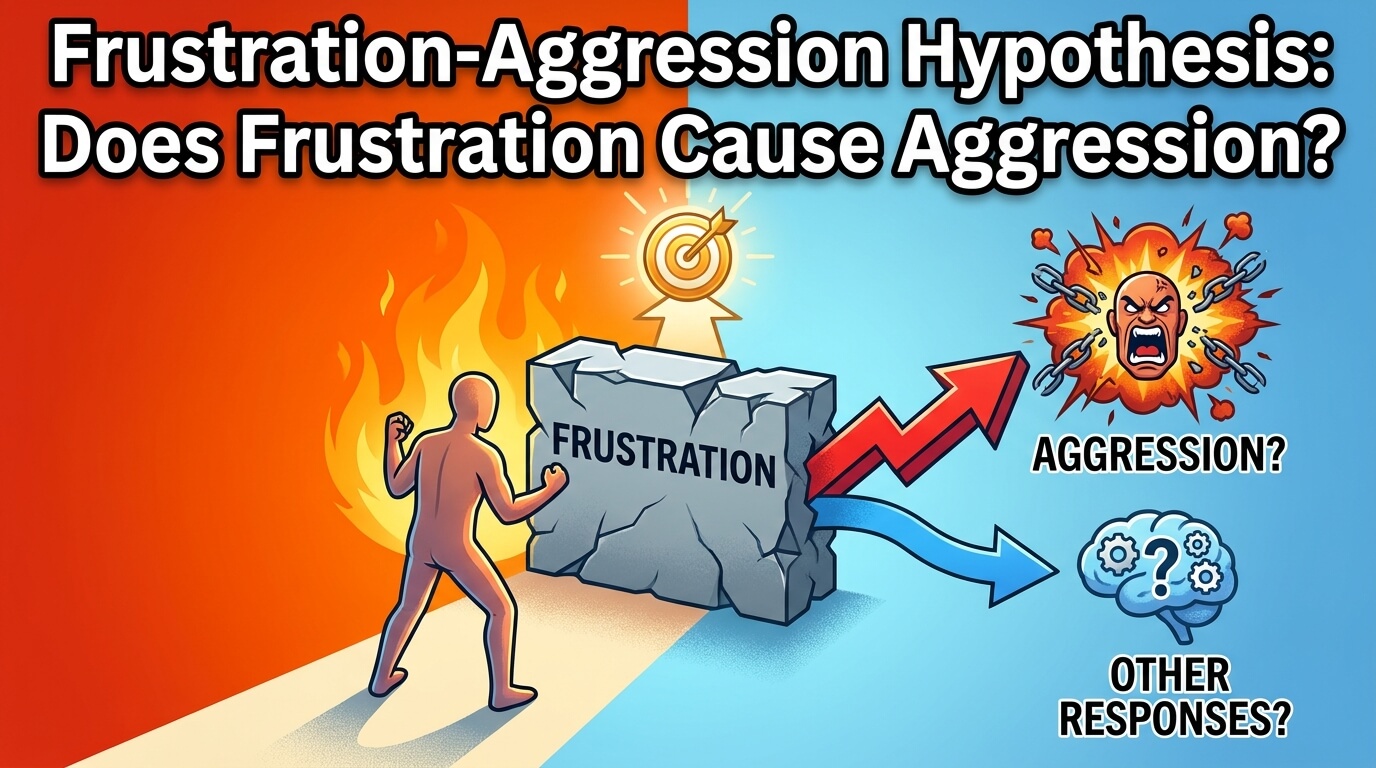
Frustration-Aggression Hypothesis: Does Frustration Cause Aggression?

Frustration-Aggression Hypothesis: Does Frustration Cause Aggression? thumbnail

When a goal is blocked, frustration can feel surprisingly intense. A delayed train, a frozen laptop, an unfair decision, or a person who seems to stand in your way can produce irritation, anger, or a strong urge to push back. That everyday experience helps explain why the frustration-aggression hypothesis became so influential in psychology. But … Read more

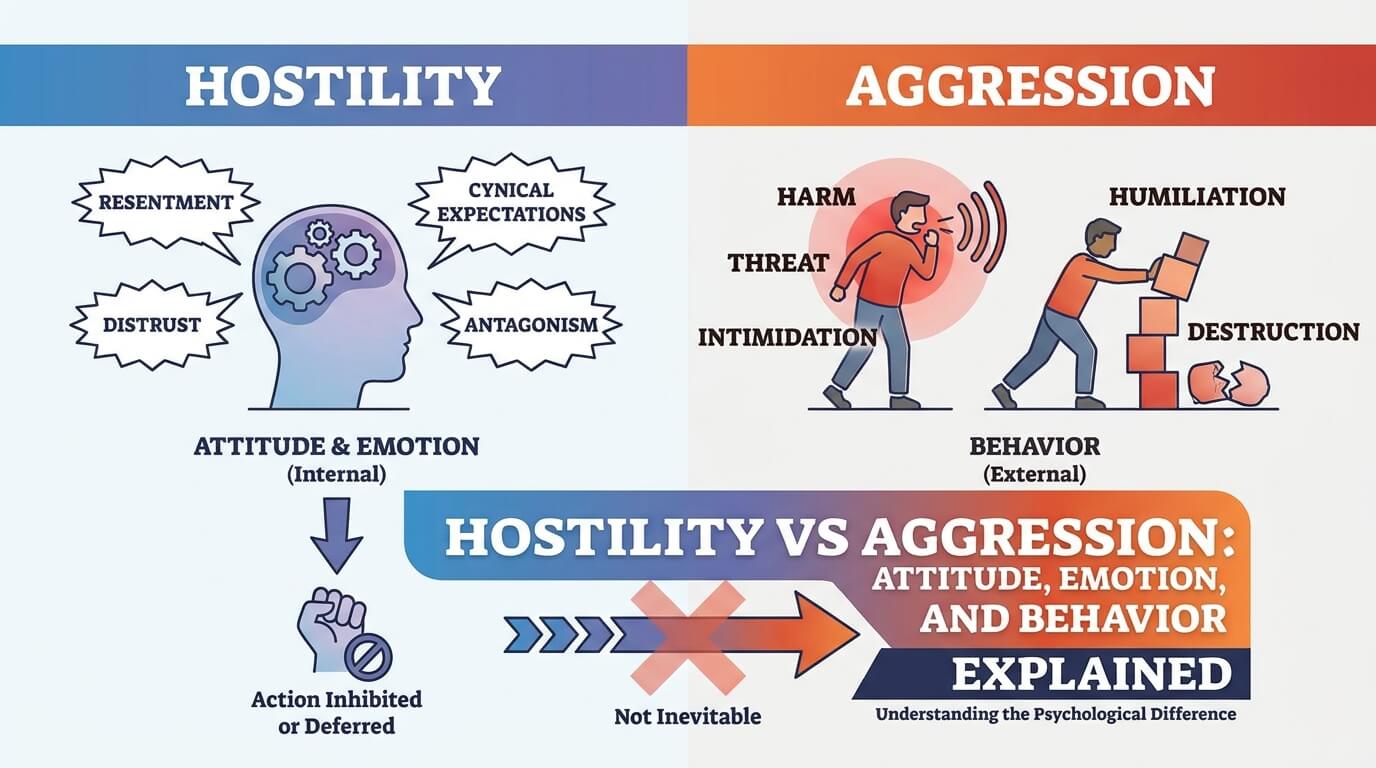
Hostility vs Aggression: Attitude, Emotion, and Behavior Explained

Hostility vs Aggression: Attitude, Emotion, and Behavior Explained thumbnail

You can dislike someone, expect the worst from them, feel resentful, or carry a generally antagonistic attitude without trying to hurt them. You can also act aggressively in a particular moment without having a broad, long-standing hostile view of the other person. That difference matters because hostility and aggression overlap, but they are not the … Read more

Reactive vs Proactive Aggression: Two Different Paths to Harm

Reactive vs Proactive Aggression: Two Different Paths to Harm thumbnail

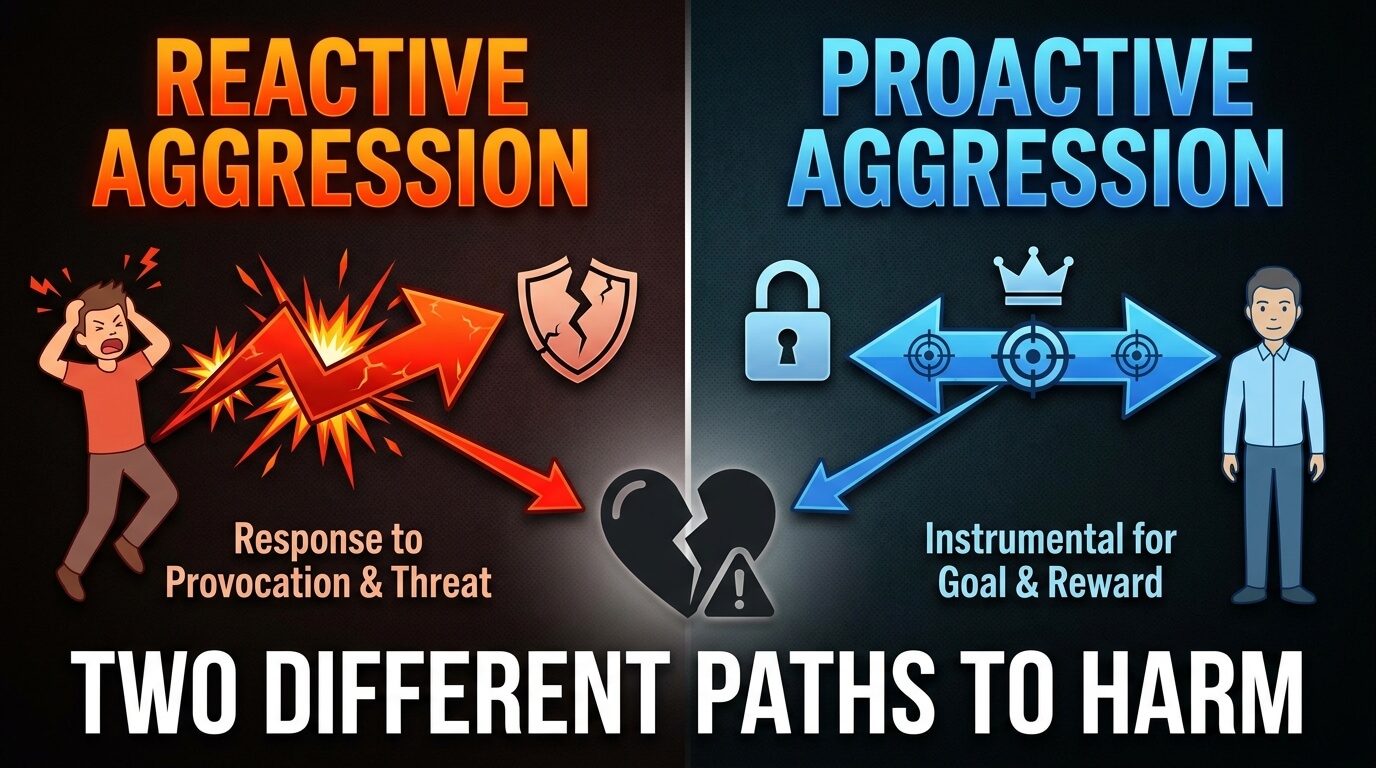
Two aggressive acts can look similar from the outside and still serve very different immediate purposes. One person may lash out seconds after feeling threatened or insulted. Another may use intimidation because they expect it to produce compliance, status, access, or some other advantage. The behavior in both cases may be harmful, but the pathway … Read more

Aggression vs Anger: The Psychological Difference

Aggression vs Anger: The Psychological Difference thumbnail

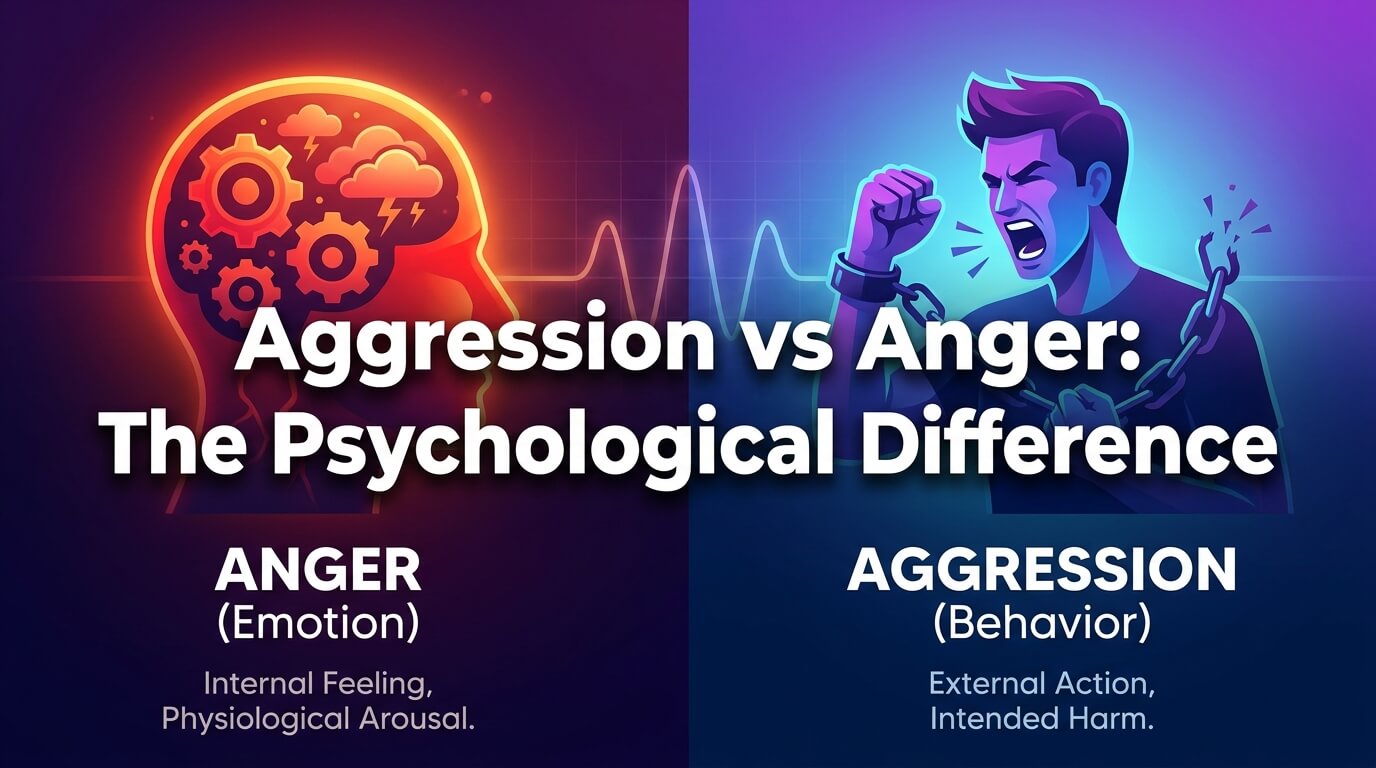
You can be furious and still choose not to harm anyone. You can also behave aggressively while sounding controlled, speaking quietly, or showing very little obvious anger. That is why treating anger and aggression as interchangeable creates confusion. Psychologically, the distinction is useful because it separates an internal emotional state from an observable form of … Read more

Aggression Psychology: Why People Become Aggressive and How Escalation Happens

Aggression Psychology: Why People Become Aggressive and How Escalation Happens thumbnail

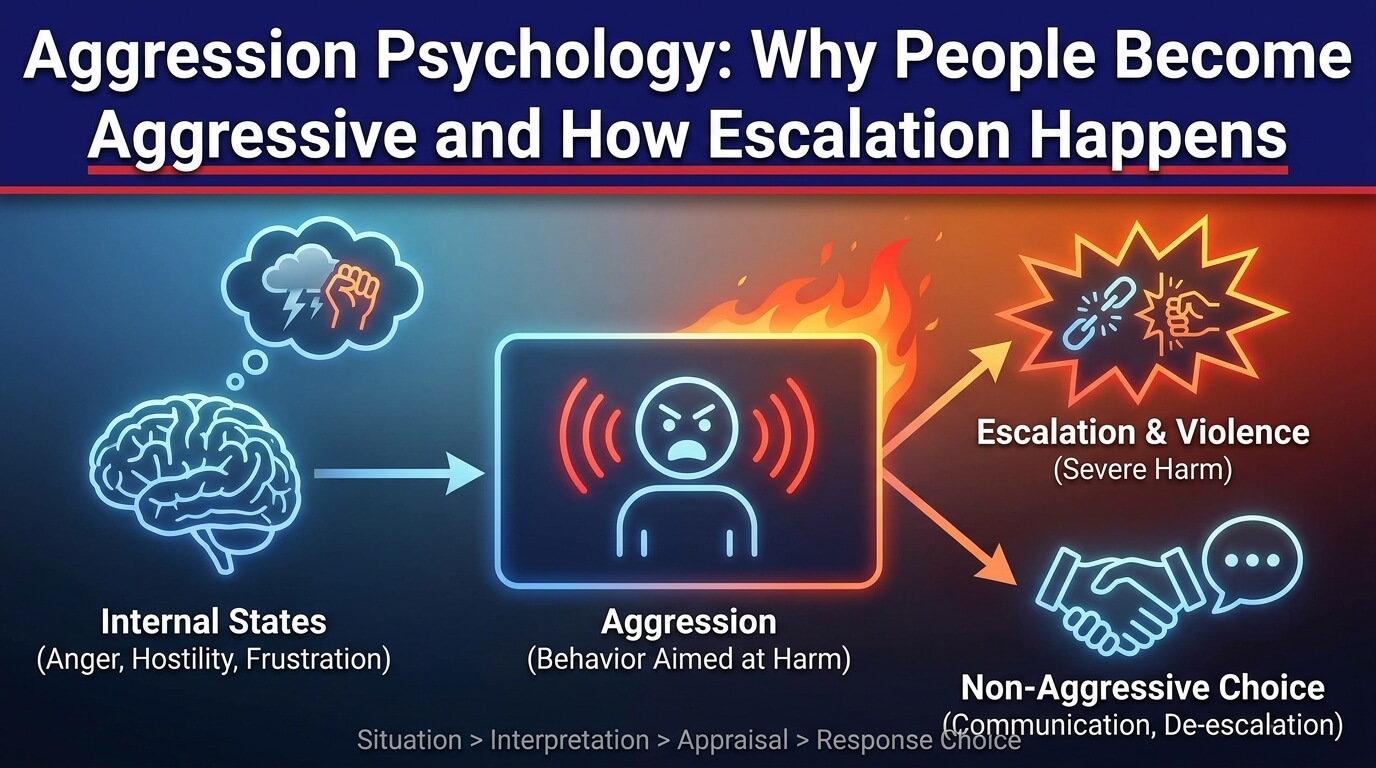
Aggression is often confused with anger, hostility, conflict, or violence. Those concepts can overlap, but they are not interchangeable. A person can feel furious and still choose not to harm anyone. Two people can disagree strongly without either one becoming aggressive. Harmful behavior can also be deliberate and controlled rather than visibly angry. Understanding aggression … Read more