Task Switching Psychology: Why Changing Tasks Has a Cognitive Cost

Task Switching Psychology: Why Changing Tasks Has a Cognitive Cost thumbnail
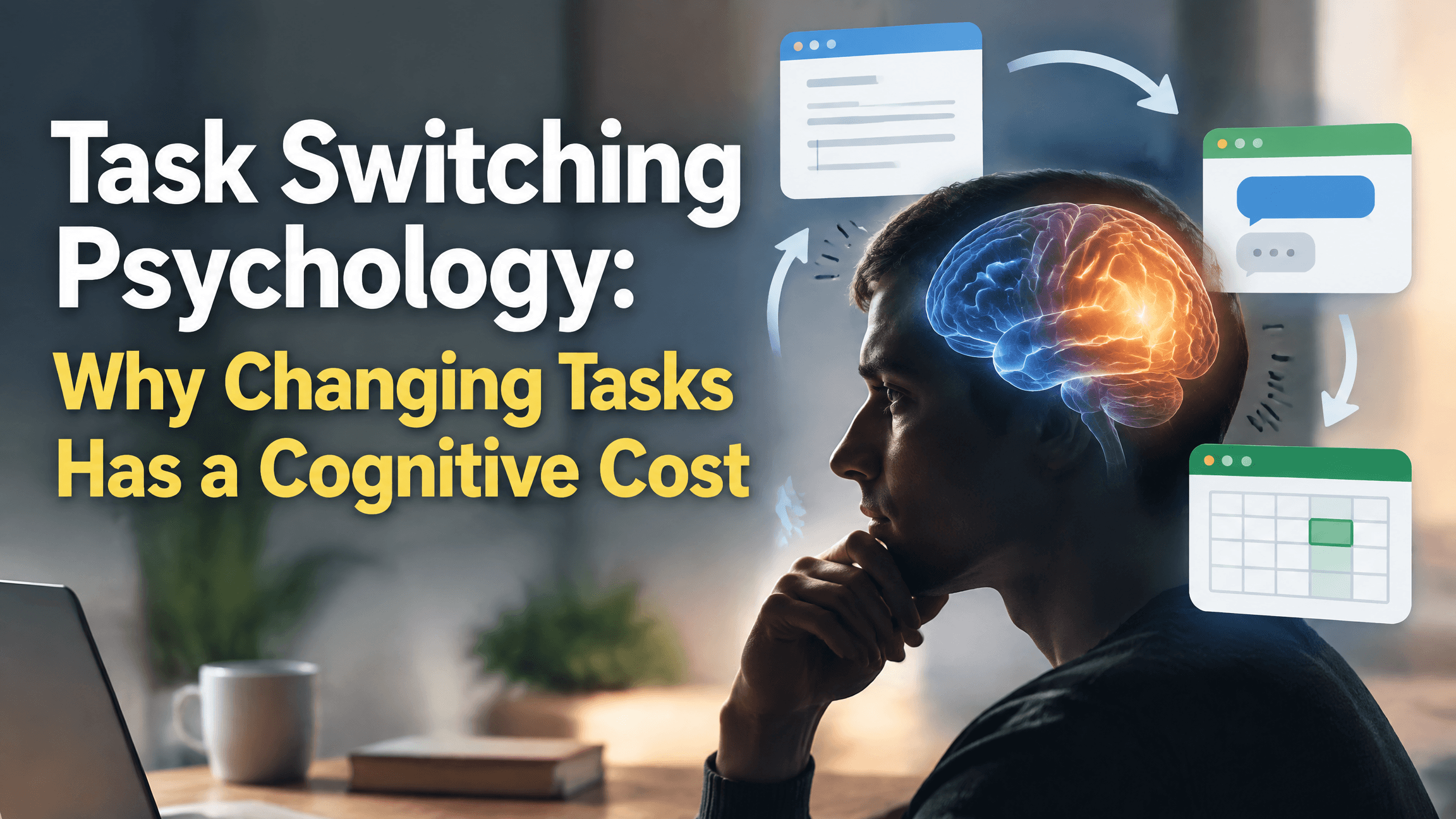
You stop writing an email to answer a message, return to the email, then switch to a spreadsheet because a number needs checking. Each transition feels fast. You may even feel as though you moved between the tasks almost instantly. Yet the first response after a switch is often slower, less accurate, or more effortful … Read more

Mind Wandering Psychology: Why Attention Leaves the Task

Mind Wandering Psychology: Why Attention Leaves the Task thumbnail

You read half a page and suddenly realize you have no idea what the last paragraph said. During a routine meeting, your attention shifts from the speaker to tomorrow’s plans. While washing dishes, you replay an old conversation, imagine a future trip, or mentally solve a problem that has nothing to do with the sink … Read more

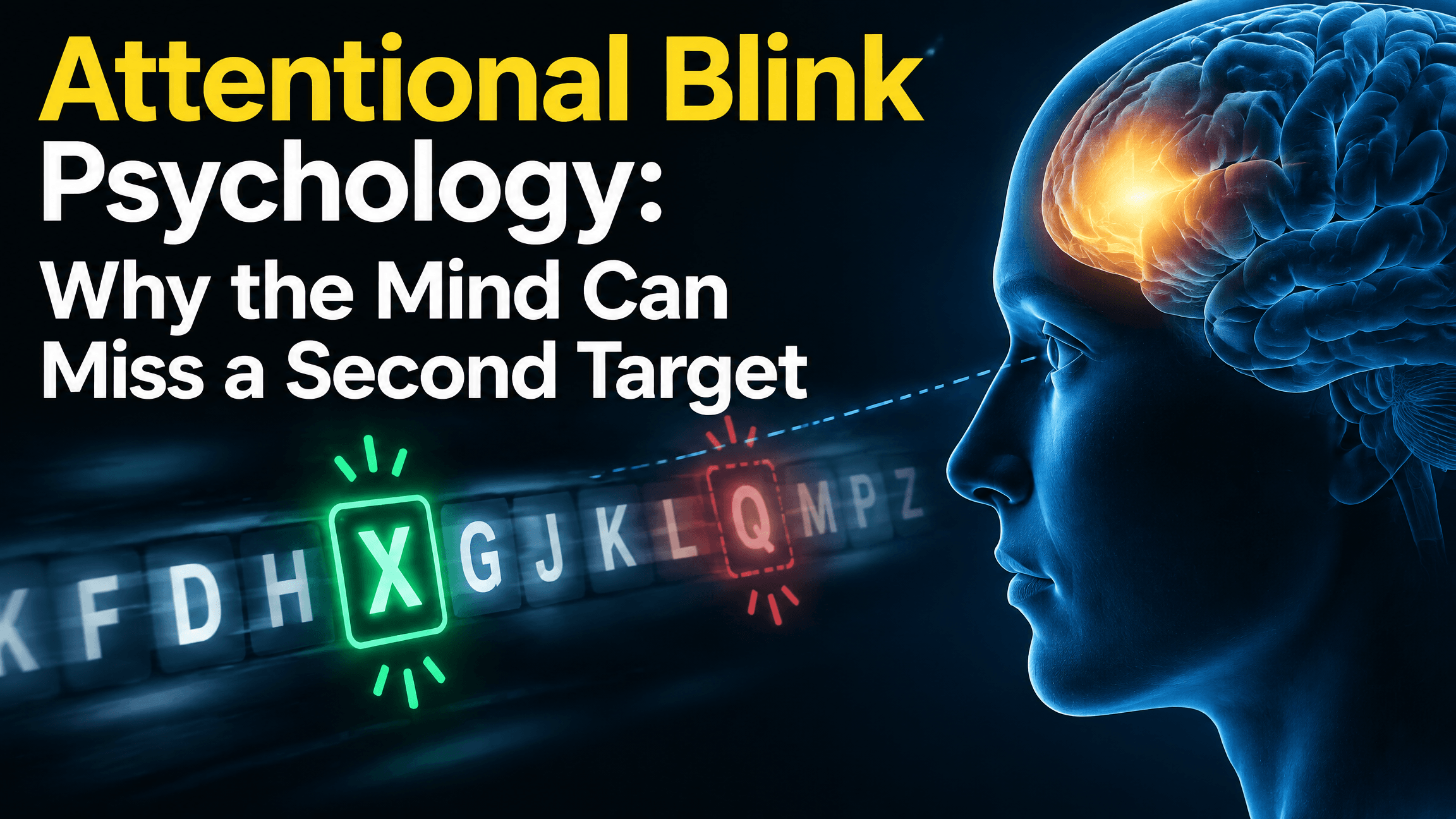
Attentional Blink Psychology: Why the Mind Can Miss a Second Target

Attentional Blink Psychology: Why the Mind Can Miss a Second Target thumbnail

A rapid stream of letters appears on a screen. You are asked to identify two targets hidden among the distractors. You spot the first target correctly, yet when the second target appears a fraction of a second later, it seems to vanish from experience. The second item was physically present. Your eyes were open. Nothing … Read more

Inattentional Blindness Psychology: How We Miss What Is Right in Front of Us

Inattentional Blindness Psychology: How We Miss What Is Right in Front of Us thumbnail

You can look directly at a scene and still fail to notice something obvious. A pedestrian steps into view while you are concentrating on traffic signs. An unusual object appears during a visual task, yet you remember nothing about it. Someone later asks, “How could you not see that?” and the honest answer is that … Read more

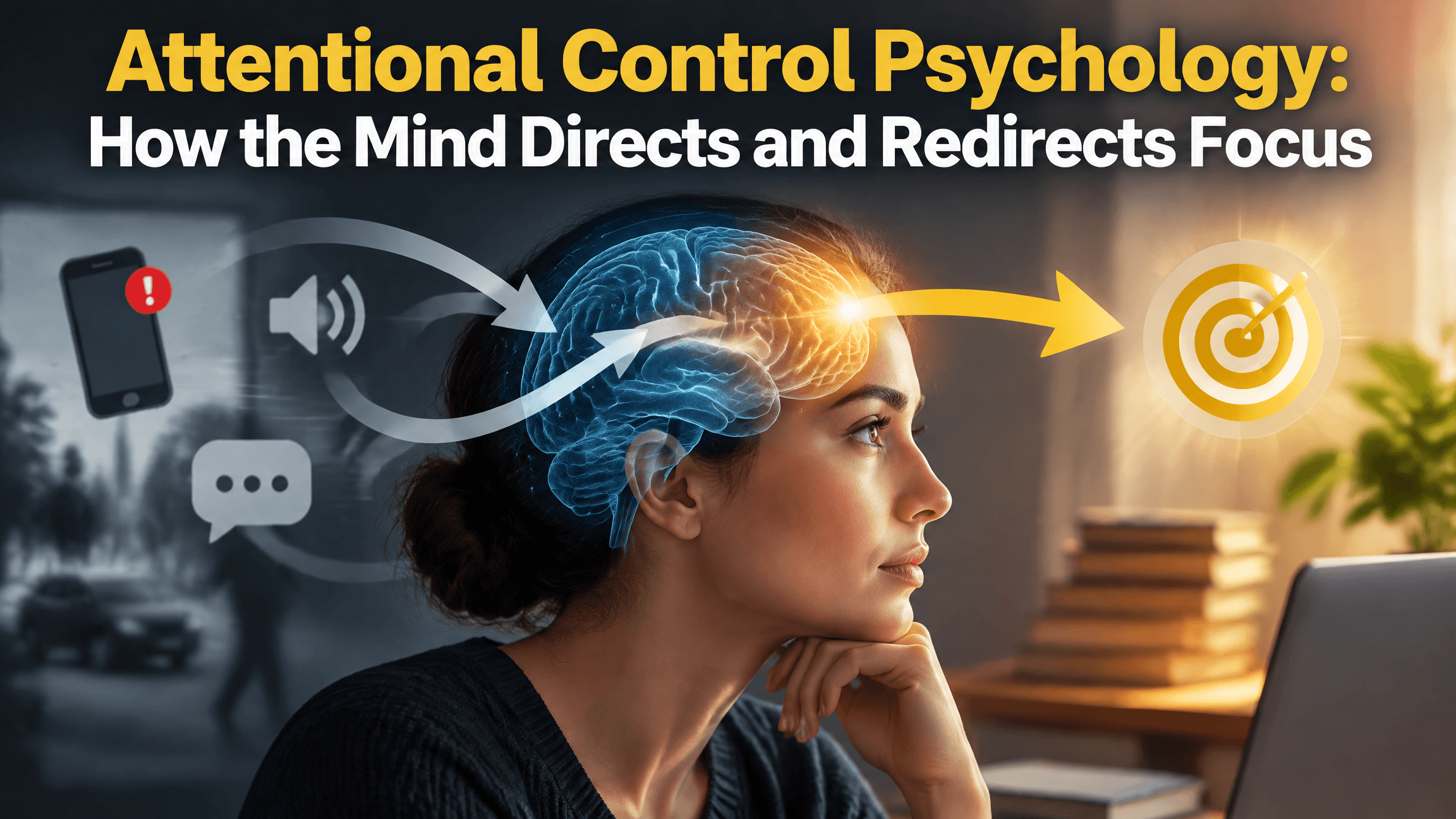
Attentional Control Psychology: How the Mind Directs and Redirects Focus

Attentional Control Psychology: How the Mind Directs and Redirects Focus thumbnail

You are reading a difficult paragraph when a sound pulls your attention toward the window. A few seconds later, you realize you have lost the thread and deliberately return to the page. In another situation, you notice your mind drifting during a meeting and bring it back to the speaker before you miss anything important. … Read more

Attentional Capture Psychology: Why Some Things Pull Attention Automatically

Attentional Capture Psychology: Why Some Things Pull Attention Automatically thumbnail

You are reading carefully when a sudden movement appears at the edge of your vision. A notification sound interrupts a thought. Someone says your name across the room, and your attention turns before you consciously decide whether the conversation matters. These moments feel immediate because attention has been redirected toward a competing cue. Psychologists call … Read more

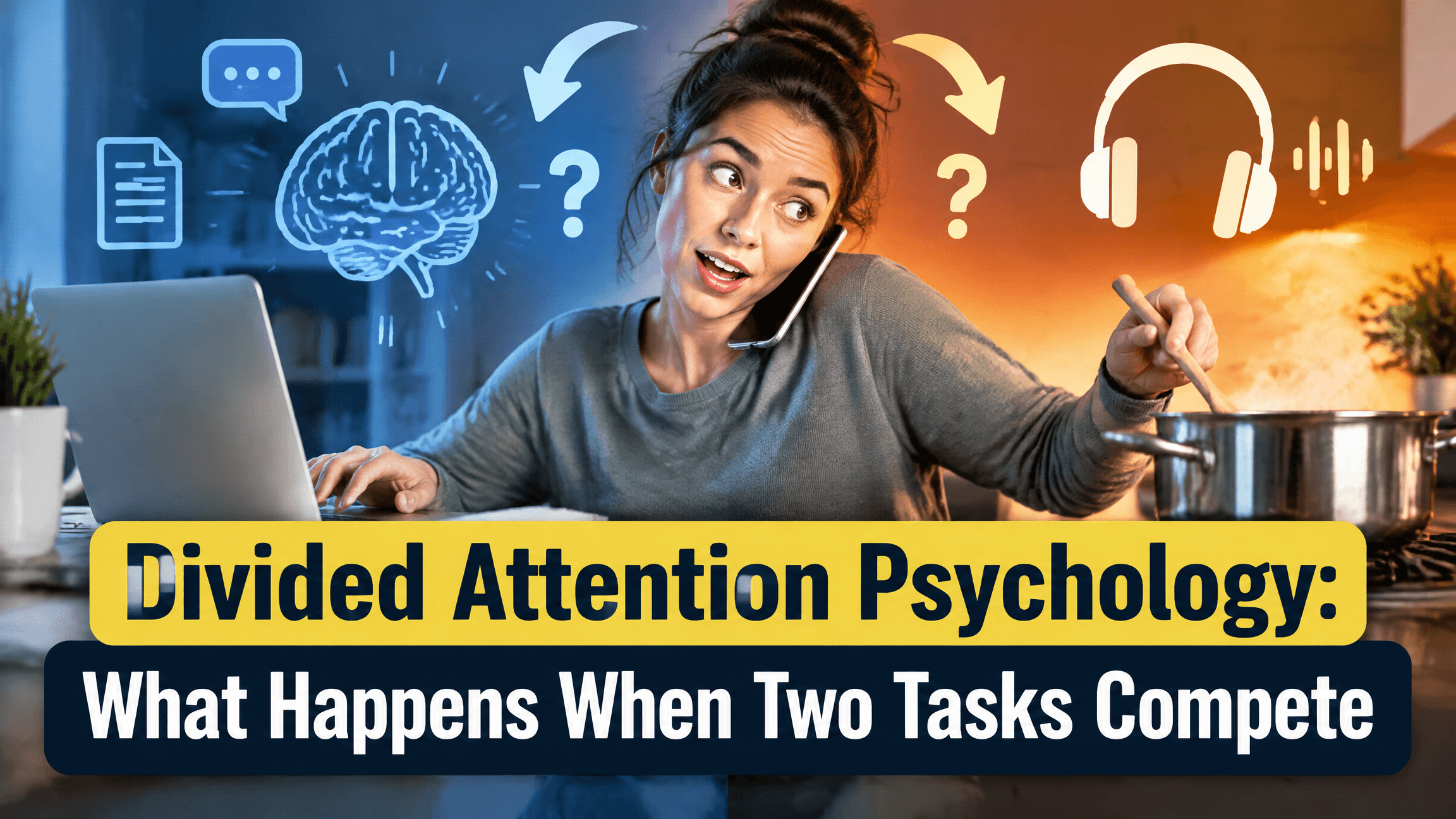
Divided Attention Psychology: What Happens When Two Tasks Compete

Divided Attention Psychology: What Happens When Two Tasks Compete thumbnail

You can walk while talking, stir a pot while listening to a podcast, or fold laundry during a phone call. Yet other combinations fall apart quickly. Try reading a complex email while someone gives you unfamiliar directions, or making a difficult decision while responding to another demanding question. Both tasks may feel possible for a … Read more

Sustained Attention Psychology: How the Mind Stays Ready Over Time

Sustained Attention Psychology: How the Mind Stays Ready Over Time thumbnail

Some attention problems appear immediately. A notification flashes, a sound pulls you away, or two tasks compete at once. Sustained attention is different. The target may stay exactly the same while performance slowly becomes less consistent. Think about proofreading a long report, watching a dashboard for a rare error, driving through an uneventful stretch of … Read more

Selective Attention Psychology: How the Mind Filters Competing Information

Selective Attention Psychology: How the Mind Filters Competing Information thumbnail

You are talking with a friend in a crowded restaurant. Plates clatter, music plays, several conversations overlap, and people move through your peripheral vision. Somehow, one voice remains central while much of the rest becomes background. A few minutes later, your attention shifts because someone nearby says your name. Selective attention helps explain both moments. … Read more