
Sunday Scaries Psychology: Why Sunday Night Feels So Anxious is not just a wording problem. For someone who feels dread, sadness, pressure, or anxiety as the weekend ends, the difficult part is that the mind and body can feel urgent before the situation is fully understood. The goal is to name the pattern accurately, because the right label changes the next move.

This guide keeps the focus narrow. It explains how Sunday scaries works, what problem it is trying to solve, and how to respond without turning the article into a generic list of signs or tips. The practical thread is simple: understand the loop, reduce the fuel, and choose one next action that fits the real problem.
For a related next step, see this guide to stress vs anxiety.
What Are the Sunday Scaries?
This section focuses on what are the sunday scaries? because it is where many readers lose the thread. In practice, Sunday distress often blends anticipatory stress, a loss of autonomy, unfinished tasks, and the body’s early response to Monday demands. When you can see the mechanism clearly, the experience becomes less mysterious and the next step becomes less dramatic. For a broader clinical or psychology context, Stress is a useful reference point for this part of the pattern.
A simple definition
A simple definition matters because it narrows the problem from a vague emotional cloud into something you can work with. For someone who feels dread, sadness, pressure, or anxiety as the weekend ends, this distinction prevents the mind from treating every discomfort as the same emergency.
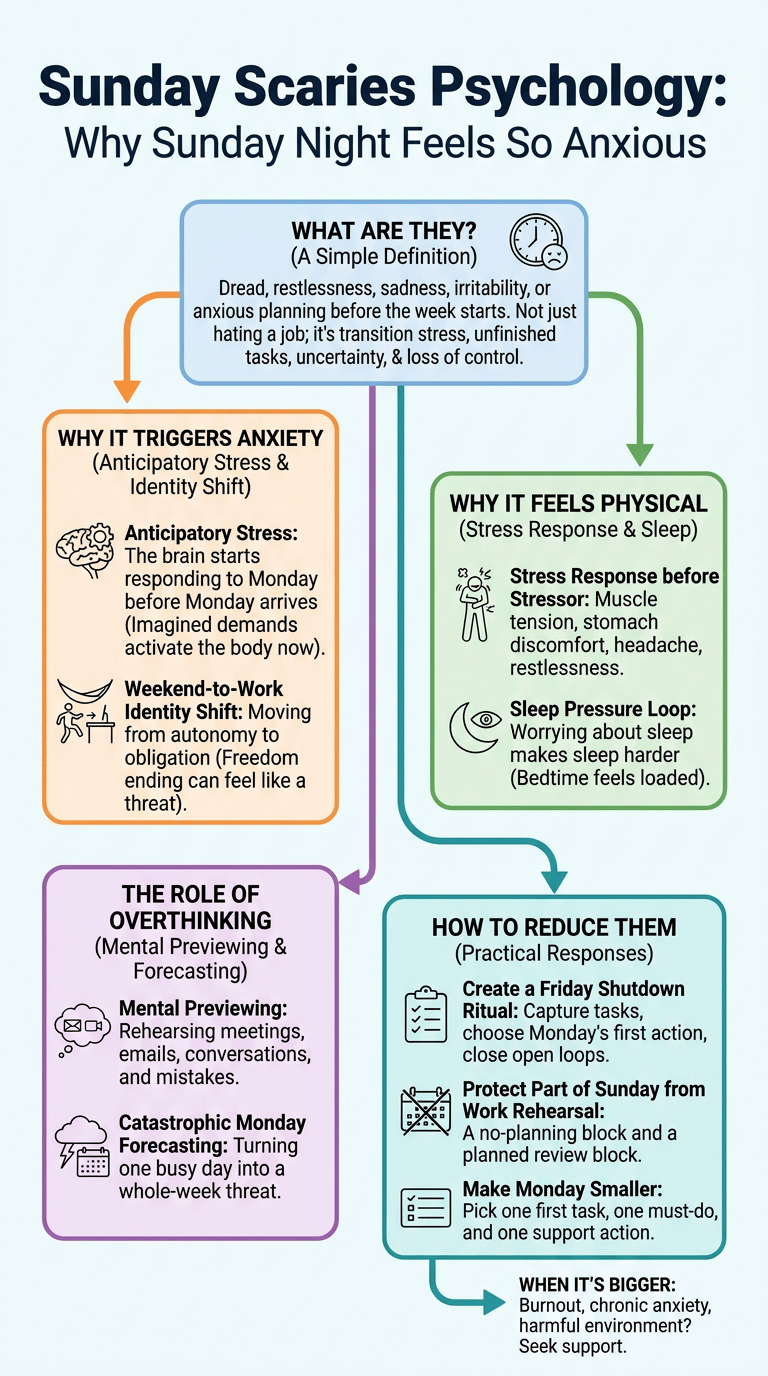
Dread, restlessness, sadness, irritability, or anxious planning before the week starts
Dread, restlessness, sadness, irritability, or anxious planning before the week starts is the practical detail that makes the concept usable. Notice what is happening, name it in plain language, and look for the smallest response that changes the loop. In this topic, the common body pattern is restlessness, muscle tension, stomach discomfort, irritability, low mood, and sleep pressure that makes bedtime feel loaded. The helpful move is to pause long enough to ask what the situation is actually asking for, then apply this principle: close loops on Friday, protect a real Sunday recovery block, make Monday smaller, and give the body a transition cue.
Why the feeling often begins before Sunday night
Why the feeling often begins before Sunday night is the practical detail that makes the concept usable. Notice what is happening, name it in plain language, and look for the smallest response that changes the loop. In this topic, the common body pattern is restlessness, muscle tension, stomach discomfort, irritability, low mood, and sleep pressure that makes bedtime feel loaded. The helpful move is to pause long enough to ask what the situation is actually asking for, then apply this principle: close loops on Friday, protect a real Sunday recovery block, make Monday smaller, and give the body a transition cue.
Sunday scaries are not always about hating your job
Sunday scaries are not always about hating your job matters because it narrows the problem from a vague emotional cloud into something you can work with. For someone who feels dread, sadness, pressure, or anxiety as the weekend ends, this distinction prevents the mind from treating every discomfort as the same emergency.
Transition stress, unfinished tasks, uncertainty, and loss of control
Transition stress, unfinished tasks, uncertainty, and loss of control is the practical detail that makes the concept usable. Notice what is happening, name it in plain language, and look for the smallest response that changes the loop. In this topic, the common body pattern is restlessness, muscle tension, stomach discomfort, irritability, low mood, and sleep pressure that makes bedtime feel loaded. The helpful move is to pause long enough to ask what the situation is actually asking for, then apply this principle: close loops on Friday, protect a real Sunday recovery block, make Monday smaller, and give the body a transition cue.
Why Sunday Triggers Anxiety
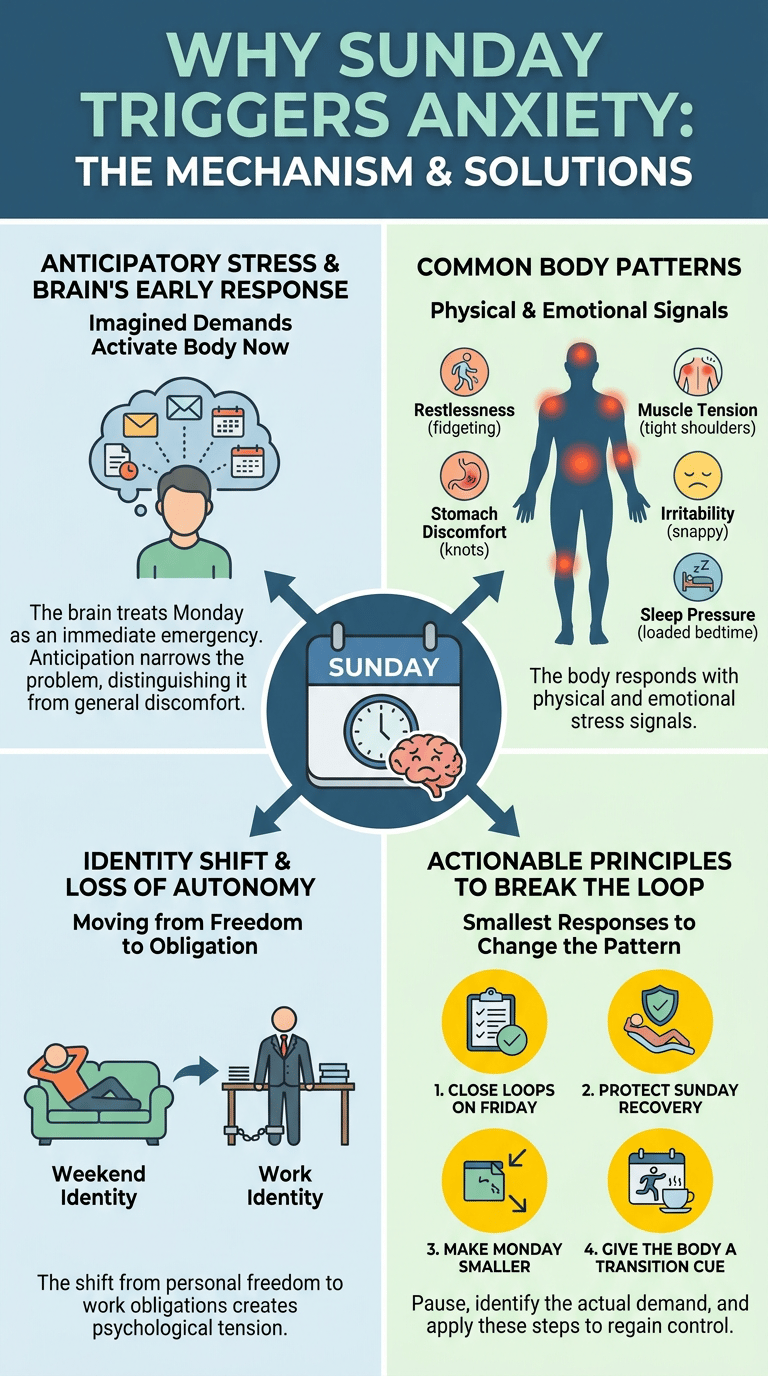
This section focuses on why sunday triggers anxiety because it is where many readers lose the thread. In practice, Sunday distress often blends anticipatory stress, a loss of autonomy, unfinished tasks, and the body’s early response to Monday demands. When you can see the mechanism clearly, the experience becomes less mysterious and the next step becomes less dramatic. For a broader clinical or psychology context, Anxiety Disorders is a useful reference point for this part of the pattern.
Anticipatory stress
Anticipatory stress matters because it narrows the problem from a vague emotional cloud into something you can work with. For someone who feels dread, sadness, pressure, or anxiety as the weekend ends, this distinction prevents the mind from treating every discomfort as the same emergency.
The brain starts responding to Monday before Monday arrives
The brain starts responding to Monday before Monday arrives is the practical detail that makes the concept usable. Notice what is happening, name it in plain language, and look for the smallest response that changes the loop. In this topic, the common body pattern is restlessness, muscle tension, stomach discomfort, irritability, low mood, and sleep pressure that makes bedtime feel loaded. The helpful move is to pause long enough to ask what the situation is actually asking for, then apply this principle: close loops on Friday, protect a real Sunday recovery block, make Monday smaller, and give the body a transition cue.
Why imagined demands can activate the body now
Why imagined demands can activate the body now is the practical detail that makes the concept usable. Notice what is happening, name it in plain language, and look for the smallest response that changes the loop. In this topic, the common body pattern is restlessness, muscle tension, stomach discomfort, irritability, low mood, and sleep pressure that makes bedtime feel loaded. The helpful move is to pause long enough to ask what the situation is actually asking for, then apply this principle: close loops on Friday, protect a real Sunday recovery block, make Monday smaller, and give the body a transition cue.
Weekend-to-work identity shift
Weekend-to-work identity shift matters because it narrows the problem from a vague emotional cloud into something you can work with. For someone who feels dread, sadness, pressure, or anxiety as the weekend ends, this distinction prevents the mind from treating every discomfort as the same emergency.
Moving from autonomy to obligation
Moving from autonomy to obligation is the practical detail that makes the concept usable. Notice what is happening, name it in plain language, and look for the smallest response that changes the loop. In this topic, the common body pattern is restlessness, muscle tension, stomach discomfort, irritability, low mood, and sleep pressure that makes bedtime feel loaded. The helpful move is to pause long enough to ask what the situation is actually asking for, then apply this principle: close loops on Friday, protect a real Sunday recovery block, make Monday smaller, and give the body a transition cue.
Why freedom ending can feel like threat
Why freedom ending can feel like threat is the practical detail that makes the concept usable. Notice what is happening, name it in plain language, and look for the smallest response that changes the loop. In this topic, the common body pattern is restlessness, muscle tension, stomach discomfort, irritability, low mood, and sleep pressure that makes bedtime feel loaded. The helpful move is to pause long enough to ask what the situation is actually asking for, then apply this principle: close loops on Friday, protect a real Sunday recovery block, make Monday smaller, and give the body a transition cue.
Unfinished business
Unfinished business matters because it narrows the problem from a vague emotional cloud into something you can work with. For someone who feels dread, sadness, pressure, or anxiety as the weekend ends, this distinction prevents the mind from treating every discomfort as the same emergency.
Open tasks, unread messages, and vague responsibilities
Open tasks, unread messages, and vague responsibilities is the practical detail that makes the concept usable. Notice what is happening, name it in plain language, and look for the smallest response that changes the loop. In this topic, the common body pattern is restlessness, muscle tension, stomach discomfort, irritability, low mood, and sleep pressure that makes bedtime feel loaded. The helpful move is to pause long enough to ask what the situation is actually asking for, then apply this principle: close loops on Friday, protect a real Sunday recovery block, make Monday smaller, and give the body a transition cue. A simple script is: I want to respond carefully, so I am going to slow this down and come back with one clear point.
How ambiguity fuels mental checking
How ambiguity fuels mental checking is the practical detail that makes the concept usable. Notice what is happening, name it in plain language, and look for the smallest response that changes the loop. In this topic, the common body pattern is restlessness, muscle tension, stomach discomfort, irritability, low mood, and sleep pressure that makes bedtime feel loaded. The helpful move is to pause long enough to ask what the situation is actually asking for, then apply this principle: close loops on Friday, protect a real Sunday recovery block, make Monday smaller, and give the body a transition cue.
The Role of Overthinking on Sunday
This section focuses on the role of overthinking on sunday because it is where many readers lose the thread. In practice, Sunday distress often blends anticipatory stress, a loss of autonomy, unfinished tasks, and the body’s early response to Monday demands. When you can see the mechanism clearly, the experience becomes less mysterious and the next step becomes less dramatic. For a broader clinical or psychology context, Harvard Health Stress is a useful reference point for this part of the pattern.
Mental previewing
Mental previewing matters because it narrows the problem from a vague emotional cloud into something you can work with. For someone who feels dread, sadness, pressure, or anxiety as the weekend ends, this distinction prevents the mind from treating every discomfort as the same emergency.
Rehearsing meetings, emails, conversations, and mistakes
Rehearsing meetings, emails, conversations, and mistakes is the practical detail that makes the concept usable. Notice what is happening, name it in plain language, and look for the smallest response that changes the loop. In this topic, the common body pattern is restlessness, muscle tension, stomach discomfort, irritability, low mood, and sleep pressure that makes bedtime feel loaded. The helpful move is to pause long enough to ask what the situation is actually asking for, then apply this principle: close loops on Friday, protect a real Sunday recovery block, make Monday smaller, and give the body a transition cue.
Catastrophic Monday forecasting
Catastrophic Monday forecasting matters because it narrows the problem from a vague emotional cloud into something you can work with. For someone who feels dread, sadness, pressure, or anxiety as the weekend ends, this distinction prevents the mind from treating every discomfort as the same emergency.
Turning one busy day into a whole-week threat
Turning one busy day into a whole-week threat is the practical detail that makes the concept usable. Notice what is happening, name it in plain language, and look for the smallest response that changes the loop. In this topic, the common body pattern is restlessness, muscle tension, stomach discomfort, irritability, low mood, and sleep pressure that makes bedtime feel loaded. The helpful move is to pause long enough to ask what the situation is actually asking for, then apply this principle: close loops on Friday, protect a real Sunday recovery block, make Monday smaller, and give the body a transition cue.
Productivity guilt
Productivity guilt matters because it narrows the problem from a vague emotional cloud into something you can work with. For someone who feels dread, sadness, pressure, or anxiety as the weekend ends, this distinction prevents the mind from treating every discomfort as the same emergency.
Feeling you failed the weekend by not resting or not doing enough
Feeling you failed the weekend by not resting or not doing enough is the practical detail that makes the concept usable. Notice what is happening, name it in plain language, and look for the smallest response that changes the loop. In this topic, the common body pattern is restlessness, muscle tension, stomach discomfort, irritability, low mood, and sleep pressure that makes bedtime feel loaded. The helpful move is to pause long enough to ask what the situation is actually asking for, then apply this principle: close loops on Friday, protect a real Sunday recovery block, make Monday smaller, and give the body a transition cue.
Why Sunday Scaries Feel Physical
This section focuses on why sunday scaries feel physical because it is where many readers lose the thread. In practice, Sunday distress often blends anticipatory stress, a loss of autonomy, unfinished tasks, and the body’s early response to Monday demands. When you can see the mechanism clearly, the experience becomes less mysterious and the next step becomes less dramatic. For a broader clinical or psychology context, Mayo Clinic Stress Symptoms is a useful reference point for this part of the pattern.
When your system has less capacity, the window of tolerance can narrow before the week even starts.
Stress response before the stressor
Stress response before the stressor matters because it narrows the problem from a vague emotional cloud into something you can work with. For someone who feels dread, sadness, pressure, or anxiety as the weekend ends, this distinction prevents the mind from treating every discomfort as the same emergency.
Muscle tension, stomach discomfort, headache, restlessness, and sleep difficulty
Muscle tension, stomach discomfort, headache, restlessness, and sleep difficulty is the practical detail that makes the concept usable. Notice what is happening, name it in plain language, and look for the smallest response that changes the loop. In this topic, the common body pattern is restlessness, muscle tension, stomach discomfort, irritability, low mood, and sleep pressure that makes bedtime feel loaded. The helpful move is to pause long enough to ask what the situation is actually asking for, then apply this principle: close loops on Friday, protect a real Sunday recovery block, make Monday smaller, and give the body a transition cue.
Sleep pressure makes the loop stronger
Sleep pressure makes the loop stronger matters because it narrows the problem from a vague emotional cloud into something you can work with. For someone who feels dread, sadness, pressure, or anxiety as the weekend ends, this distinction prevents the mind from treating every discomfort as the same emergency.
Worrying about sleep can make sleep harder
Worrying about sleep can make sleep harder is the practical detail that makes the concept usable. Notice what is happening, name it in plain language, and look for the smallest response that changes the loop. In this topic, the common body pattern is restlessness, muscle tension, stomach discomfort, irritability, low mood, and sleep pressure that makes bedtime feel loaded. The helpful move is to pause long enough to ask what the situation is actually asking for, then apply this principle: close loops on Friday, protect a real Sunday recovery block, make Monday smaller, and give the body a transition cue.
Why Sunday bedtime becomes emotionally loaded
Why Sunday bedtime becomes emotionally loaded is the practical detail that makes the concept usable. Notice what is happening, name it in plain language, and look for the smallest response that changes the loop. In this topic, the common body pattern is restlessness, muscle tension, stomach discomfort, irritability, low mood, and sleep pressure that makes bedtime feel loaded. The helpful move is to pause long enough to ask what the situation is actually asking for, then apply this principle: close loops on Friday, protect a real Sunday recovery block, make Monday smaller, and give the body a transition cue.
How to Reduce Sunday Scaries
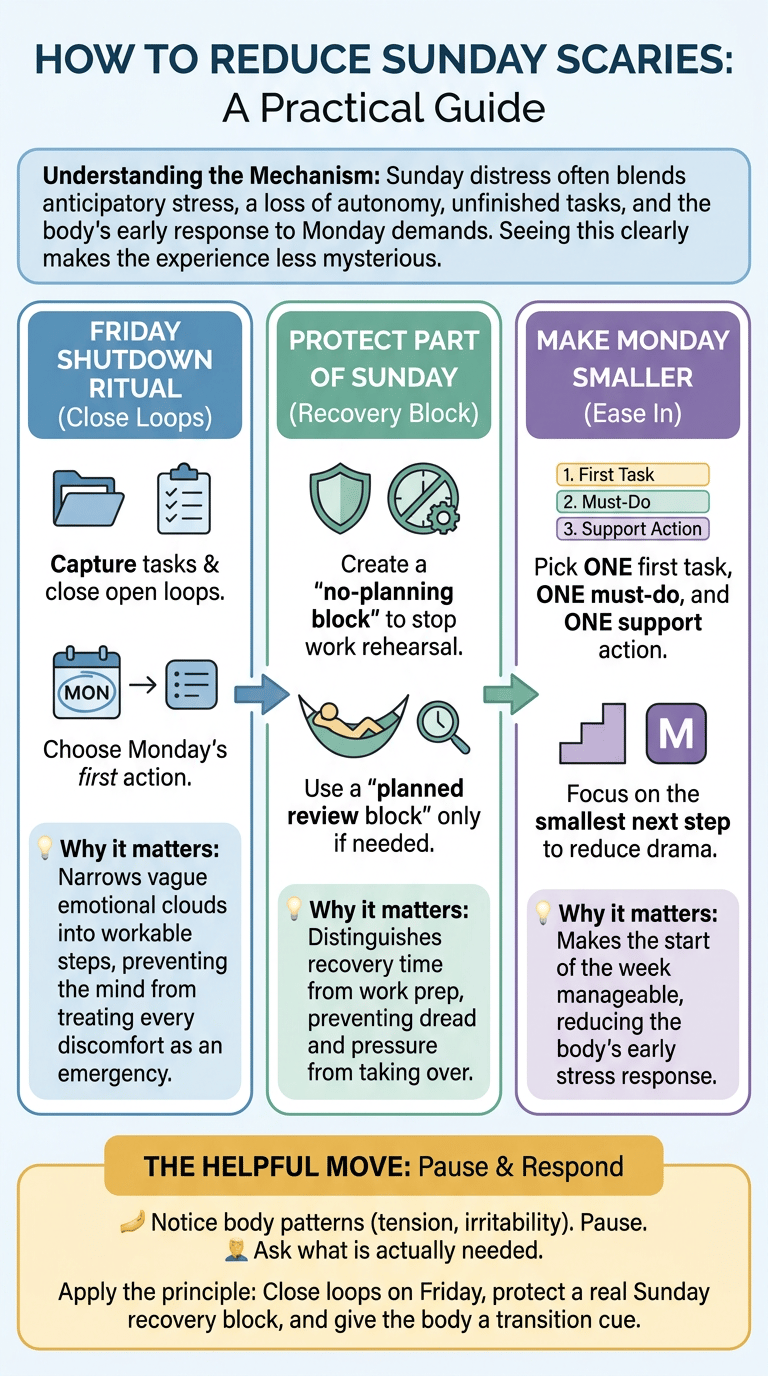
This section focuses on how to reduce sunday scaries because it is where many readers lose the thread. In practice, Sunday distress often blends anticipatory stress, a loss of autonomy, unfinished tasks, and the body’s early response to Monday demands. When you can see the mechanism clearly, the experience becomes less mysterious and the next step becomes less dramatic.
Different people handle Sunday pressure differently, so stress coping styles can help explain why planning works for one person while recovery or support works better for another.
Create a Friday shutdown ritual
Create a Friday shutdown ritual matters because it narrows the problem from a vague emotional cloud into something you can work with. For someone who feels dread, sadness, pressure, or anxiety as the weekend ends, this distinction prevents the mind from treating every discomfort as the same emergency.
Capture tasks, choose Monday’s first action, and close open loops
Capture tasks, choose Monday’s first action, and close open loops is the practical detail that makes the concept usable. Notice what is happening, name it in plain language, and look for the smallest response that changes the loop. In this topic, the common body pattern is restlessness, muscle tension, stomach discomfort, irritability, low mood, and sleep pressure that makes bedtime feel loaded. The helpful move is to pause long enough to ask what the situation is actually asking for, then apply this principle: close loops on Friday, protect a real Sunday recovery block, make Monday smaller, and give the body a transition cue.
Protect part of Sunday from work rehearsal
Protect part of Sunday from work rehearsal matters because it narrows the problem from a vague emotional cloud into something you can work with. For someone who feels dread, sadness, pressure, or anxiety as the weekend ends, this distinction prevents the mind from treating every discomfort as the same emergency.
A no-planning block and a planned review block
A no-planning block and a planned review block is the practical detail that makes the concept usable. Notice what is happening, name it in plain language, and look for the smallest response that changes the loop. In this topic, the common body pattern is restlessness, muscle tension, stomach discomfort, irritability, low mood, and sleep pressure that makes bedtime feel loaded. The helpful move is to pause long enough to ask what the situation is actually asking for, then apply this principle: close loops on Friday, protect a real Sunday recovery block, make Monday smaller, and give the body a transition cue.
Make Monday smaller
Make Monday smaller matters because it narrows the problem from a vague emotional cloud into something you can work with. For someone who feels dread, sadness, pressure, or anxiety as the weekend ends, this distinction prevents the mind from treating every discomfort as the same emergency.
Pick one first task, one must-do, and one support action
Pick one first task, one must-do, and one support action is the practical detail that makes the concept usable. Notice what is happening, name it in plain language, and look for the smallest response that changes the loop. In this topic, the common body pattern is restlessness, muscle tension, stomach discomfort, irritability, low mood, and sleep pressure that makes bedtime feel loaded. The helpful move is to pause long enough to ask what the situation is actually asking for, then apply this principle: close loops on Friday, protect a real Sunday recovery block, make Monday smaller, and give the body a transition cue. Ongoing dread may point to burnout, chronic anxiety, a harmful work environment, or a workload problem that coping skills alone cannot fix.
Give the body a transition cue
Give the body a transition cue matters because it narrows the problem from a vague emotional cloud into something you can work with. For someone who feels dread, sadness, pressure, or anxiety as the weekend ends, this distinction prevents the mind from treating every discomfort as the same emergency.
Walk, shower, meal prep, low-stimulation routine, or calming sensory habit
What to Do on Sunday Night
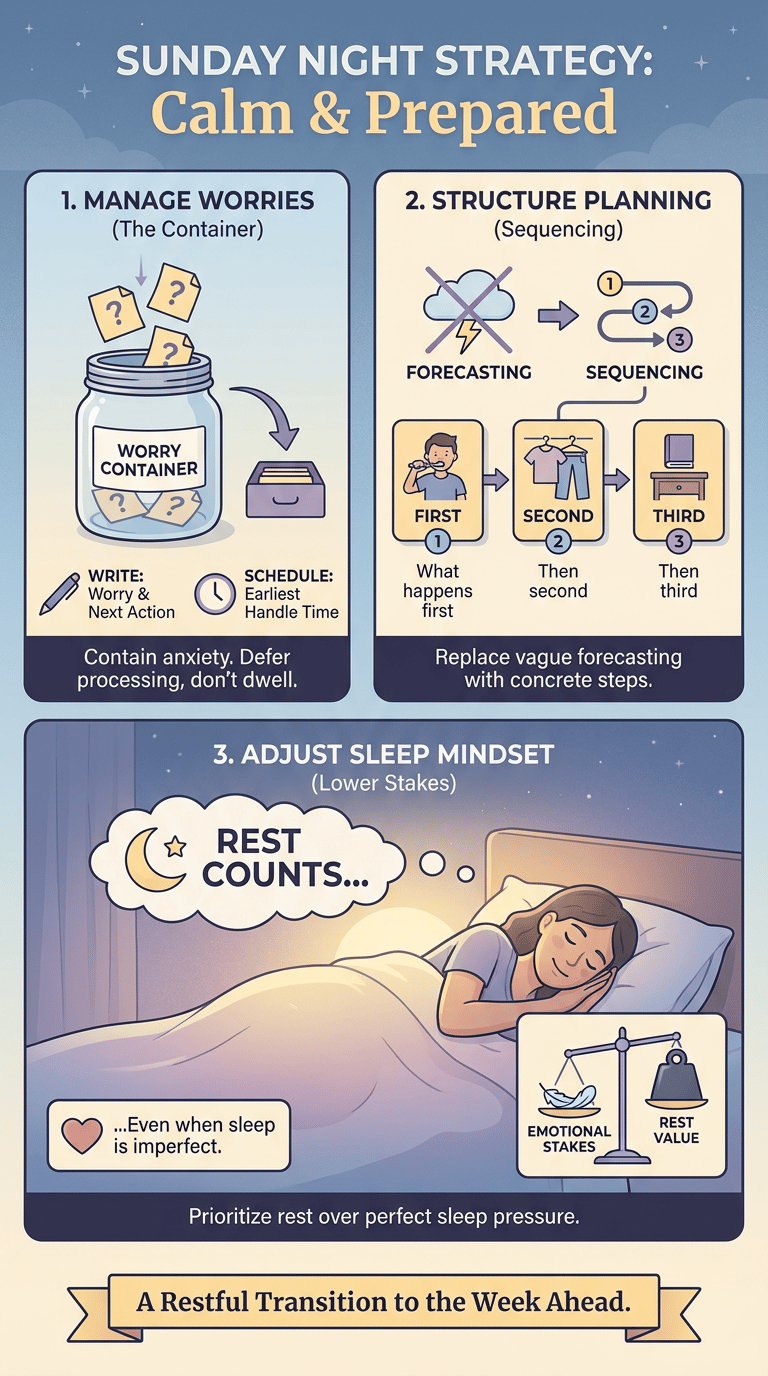
Use a worry container
Write the worry, the next action, and the earliest time you will handle it
Replace forecasting with sequencing
What happens first, then second, then third
Lower the emotional stakes of sleep
Rest counts even when sleep is imperfect
When Sunday Scaries Point to a Bigger Problem
Work environment signals
Burnout, bullying, overload, unclear expectations, or values mismatch
Anxiety signals
Persistent avoidance, panic-like symptoms, insomnia, or dread throughout the week
Support options
Workplace changes, therapy, medical support, and crisis help when urgent
FAQ
Why do I get anxious every Sunday?
Sunday anxiety often starts when your mind begins previewing Monday before Monday arrives. The shift from weekend autonomy to weekday obligation can make the body brace early. Unfinished tasks, unclear expectations, poor rest, or a demanding work environment can make that preview feel even heavier.
Are Sunday scaries the same as work anxiety?
They can overlap, but they are not always the same. Sunday scaries are tied to the transition into the week, while work anxiety may continue across the whole workday or workweek. If dread stays high all week, the issue may be broader than Sunday planning.
How do I sleep when I have Sunday night anxiety?
Do not try to solve the whole week in bed. Write down the worry, the next action, and the earliest realistic time you will handle it. Then shift toward a low-stimulation routine. Even if sleep is imperfect, resting the body still helps lower the pressure around bedtime.
What if Sunday scaries mean I need a new job?
Sometimes they are a signal, but not always. First look for patterns: workload, manager behavior, unclear expectations, values mismatch, burnout, or lack of recovery. If the dread is tied to a toxic or unsafe environment, coping skills may need to be paired with documentation, support, or a practical exit plan.
Key Takeaways
The main takeaway is that Sunday distress often blends anticipatory stress, a loss of autonomy, unfinished tasks, and the body’s early response to Monday demands. The useful response is not to force instant calm, but to make the pattern smaller, more specific, and more workable. When the pattern is frequent or impairing, support is part of responsible care, not a personal failure.

Michael Reed is the Founder and Lead Writer at Psychology Exposed. He writes about human behavior, relationships, emotional patterns, self-awareness, and practical psychology topics using research-informed, easy-to-understand content.
Read More About Michael Reed: https://psychologyexposed.com/michael-reed/