
Improving focus is rarely a one-off achievement. It is the result of daily choices that shape how attention responds when you need it most. This article turns focus improvement into a sequence of micro-habits you can repeat from morning to night. Each habit is practical, repeatable, and designed to reduce friction so staying attentive becomes easier over time.

Why Daily Habits Matter More Than Motivation
Motivation can give a brief push, but habits determine what happens after that push fades. Small, repeated actions change the environment and the cues that trigger attention. Over weeks and months repetition strengthens the routines that make focused behavior automatic rather than effortful.
Focus improves through repetition
Attention and self-regulation are shaped by the contexts and practices we repeat. Making a behavior part of your daily routine increases the chance that it will occur without relying on a burst of willpower. For accessible overviews of how repeated behaviors and psychological patterns influence everyday functioning, see the American Psychological Association’s topics collection on behavior and habit-related topics.
Habits reduce decision fatigue
Each decision you postpone or eliminate saves mental energy. When you adopt simple routines for how you begin the day, structure work sessions, and end the day, you cut down on decisions that waste cognitive resources. That conserved energy is available to sustain concentration for meaningful tasks.
Small cues shape attention automatically
Habits depend on cues. A consistent cue can be a time, a location, or a physical object that reliably signals what you should do next. Choosing clear, simple cues helps attention shift into the desired focus mode with less conscious effort.
Habit 1: Start the Day Without Immediate Phone Use
Many people begin the day by reaching for a phone. That pattern primes the brain for novelty, social alerts, and rapid context switching before you have a chance to choose a priority for the day. A brief phone-free window in the morning sets a calmer tone and reduces early distraction.
Why early stimulation affects attention
Early exposure to high-feedback stimuli primes the brain for short, reactive attention patterns. When the first minutes of your day are filled with notifications and variable content, it becomes harder to sustain attention on a single goal later. Starting with lower-stimulation activities helps preserve the ability to direct attention intentionally.
Create a phone-free first window
Decide on a short initial period each morning when you do not check your phone. Start small. Even a 15- to 30-minute window that prioritizes a calm start is enough to build the habit. Use physical cues like leaving the phone in another room or placing it face down in a drawer to make checking less automatic.
Replace scrolling with a simple morning cue
Swap the reflex to scroll with a brief, constructive ritual. Options include reviewing a single written priority for the day, doing three deep breaths, stretching, or drinking a glass of water. The goal is not to create a long routine but to introduce a repeatable morning cue that prepares attention for task initiation.
Habit 2: Choose One Main Priority
Without a clear day priority, attention splinters among many small tasks. Selecting a single main priority clarifies where to apply focused effort and makes it easier to judge whether something else deserves attention.
A focused day starts with a clear target
Identify the one task that would make the day a success if completed. Naming that priority reduces the time you spend deciding what matters and increases the likelihood that you allocate your best attention to it.
Write down the most important task
Put the priority on paper or in a short digital note. Writing outsources memory and gives you a visual cue to return to when temptation and distractions appear. Keep the note brief and visible during your main focus blocks.
Avoid starting with low-value tasks
It is tempting to begin the day with quick, easy tasks to feel productive. Those tasks can consume your freshest attention and leave less capacity for higher-value work. Reserve your initial high-quality attention for the single priority you identified.
Habit 3: Use Short Focus Blocks
Attention is a skill that responds well to practice. Short, deliberate focus blocks let you train sustained concentration without overwhelming your capacity.
Train attention in manageable sessions
Work in defined blocks with a clear start and finish. Short blocks reduce anxiety about long stretches of work and make it easier to resist distraction. Choose a length that feels rigorous but doable; consistency matters more than initial duration.
Stop before burnout
End a focus block before you are exhausted. Stopping while you can still sustain attention preserves the habit and reduces the chance you will associate focused work with fatigue. Over time, you can extend block length gradually as capacity builds.
Increase duration gradually
Make small, incremental increases in block length once the previous duration feels comfortable. This progressive approach helps expand attention without creating discouraging setbacks.
Habit 4: Take Real Breaks
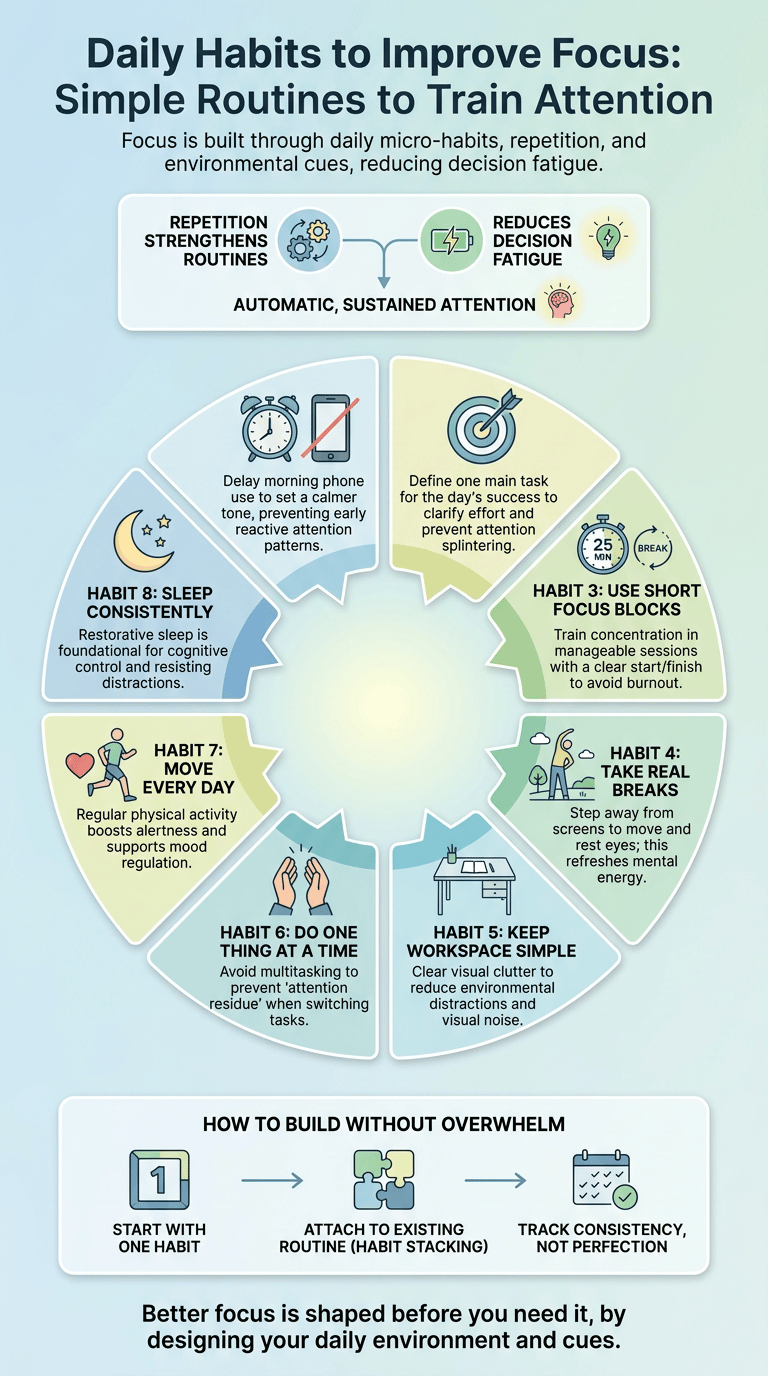
Breaks are part of focused work, not the opposite of it. A deliberate break clears attention and refreshes mental energy so you return to work more able to concentrate.
Avoid turning breaks into scrolling sessions
Passive consumption, especially on social media, often perpetuates high-stimulation patterns and undermines the benefit of a break. Choose break activities that do not fuse you to rapid novelty or constant alerts.
Move your body
Simple movement during breaks helps shift bodily state and alertness. A short walk, light stretching, or standing up and moving for a few minutes breaks up static posture and provides a physiological reset.
Rest your eyes
Give your visual system a rest from close-up screens. Look out a window at a distant point, practice brief eye relaxation, or close your eyes for a minute to reduce visual strain and ease cognitive tension.
Reset your attention
Use a single brief cue to mark the end of a break and the restart of a focus block. A consistent restart cue, such as a short breathing pattern or a checklist glance, reduces the friction of resuming concentrated work.
Habit 5: Keep Your Workspace Simple
A cluttered workspace invites split attention. Reducing visible options and arranging only the tools you need for the current task lowers the chance that attention drifts toward unrelated items.
Reduce visual distractions
Clear surfaces of unrelated objects and keep visual clutter to a minimum. Even small collections of papers or decorative items can draw the eye and fragment attention. A tidy workspace helps the brain interpret the environment as signal rather than noise.
Keep only needed tools nearby
Arrange the physical and digital tools you need for the task within easy reach. Move unrelated materials out of sight to make reaching for a distraction less automatic.
Make focus easier than distraction
Design the workspace so the path of least resistance leads to focused behavior. For example, place a notebook and pen where you will see them as you sit down, and put your phone in another room or a bag, making distraction slightly harder to access.
Habit 6: Do One Thing at a Time
Single-tasking is not old-fashioned. It is a practical way to align attention with the task at hand and produce higher-quality work in less time.
Single-tasking strengthens attention
Consistently directing attention to one task trains the brain to sustain focus. The repetition of this behavior builds a preference for concentrated work over context switching.
Multitasking creates attention residue
When you switch tasks, a portion of attention often remains tied to the previous task. This phenomenon, sometimes called attention residue, makes it harder to be fully present in the next task; for context on research into task switching, see Psychological Science.
Finish or pause one task before starting another
If you must change direction, close or explicitly pause the current task with a short note about where you left off. This ritual clears working memory and reduces the cognitive load of resuming later.
Habit 7: Move Every Day
Movement is not only good for the body. Regular physical activity supports alertness, mood regulation, and the ability to refocus after distractions.
Movement supports alertness
Short, moderate movement throughout the day increases circulation and can temporarily raise mental energy. These physiological shifts make it easier to direct attention when you return to a task.
Short walks can improve mental reset
A brief walk away from your workspace provides a change of context and sensory input that helps let go of lingering cognitive threads from earlier tasks. Movement plus a different setting often produces a cleaner mental restart than staying seated and trying harder.
Exercise helps regulate stress
Regular exercise supports general stress regulation and mood. When stress feels more manageable, it places fewer demands on attention and self-control resources. If emotional or stress-related issues significantly interfere with focus, consider consulting a qualified professional for personalized support and assessment; see the National Institute of Mental Health for information on when to seek help about mental health concerns. For general patient-friendly information about mental health and related topics, see MedlinePlus.
Habit 8: Sleep Consistently
Sleep is foundational for attention. The ability to sustain concentration and manage distractions is built on regular, restorative sleep patterns.
Sleep restores attention control
Consistent sleep helps refresh cognitive control and the capacity to regulate attention. Poor or irregular sleep can leave attention more fragile, making focus training harder to sustain. For reliable information about sleep and its role in mental functioning, see resources from the National Institute of Mental Health on sleep and mental health.
Poor sleep increases distractibility
When sleep is insufficient or inconsistent, the brain has fewer resources to resist intrusive thoughts and environmental cues. This often shows up as greater distractibility, slower response to tasks, and reduced ability to maintain a steady focus rhythm.
Build a simple evening routine
Create a short pre-sleep routine that signals winding down. Examples include dimming lights, limiting stimulating screens for a fixed period before bed, and doing a brief calming activity such as reading or gentle stretching. Repeat the same few steps each night to produce a consistent cue for sleep preparation.
How to Build These Habits Without Overwhelm
Changing many routines at once leads to friction. Use a manageable approach that emphasizes gradual gains and compassionate persistence.
Start with one habit
Pick one habit that feels both impactful and achievable. Mastering a single routine builds confidence and creates a foundation to add another habit after it feels stable.
Attach it to an existing routine
Tie the new habit to something you already do. If you always make coffee in the morning, attach a short practice such as writing the day priority while the kettle heats. This technique, often called habit stacking, uses existing cues to anchor new behavior.
Track consistency, not perfection
Focus on whether you repeat the habit rather than how perfectly you perform it. A simple checkbox or a calendar mark can reinforce streaks and reveal progress. When lapses happen, treat them as information rather than failure.
Final Thoughts
Better focus is built before the moment you need it. The micro-habits above work by shaping the cues, environment, and routines that make focused attention more automatic. Over time, these small actions reduce friction and decision load so concentration feels more natural.
Design the hours leading up to demanding work
Design the hours leading up to demanding work so your attention is ready. The cumulative effect of consistent routines often matters more than one dramatic effort the night before a deadline.
Daily habits make concentration easier over time
Adopting a set of simple, repeatable habits creates a supportive scaffold for attention. If focus problems are persistent, severe, or are interfering with daily life, school, or work, consider seeking evaluation and guidance from a qualified professional. Trusted health organizations provide accessible information on when to seek help and how to find resources.
Small, repeated actions change the environment and the cues that trigger attention. Start small, repeat consistently, and build your focus one micro-habit at a time.

Michael Reed is the Founder and Lead Writer at Psychology Exposed. He writes about human behavior, relationships, emotional patterns, self-awareness, and practical psychology topics using research-informed, easy-to-understand content.
Read More About Michael Reed: https://psychologyexposed.com/michael-reed/