
If you want to support your ability to concentrate without relying only on medication, stimulants, or productivity apps, a lifestyle-first approach can be practical and sustainable. This article brings together clear, psychology-informed habits you can try in daily life: sleep, light, movement, nutrition, attention training, environment design, and restorative breaks. The goal is not instant transformation or medical advice, but a set of low-hype, repeatable practices that align the body and environment with common attention systems described in psychological science.

What “Natural Focus” Really Means
Natural methods support the brain’s attention systems
“Focus” and “attention” describe cognitive abilities that let you select relevant information, ignore distractions, and keep a task in mind. Psychology sources describe attention as a set of processes rather than a single switch, including alerting, orienting, and executive control of attention. For concise, authoritative descriptions of these concepts, see topic overviews from the American Psychological Association on APA.org.
They work best through consistency
Small changes in sleep, movement, meals, and environment tend to add up when repeated. Natural strategies do not usually provide immediate, dramatic results the way a medication with a clear physiological action might. Instead, they support underlying systems that make sustained attention easier over days and weeks. Treating these strategies as habits rather than one-off tricks helps them become dependable supports for attention.
They are not instant cures for medical conditions
Behavioral and lifestyle steps can help many people support their focus, but they are not a medical cure for conditions that affect attention. If trouble concentrating is persistent, severe, worsening, or interferes with work, school, relationships, or daily responsibilities, consult a qualified health professional for assessment and guidance. A clinician can evaluate whether a sleep disorder or an attention-related condition is contributing and recommend appropriate options.
Improve Sleep to Improve Focus
Why sleep affects attention control
Sleep is closely linked to how well the brain can sustain attention, manage impulses, and shift between tasks. Poor or insufficient sleep makes it harder to maintain consistent alertness and can increase distractibility. For general information on sleep and mental functioning, see educational materials from the National Institute of Mental Health on the NIMH website.
Keep a consistent sleep schedule
Sticking to a regular wake and sleep time helps stabilize the body clock and makes daytime alertness more predictable. Aim for a routine that lets you wake at roughly the same time each day, even on weekends when possible. Consistency helps the brain expect peak periods of alertness and can reduce variability in daily attention.
Reduce late-night stimulation
Electronic screens and highly stimulating activities close to bedtime can delay falling asleep for some people. Limiting intense mental tasks and bright screens in the hour before sleep can make falling asleep easier and reduce night-time arousal that fragments sleep. If you use devices in the evening, consider lowering screen brightness and choosing calmer activities to signal the body that it is time to wind down.
Create a wind-down routine
A predictable pre-sleep routine can cue the mind and body that sleep is approaching. Wind-down activities can include dimming lights, gentle stretching, reading a low-arousal book, or brief relaxation practice. The specific routine matters less than its consistency and the way it reliably signals sleep time to your brain.
Use Morning Light and Movement
Light helps regulate alertness
Daylight exposure, especially in the morning, supports the body clock and can boost daytime alertness. Getting natural light soon after waking helps set the timing for your internal rhythm and makes it easier to feel awake during the day. If you cannot go outside in the morning, sitting near a bright window for a few minutes can be helpful. See information on sleep and rhythms from the National Institute of Mental Health on NIMH.org.
Movement wakes up the body and mind
Physical activity raises circulation, increases alertness, and prepares the brain for focused work. A brief period of movement after waking can be combined with morning light to amplify the wake-up signal. Movement does not need to be intense; even gentle mobility and stretching raise physiological readiness for attention and task engagement.
Short walks can reset attention
When attention starts to drag during the day, a short walk that includes a change of scenery and fresh air can provide a reliable reset. Walking gives the eyes new visual input, supports circulation, and gives the brain a break from sustained cognitive demand so you return with clearer focus. Aim to make these walks a regular, short part of the workday rather than a rare special activity.
Eat for Stable Energy
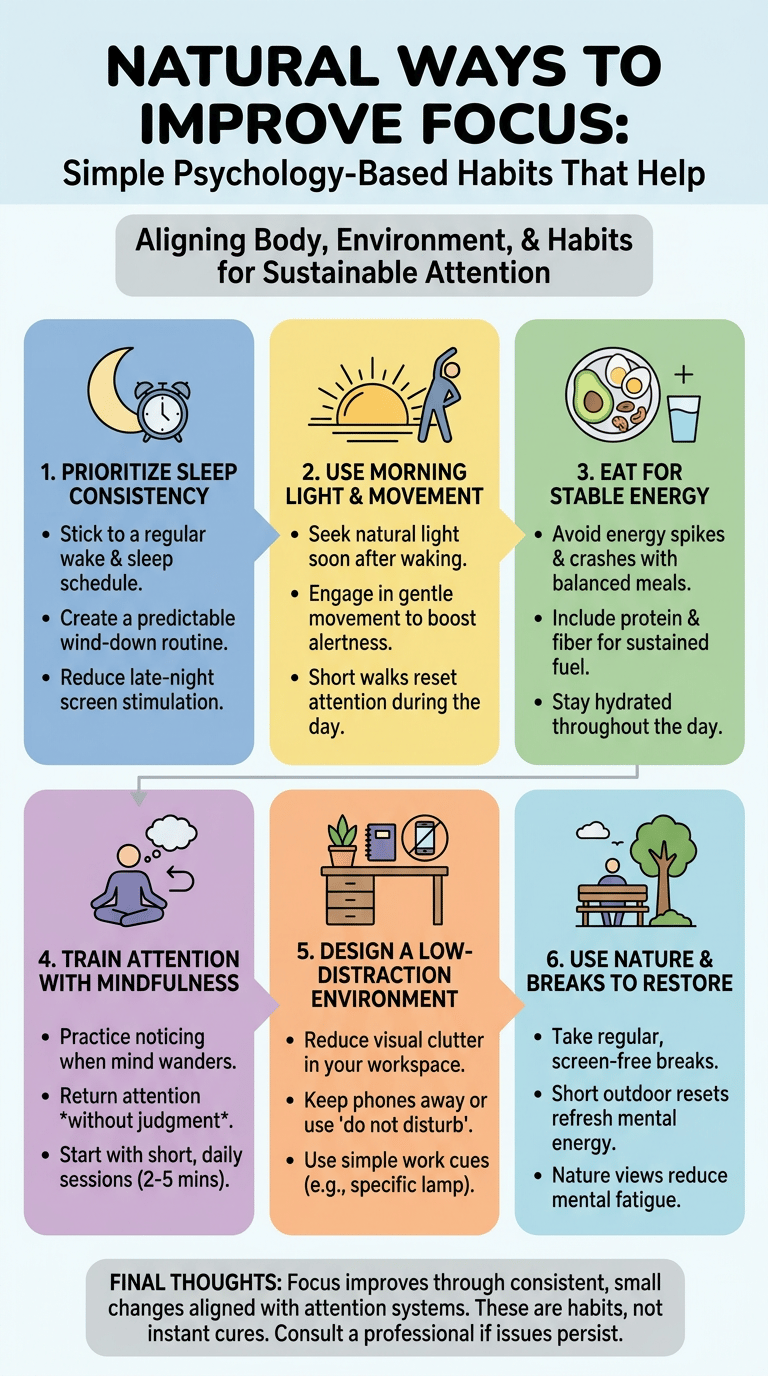
Avoid energy spikes and crashes
Large swings in blood sugar and energy can make concentration harder. Eating in ways that avoid rapid spikes and subsequent drops supports steadier attention. Rather than relying on strict rules, focus on balanced meals and snacks that combine sources of slow-burning energy with nutrients that support brain function.
Include protein and fiber
Meals and snacks that include protein and fiber can help sustain energy between eating occasions. Examples include plain yogurt with fruit and nuts, whole grain toast with nut butter, a legume-based salad, or eggs plus vegetables. These combinations help deliver steady nourishment for thinking and problem-solving tasks.
Stay hydrated
Keep water within reach and take regular sips throughout the day to support comfort and alertness. If you find it difficult to remember to drink, keep a water bottle within sight as a non-disruptive prompt.
Use caffeine carefully
If you use caffeinated beverages, consider timing them so they help morning and early-afternoon performance without delaying night-time sleep. Avoid building excessive reliance on caffeine to mask chronic sleep shortage; addressing sleep itself typically produces better long-term benefits for focus. For general sleep guidance, see the National Institute of Mental Health on NIMH.org.
Train Attention With Mindfulness
Practice noticing when the mind wanders
A core skill for improving focus is the ability to notice when attention has drifted without judging yourself. Mindfulness practices teach you to observe the moment-to-moment flow of thoughts and sensations. Noticing wandering is itself a change in attention: it creates the opportunity to bring attention back deliberately rather than staying lost in distraction.
Return attention without judgment
When you find your mind has wandered, try to guide attention back gently rather than scolding yourself. Self-criticism about distraction tends to create more cognitive load and can reduce subsequent focus. A calm, curious stance makes it easier to re-engage with the task at hand.
Start with two to five minutes
If you are new to formal attention practice, begin small. A short daily practice of two to five minutes of focused breathing or body awareness is enough to train the basic noticing-and-returning pattern. Over weeks, you can slowly increase duration if it feels useful. Consistency matters more than duration for building an attention habit.
Design a Low-Distraction Environment
Reduce visual clutter
Visual clutter competes for attention. A tidy work surface and a limited number of items in your peripheral vision make it easier for the brain to prioritize task-relevant information. Practical steps include removing unneeded objects from the immediate workspace, organizing frequently used items, and choosing a neutral backdrop when possible.
Keep your phone away
Smartphones are common sources of interruption. Putting the phone in another room, using a physical “do not disturb” cue, or turning off non-essential notifications can reduce temptation and make it easier to stay engaged for longer periods. If you need your phone for work, consider flight mode or app timers that limit distracting notifications.
Use simple work cues
Routines and environmental signals help condition focused behavior. A specific playlist, a particular lamp, or a notebook opened to a fresh page can act as consistent cues that signal the brain to shift into work mode. Keep the cues simple and repeat them so they build reliable associations.
Create a focused location
When possible, designate a particular seat or corner for tasks that require concentration. Using the same physical spot for focused work helps the brain develop context-dependent memory for concentration. Over time, sitting in that location can make it easier to enter a state of sustained attention.
Use Nature and Breaks to Restore Attention
Why nature can feel mentally refreshing
Many people find that exposure to nature, even a brief view of trees or a garden, reduces mental fatigue and supports clearer thinking. Natural settings provide varied but gentle stimulation and often invite effortless attention, which gives directed attention systems a chance to recover. Short, regular exposure to green spaces or natural views can therefore be a practical way to manage cognitive energy during busy days.
Take screen-free breaks
Breaks that do not involve another screen are more likely to restore attention. During a break, try to move, look at distant objects, or focus on sensory experiences like breathing or walking. These kinds of breaks help shift neural activity away from intense, continuous task-oriented processing so you can return refreshed.
Use short outdoor resets
Even a brief walk outside or a few minutes sitting near a window can change the sensory input enough to make coming back to a task feel easier. Plan short resets into your work rhythm rather than waiting until you hit a wall. Consistent, gentle restoration is more sustainable than occasional, lengthy escapes.
Final Thoughts
Natural focus improves through body, environment, and habit alignment
Improving concentration naturally is a matter of aligning physical state, environmental cues, and attention habits. Sleep, light, movement, simple nutrition, mindfulness practice, and a low-distraction workspace each contribute a piece of the puzzle. Together, these strategies create conditions that make sustained attention easier and more reliable for daily tasks.
Start with one habit and repeat it daily
Pick one small habit to try for a few weeks. Whether it is a short morning walk, a two-minute daily attention practice, a consistent sleep window, or a distraction-free work corner, small repeated changes produce meaningful improvements over time. If concentration problems persist, worsen, or significantly disrupt your life, seek assessment and support from a qualified health professional to explore additional options and rule out underlying medical causes.

Michael Reed is the Founder and Lead Writer at Psychology Exposed. He writes about human behavior, relationships, emotional patterns, self-awareness, and practical psychology topics using research-informed, easy-to-understand content.
Read More About Michael Reed: https://psychologyexposed.com/michael-reed/