
Can food really improve focus?
Food supports focus through energy, blood sugar, and brain health
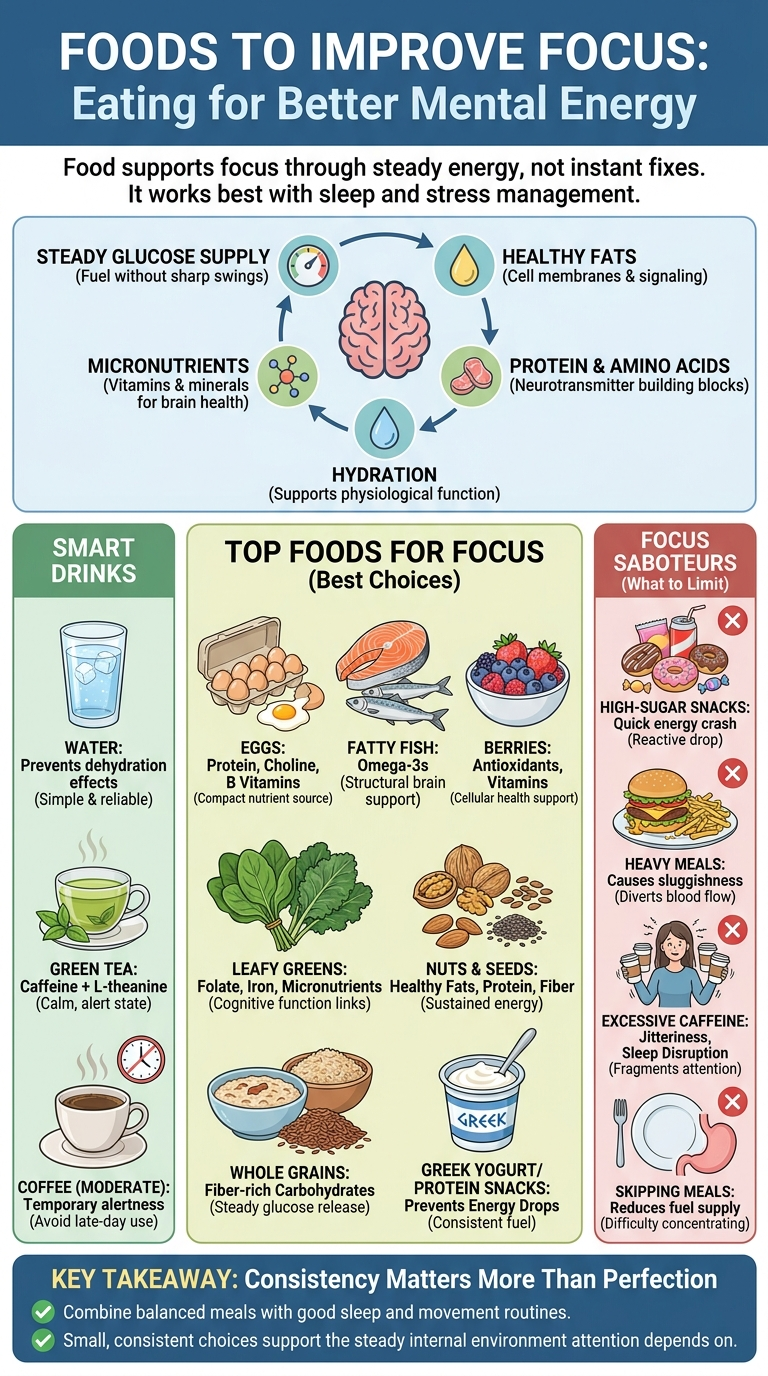
Food does not act like a pill that instantly fixes attention. Instead, what you eat helps shape internal conditions the brain needs to maintain attention over time. Meals and snacks influence blood glucose availability, the balance of amino acids used to build neurotransmitters, the supply of healthy fats for cell membranes, and micronutrients that support cellular processes. Describing food as supportive of steadier mental energy and brain health is more useful than promising quick cures. For accessible overviews of behavior, emotion, and mental health that frame attention as part of broader psychological functioning, see the American Psychological Association topics index for summaries and resources on the APA site.

No single food fixes poor sleep or chronic stress
Food can help, but it is rarely enough by itself when the main causes of poor concentration are chronic sleep loss, unmanaged stress, mood disorders, or untreated medical conditions. Persistent or worsening attention problems that interfere with work, school, or daily life deserve evaluation by a qualified professional. For clear, patient-facing information about mental health concerns and when to seek help, see guidance from the National Institute of Mental Health at NIMH and from MedlinePlus on mental health topics.
The goal is stable mental energy
When the goal is clearer attention, the most practical dietary aim is stable mental energy across the day. That means eating in ways that help avoid sharp blood sugar spikes and crashes, providing regular protein and healthy fats, staying hydrated, and getting adequate micronutrients. Combined with sleep, movement, and structured work habits, such eating patterns support concentration and the ability to sustain cognitively demanding tasks.
What your brain needs to stay focused
Steady glucose supply
Glucose is a major fuel for the brain, and sudden drops or sharp swings in blood glucose can correspond with feelings of mental fog or low energy for some people. Choosing carbohydrate sources that release energy more slowly can support steadier attention across study or work periods. For definitions and context on psychological functioning and related terms, see the APA Dictionary on the APA site.
Healthy fats
Cell membranes and neuron signaling depend on fats. Long-chain omega-3 fatty acids are present in brain tissue and support membrane properties that help efficient signaling between cells. Including sources of healthy fats in meals and snacks helps maintain that structural support over time.
Protein and amino acids
Amino acids from dietary protein are the precursors for neurotransmitters involved in attention and alertness, such as dopamine and norepinephrine. Including protein in meals and snacks helps maintain a supply of these building blocks and can reduce mid-session dips in focus for some people.
Hydration
Even mild dehydration can negatively affect attention and mood for some people. Regular fluid intake across the day supports blood volume and general physiological functioning, both of which matter for sustained cognitive effort.
Micronutrients
Vitamins and minerals such as iron, B vitamins, vitamin D, and magnesium contribute to energy metabolism, oxygen transport, and neurotransmitter synthesis. Deficiencies in some micronutrients can reduce cognitive efficiency, so eating a varied diet that supplies these nutrients supports attention indirectly by maintaining overall brain health.
Best foods to support focus
Eggs for protein and nutrients
Eggs are a compact source of high-quality protein and contain nutrients such as choline and B vitamins that support brain processes. As a portable breakfast or snack option, eggs provide amino acids that help maintain attention across a morning work or study session.
Fatty fish for omega-3 support
Oily fish such as salmon, mackerel, and sardines are rich in long-chain omega-3 fatty acids, which serve structural roles in brain tissue. Including these foods a few times per week can contribute to overall brain health as part of a balanced diet.
Berries for antioxidant-rich nutrition
Berries provide vitamins and antioxidant compounds that support vascular and cellular health. Including berries in breakfasts, smoothies, or snacks adds micronutrients without large amounts of added sugar.
Leafy greens for micronutrients
Spinach, kale, and other leafy greens are rich in folate, iron-binding compounds, and other micronutrients linked to cognitive function when they are part of an overall nutritious diet. Regularly including vegetables supports the nutrient diversity the brain needs.
Nuts and seeds for healthy fats
Walnuts, almonds, flaxseeds, and chia seeds supply healthy fats, protein, and fiber, making them effective snacks to provide slow-burning energy and help maintain attention between meals.
Whole grains for steady energy
Whole grains like oatmeal, brown rice, and quinoa deliver carbohydrates with fiber, which slows digestion and helps avoid rapid blood sugar swings. That steadiness supports sustained attention across tasks that require focus over time.
Greek yogurt or protein-rich snacks
Greek yogurt, cottage cheese, or hummus with vegetables are examples of protein-rich snack options that can prevent mid-session drops in energy and support consistent concentration during prolonged work or study periods.
Drinks that may support focus
Water
Maintaining hydration with plain water is a simple and reliable way to avoid attention-reducing effects of mild dehydration. Keep a water bottle at hand during work and study to make sipping habitual.
Coffee in moderation
Caffeine from coffee can temporarily increase alertness and reduce subjective tiredness for many people. Moderate amounts consumed strategically, such as before a focused task, can be helpful for short-term needs. Because individual tolerance varies, aim for personal moderation and avoid late-day caffeine if it disrupts sleep.
Green tea
Green tea contains a modest amount of caffeine plus the amino acid L-theanine, which some people report as producing a calm but alert state. For people sensitive to stronger stimulants, green tea can be a gentler alternative.
When caffeine can make focus worse
Too much caffeine can increase jitteriness, anxiety, and sleep disruption, all of which impair concentration over time. If caffeine use is causing restlessness or sleeplessness, reducing intake or spacing it earlier in the day often improves overall cognitive performance. For information about mental health symptoms that can be worsened by stimulant effects, consult resources such as the National Institute of Mental Health for guidance.
Foods that can make focus harder
High-sugar snacks
Sweets and sugary drinks can produce quick energy followed by a reactive drop for some people. When planning for long study or work periods, choose carbohydrate sources paired with protein or fiber to slow absorption and avoid rapid crashes.
Heavy meals before deep work
Large, high-fat meals can divert blood flow toward digestion and leave you feeling sluggish. For tasks that require sustained attention, lighter balanced meals that include protein, fiber, and healthy fats tend to be more supportive.
Too much caffeine
Excessive caffeine can fragment attention and impair sleep, creating a cycle that undermines focus. Tuning intake to your sensitivity and the timing of your work tasks helps avoid negative effects.
Skipping meals
Long periods without food can reduce the steady supply of glucose and other nutrients the brain uses, which for some people leads to difficulty concentrating. Regular small meals or snacks that include protein and fiber can help maintain steady mental energy.
Simple focus-friendly meal ideas
Breakfast for steady energy
Example balanced breakfasts that favor steady concentration include:
- Oatmeal topped with berries and a handful of nuts, plus Greek yogurt on the side
- Whole-grain toast with avocado and a poached egg
- Smoothie with spinach, frozen berries, a scoop of protein powder or Greek yogurt, and water or milk
Lunch that avoids afternoon crash
Lunches that combine protein, fiber-rich carbohydrates, and healthy fats can reduce the likelihood of an afternoon energy slump. Examples include:
- Mixed salad with grilled salmon or chicken, quinoa, and a vinaigrette dressing
- Whole-grain wrap with hummus, lean turkey, and mixed vegetables
- Grain bowl with brown rice, roasted vegetables, chickpeas, and tahini dressing
Snacks for long work or study sessions
Good snack choices for sustained focus are portable and provide a mix of protein, fiber, and healthy fats, such as:
- An apple with almond butter
- Greek yogurt with a sprinkle of seeds
- Carrot sticks with hummus and a small handful of walnuts
Food, mood, and attention
Why energy changes affect concentration
Sharp changes in blood sugar and energy availability often coincide with subjective drops in mental clarity. When energy becomes unpredictable, the brain must allocate resources to basic regulation rather than high-order cognitive control, making sustained attention harder to maintain.
How stress eating can affect focus
Stress-related eating patterns, such as reaching for high-sugar or high-fat comfort foods, may temporarily change perceived mood but can contribute to energy instability and disrupted attention later. Addressing the underlying stress with behavioral strategies and professional care when needed tends to produce more durable improvements in concentration than relying on food as the sole coping mechanism.
Why consistency matters more than perfect eating
One or two ideal meals will not offset patterns of poor sleep, chronic stress, or inconsistent nutrition. Regular meals, habitual hydration, and predictable sleep and movement routines support the steady internal environment that attention depends on. Small, consistent choices add up more than occasional perfect meals.
Final thoughts
Food supports focus best when combined with sleep, movement, and good work habits
Diet is one part of a larger system that supports attention. Sleep quality, regular physical activity, structured task planning, and environment design also play major roles. If concentration problems are persistent, severe, or interfere with daily functioning, consider reaching out to a qualified health professional for assessment and tailored recommendations. For consumer-oriented guidance about mental health and when to seek care, see MedlinePlus mental health resources and the National Institute of Mental Health information pages.
Build meals that keep your energy stable
Practical steps to make food work for focus include:
- Prioritize balanced meals with protein, fiber-rich carbohydrates, and healthy fats.
- Include portable protein-rich snacks to bridge long work sessions.
- Stay hydrated with regular water intake.
- Limit large sugary treats and very heavy meals before tasks that require concentration.
- Pay attention to personal responses to caffeine and time intake to protect sleep.
If you experience severe concentration problems, significant mood changes, persistent sleep disruption, or thoughts of self-harm, seek qualified professional or emergency help right away. A healthcare provider can help determine whether additional evaluation or treatment is appropriate.

Michael Reed is the Founder and Lead Writer at Psychology Exposed. He writes about human behavior, relationships, emotional patterns, self-awareness, and practical psychology topics using research-informed, easy-to-understand content.
Read More About Michael Reed: https://psychologyexposed.com/michael-reed/