Dominance vs Prestige Psychology: Key Differences

Dominance vs Prestige Psychology: Two Routes to Social Rank and Influence thumbnail

Two people can become influential for almost opposite reasons. One may be difficult to challenge because others expect conflict, punishment, exclusion, or another cost. The other may be sought out because people value their knowledge, skill, judgment, or contribution. Both can receive attention and deference, yet the psychology underneath that deference is different. This is … Read more
Social Hierarchy Psychology: How Rank Forms

Social Hierarchy Psychology: How Rank and Influence Become Organized thumbnail

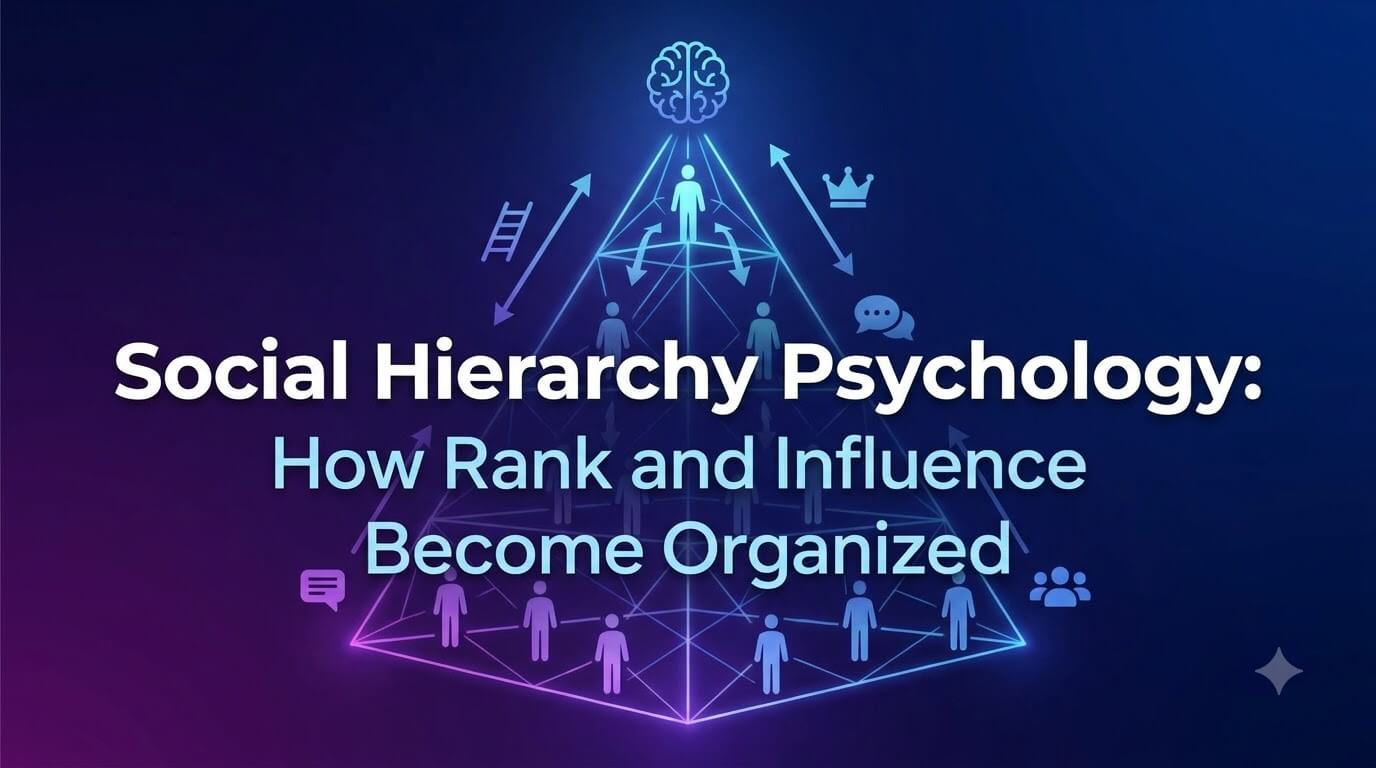
A social hierarchy exists when people in the same setting are not treated as equally ranked, equally influential, or equally entitled to shape what happens. Some people are listened to first. Some have more decision rights. Some receive more deference because of expertise, seniority, prestige, or control over resources. Others may have less voice even … Read more

Types of Social Power in Psychology: 6 Power Bases

Types of Social Power in Psychology: The Major Bases of Influence thumbnail

Two people can both influence the same decision for completely different reasons. One person may have an official right to decide. Another may control a reward. A third may be the only person who understands the problem. Someone else may be followed because people identify with them or value their approval. The outcome may look … Read more

Status Psychology: How Social Rank Shapes Behavior

Status Psychology: How Social Rank and Respect Shape Behavior thumbnail

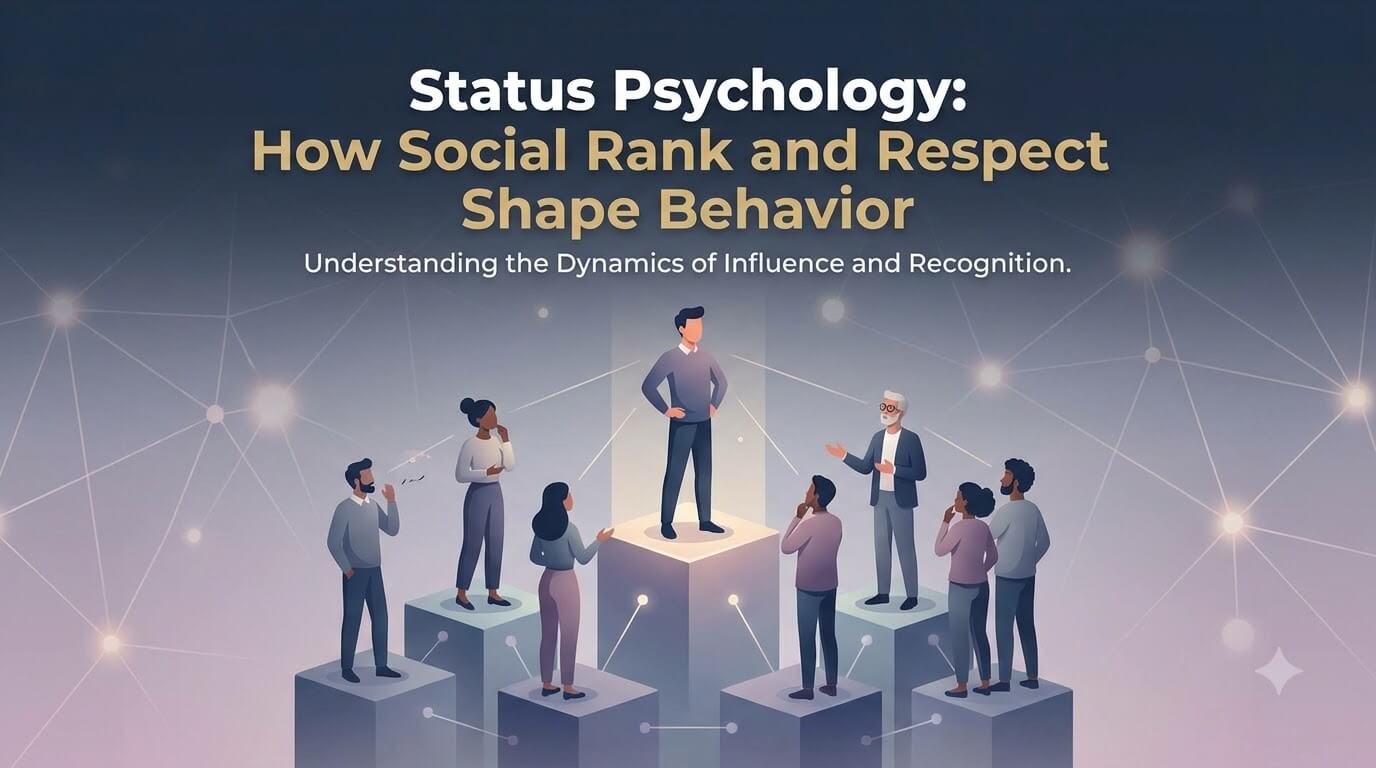
Some people are listened to before they have said much. Others are interrupted, overlooked, or expected to prove themselves first. In one group, a person may be treated as the natural expert. In another, the same person may receive little attention. These differences are often described with a single word: status. Status psychology is about … Read more

Social Power Psychology: What Power Really Means

Social Power Psychology: What Relative Influence Really Means thumbnail

Power is easy to notice when someone has an obvious title or formal decision right. It is harder to see in everyday relationships. A friend may shape who gets included socially. A relative may control access to money or transportation. A classmate may have no title but still affect what the group takes seriously. The … Read more

Power and Status Psychology: How Hierarchy Shapes Us

Power and Status Psychology: How Hierarchy Shapes Human Behavior thumbnail

Walk into almost any group and differences in influence appear quickly. One person can approve a decision, another is listened to because of expertise, someone else is admired but has little formal control, and another person may stay quiet because challenging the wrong person carries a real cost. These differences are easy to notice, but … Read more

Deindividuation Psychology: How Groups Change Behavior

Deindividuation Psychology: How Anonymity and Group Context Can Change Behavior thumbnail

A person may behave differently when nobody can easily identify them, when they are one face in a large crowd, or when responsibility feels spread across many people. That change is often described with the word deindividuation. The tempting explanation is that anonymity makes people “lose themselves” and become reckless. Psychology gives a more complicated … Read more

Group Polarization Psychology: Why Views Become Stronger

Group Polarization Psychology: Why Discussion Can Strengthen an Initial Group Tendency thumbnail

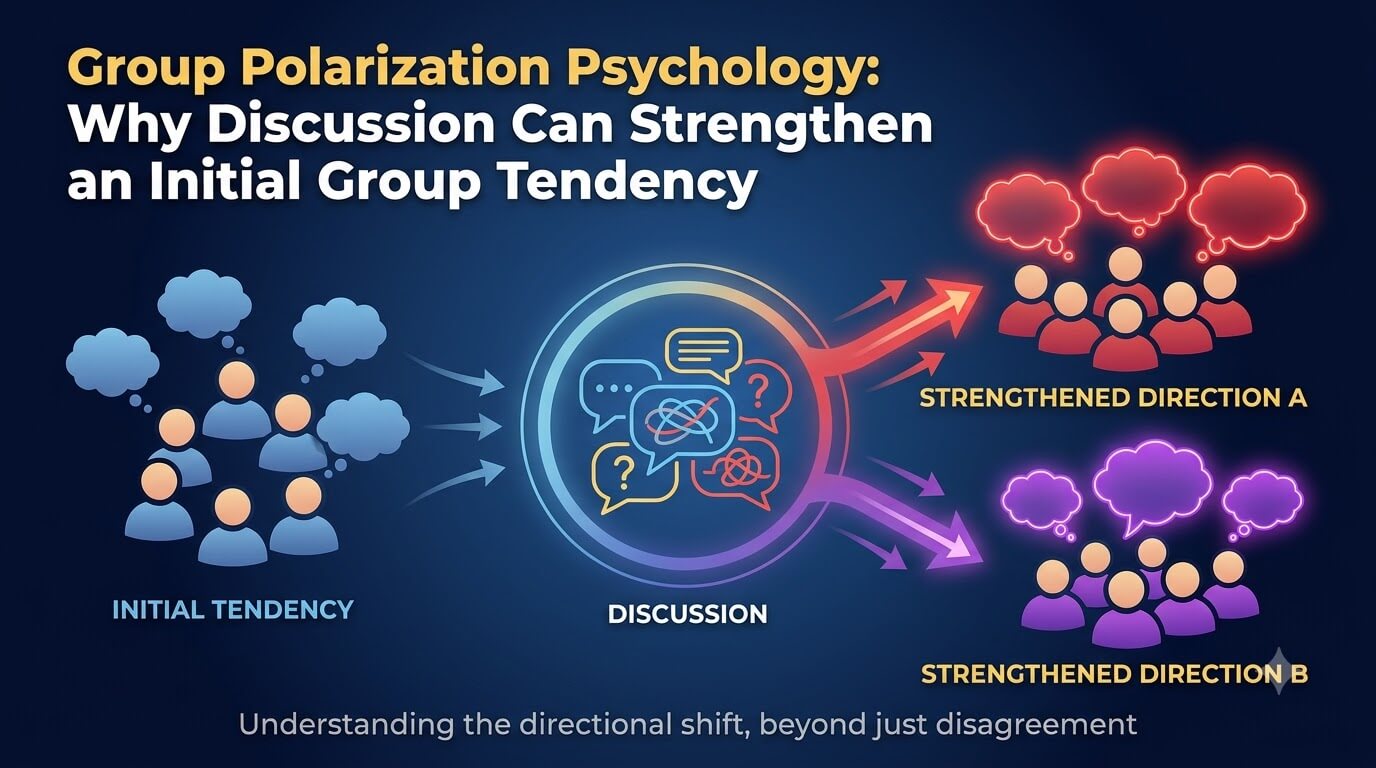
A group does not have to begin at an extreme position to end a discussion further in one direction. A product team that already leans toward a bold launch may become more enthusiastic after exchanging reasons for moving fast. A cautious family may become even more cautious after everyone shares what could go wrong. A … Read more

Groupthink Psychology: How Consensus Weakens Judgment

Groupthink Psychology: When Consensus Pressure Weakens Group Judgment thumbnail

A group can agree quickly for good reasons. People may have reviewed the same evidence, challenged one another’s assumptions, considered realistic alternatives, and still reached the same conclusion. Agreement becomes more concerning when preserving unity starts to matter more than testing the decision. That is the problem groupthink psychology is meant to describe. The risk … Read more

Collective Identity Psychology: How a Shared “We” Forms

Collective Identity Psychology: How a Shared Sense of “We” Forms thumbnail

A group can be more than a list of people who share a label. Over time, members may develop a common story about where they came from, what matters to them, what counts as good membership, and what they are trying to protect or build together. That shared understanding creates a psychological “we” that can … Read more