Reciprocity Psychology: Why We Return Favors
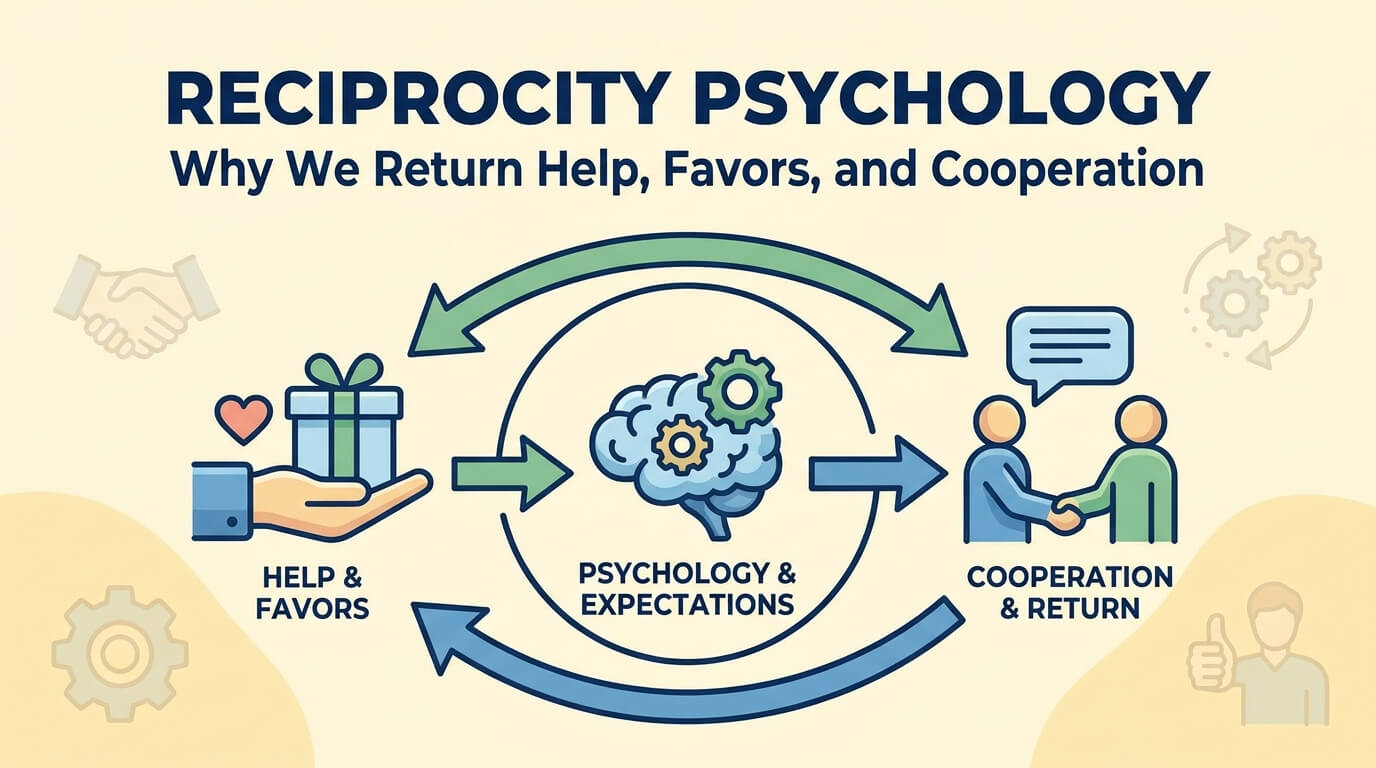
Reciprocity Psychology: Why We Return Help, Favors, and Cooperation thumbnail

Someone covers a task for you when you are overwhelmed. Later, you feel drawn to help them when they are under pressure. A neighbor lends you a tool, and you become more willing to share something of your own. A colleague repeatedly withholds useful information, and you begin to protect your own effort in return. … Read more
Bystander Effect Psychology: Why People Hesitate

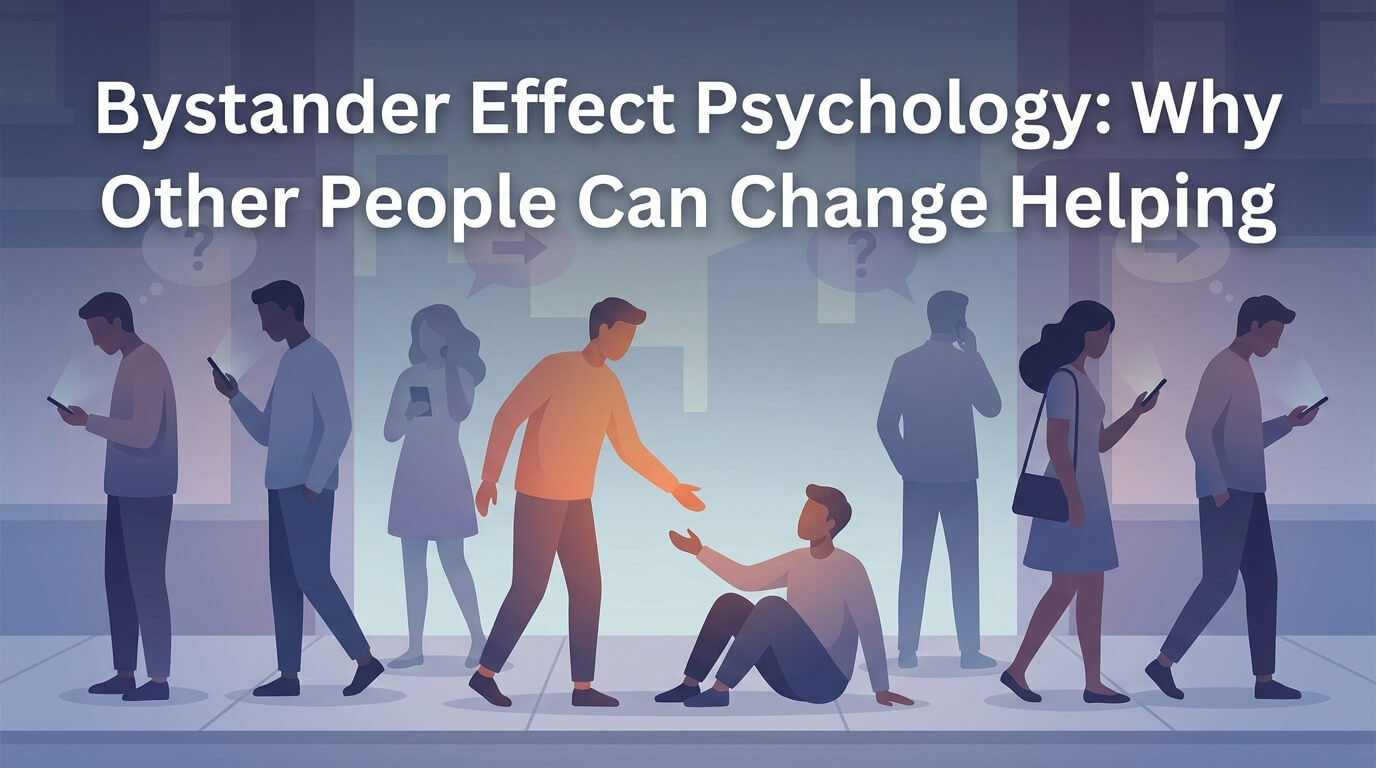
Bystander Effect Psychology: Why Other People Can Change Helping thumbnail

You notice someone sitting on the floor of a crowded station. They look pale, but nobody nearby seems alarmed. For a few seconds, you may wonder whether anything is wrong, whether someone else already checked, whether you would embarrass the person by approaching, or whether you know enough to help. Those seconds illustrate why bystander … Read more

Altruism Psychology: Why People Help at a Cost

Altruism Psychology: Why People Help at a Personal Cost thumbnail

A person gives up an evening to sit with a distressed friend. A commuter returns a wallet with cash still inside. Someone anonymously pays for another person’s groceries. These actions may look altruistic, but the visible behavior does not tell us everything about the motive behind it. That distinction is central to altruism psychology. The … Read more

Helping Behavior Psychology: Why People Help

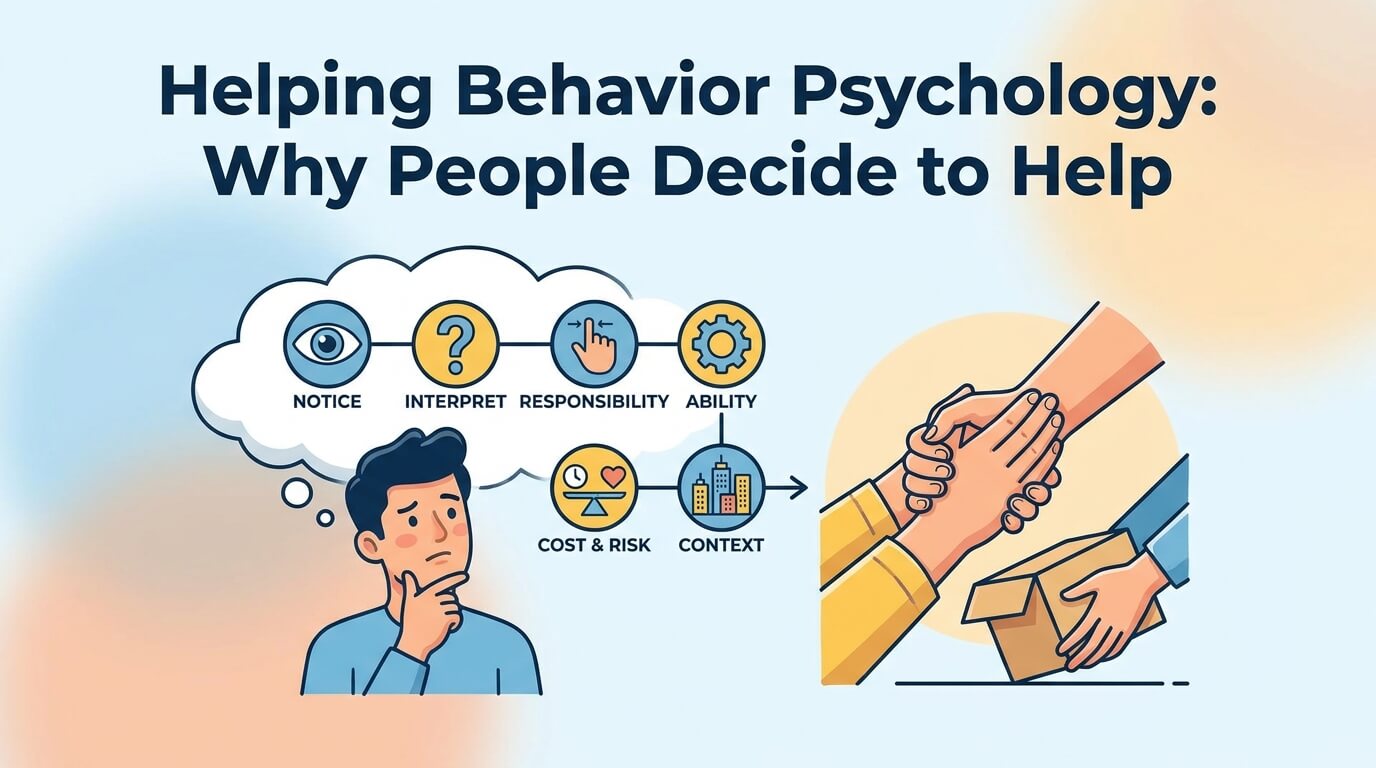
Helping Behavior Psychology: Why People Decide to Help thumbnail

You can notice that someone is struggling, care about what happens to them, and still hesitate. A coworker looks overwhelmed, a neighbor is carrying something awkward, a friend sounds upset, or a stranger seems confused. The question is not only whether you are a caring person. It is also whether you recognize the need, understand … Read more

Prosocial Behavior Psychology: Why People Help

Prosocial Behavior Psychology: Why People Help, Cooperate, and Care thumbnail

You notice a coworker struggling with a heavy box, a stranger looking confused on a train platform, or a neighbor asking the building group chat for help. Sometimes you respond immediately. Other times you hesitate, assume someone else will step in, decide the situation is unclear, or conclude that helping would create more risk than … Read more

Power Imbalance Psychology: How Unequal Options Shape Us

Power Imbalance Psychology: How Unequal Options Shape Relationships thumbnail

Two people can care about each other, work well together, or share a legitimate professional role while still having very unequal power. One may control money, information, access, grades, schedules, opportunities, housing, transportation, recommendations, or decisions that matter to the other. The relationship can remain respectful, or the imbalance can make disagreement, refusal, or exit … Read more

Why Power Changes Behavior: What Psychology Shows

Why Power Changes Behavior: What Psychology Actually Suggests thumbnail

Power can change behavior, but not in one simple direction. A person who gains more control over decisions may act faster, speak more freely, focus harder on goals, or take risks that previously felt unavailable. The same person may also pay less attention to other people’s reactions because those reactions now carry fewer consequences. Yet … Read more

Power Distance Psychology: How Authority Shapes Behavior

Power Distance Psychology: Why Unequal Authority Feels Normal in Some Settings thumbnail

Two groups can have the same formal hierarchy and react to it very differently. In one classroom, students routinely question a professor and expect detailed explanations. In another, direct disagreement with the instructor may feel disrespectful even when the student sees a genuine problem. In one family, younger adults openly challenge older relatives. In another, … Read more

Status Threat Psychology: Why Rank Feels at Risk

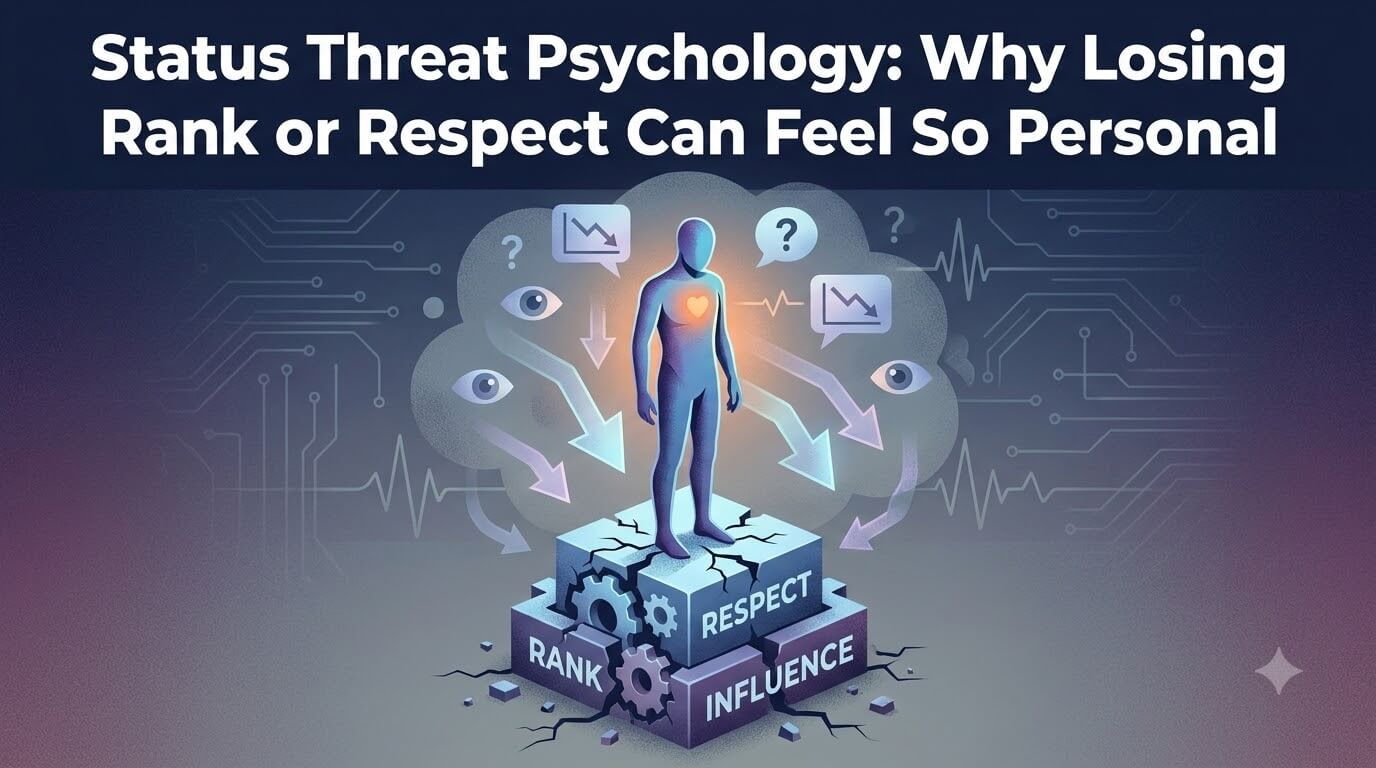
Status Threat Psychology: Why Losing Rank or Respect Can Feel So Personal thumbnail

A correction in private can feel manageable, while the same correction in front of a group can feel much bigger. Being left out of a decision may seem like more than inconvenience if it suggests that your opinion no longer carries weight. A talented newcomer can trigger discomfort in an established member even when nobody … Read more

Authority Psychology: Why People Accept Legitimate Direction

Authority Psychology: Why People Accept Legitimate Direction thumbnail

Authority is easy to confuse with power. A manager may have authority to approve a schedule. A respected specialist may influence the same schedule without having any formal right to decide it. A socially intimidating person may pressure others into agreement without possessing legitimate authority at all. The visible result may be compliance, but the … Read more