Self-Presentation Psychology: Why We Shape How Others See Us
Self-Presentation Psychology: How People Shape the Impressions Others Form thumbnail

You probably do not speak to a close friend in exactly the same way you speak during a job interview, a classroom discussion, or a first meeting with someone important. You may emphasize different skills, choose different stories, change how formal you sound, or decide that some personal information belongs in one setting but not … Read more
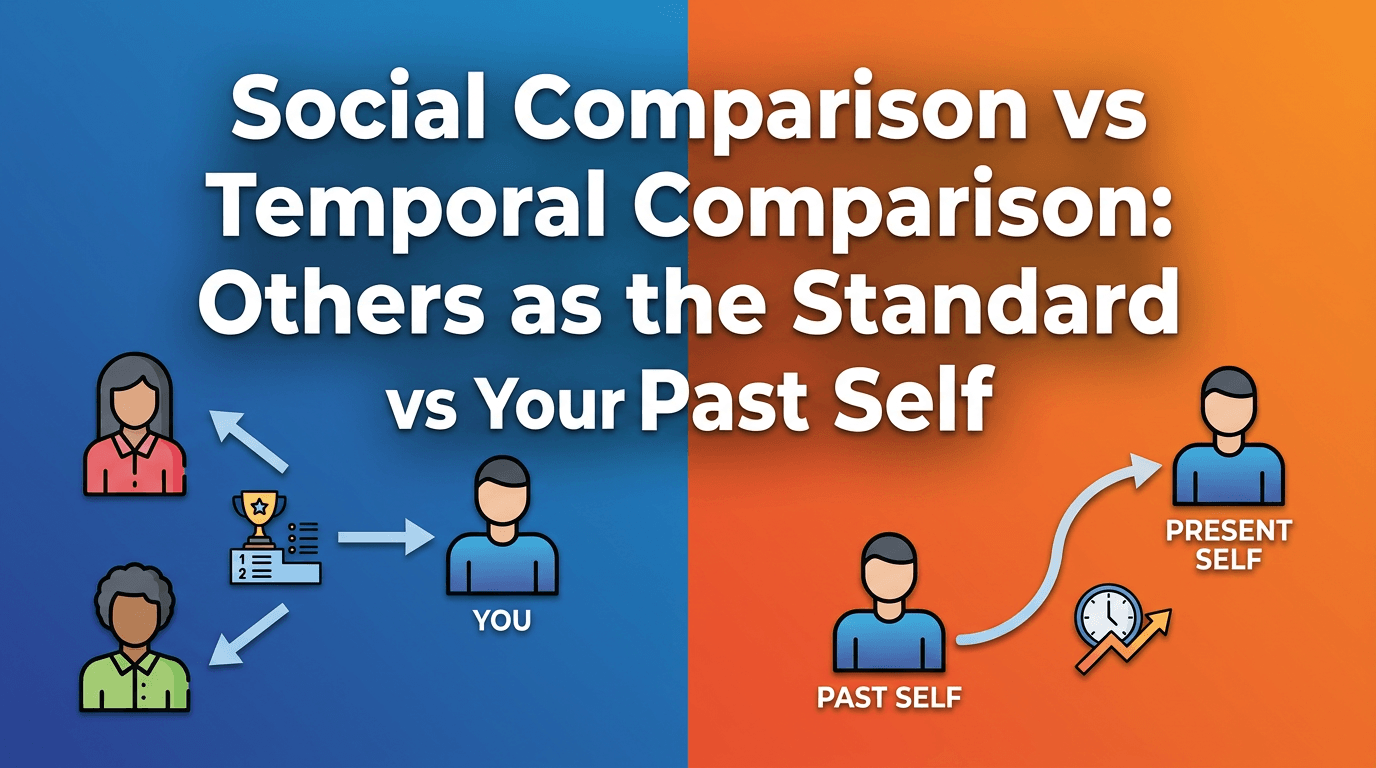
Social Comparison vs Temporal Comparison Explained

Social Comparison vs Temporal Comparison: Others as the Standard vs Your Past Self thumbnail

You can look at the same result and reach two very different conclusions depending on the standard you choose. A presentation may feel weak beside a polished colleague’s talk, yet clearly better than the presentation you gave six months ago. A language learner may rank near the bottom of an advanced class while also speaking … Read more

Big-Fish-Little-Pond Effect: Why Ability Feels Different

Big-Fish-Little-Pond Effect: Why the Same Ability Can Feel Different in a Stronger Group thumbnail

You can become more capable and still feel less capable. That sounds contradictory until the comparison environment changes. A student who felt academically strong in one school may enter a highly selective program, perform at roughly the same objective level, and suddenly describe themselves as average. A runner can improve their pace, join a much … Read more

Assimilation vs Contrast in Social Comparison

Assimilation vs Contrast in Social Comparison: Why Success Can Inspire or Diminish You thumbnail

Two people can watch the same talented colleague give an excellent presentation and walk away with opposite conclusions. One thinks, “They started where I started. I could learn to do that.” The other thinks, “They are on another level. I am nowhere close.” The comparison target is the same. The direction is the same. What … Read more

Relative Deprivation Psychology: Why Enough Feels Unfair

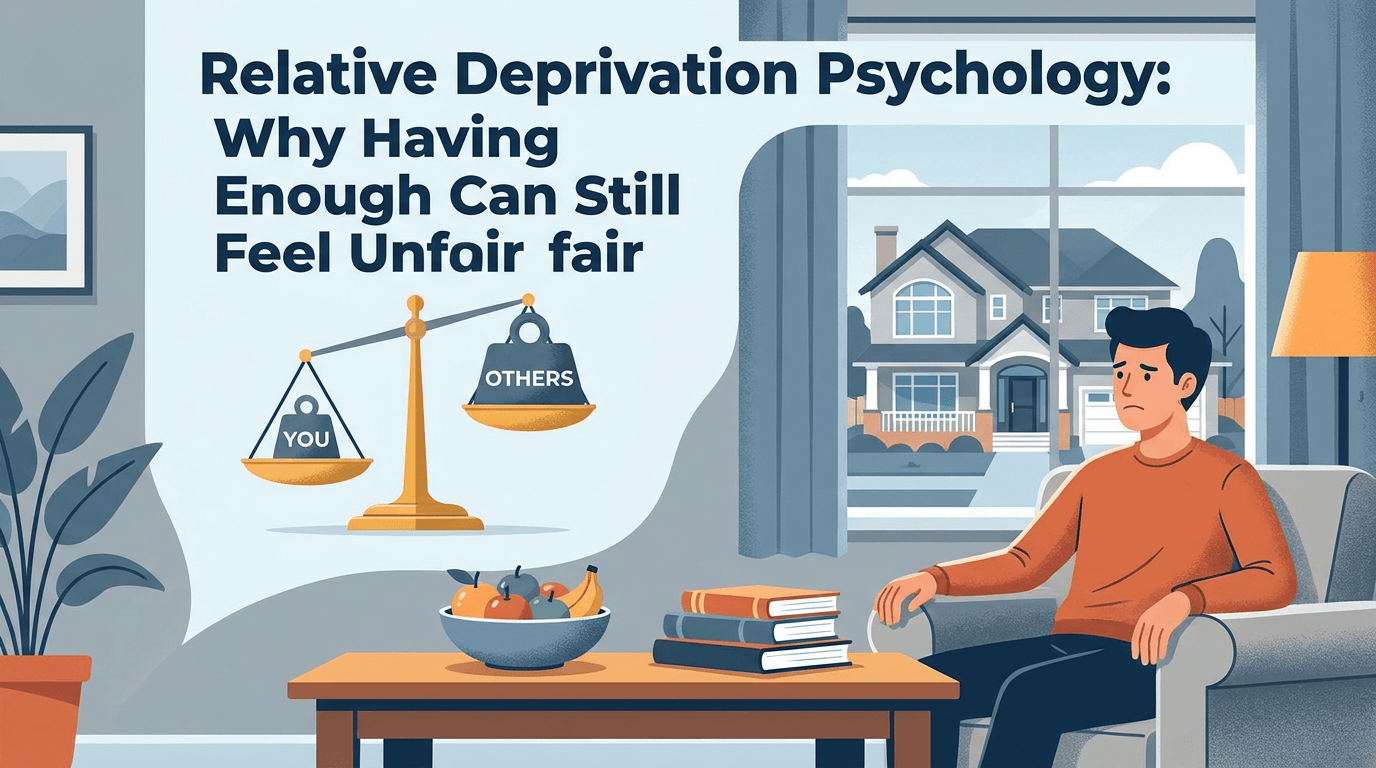
Relative Deprivation Psychology: Why Having Enough Can Still Feel Unfair thumbnail

You can be objectively better off than you were a year ago and still feel as if you are falling behind. A raise can feel disappointing after you learn what similar colleagues earn. A good academic result can suddenly feel inadequate when everyone in your study group seems to score higher. A comfortable home can … Read more

Social Media and Social Comparison Psychology

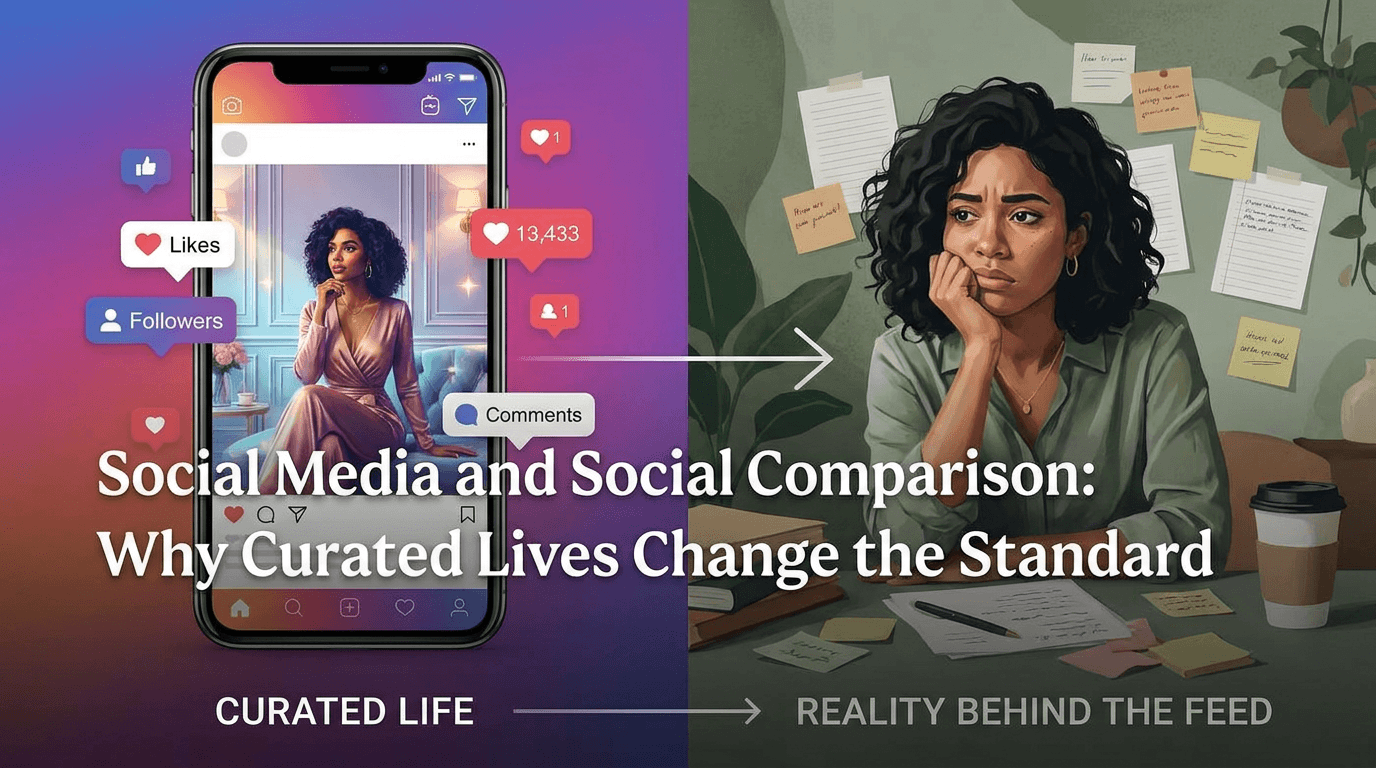
Social Media and Social Comparison: Why Curated Lives Change the Standard thumbnail

Social media can make comparison feel unusually immediate. A promotion, a polished home, a fitness milestone, a viral post, a family trip, or a creator’s rapid growth can appear beside one another in a few minutes of scrolling. The result is not simply “more information.” It is a stream of people, outcomes, and numbers that … Read more

Social Comparison and Self-Evaluation Explained

Social Comparison and Self-Evaluation: How Other People Change the Way You Judge Yourself thumbnail

You can feel capable in the morning, notice one person who is further ahead by lunchtime, and suddenly judge the same ability much more harshly. Nothing about your actual skill may have changed. What changed was the standard you used to interpret it. That is one of the most important things to understand about social … Read more

Reference Group Psychology: Why Standards Change

Reference Group Psychology: Why the People Around You Change Your Standards thumbnail

You can feel highly capable in one room and ordinary in the next without losing any skill. A new employee who seemed advanced in a previous job may suddenly feel inexperienced after joining a team of experts. A recreational runner may feel fast among friends, then slow after joining a competitive club. A creator with … Read more

Social Comparison Orientation: Why We Compare More

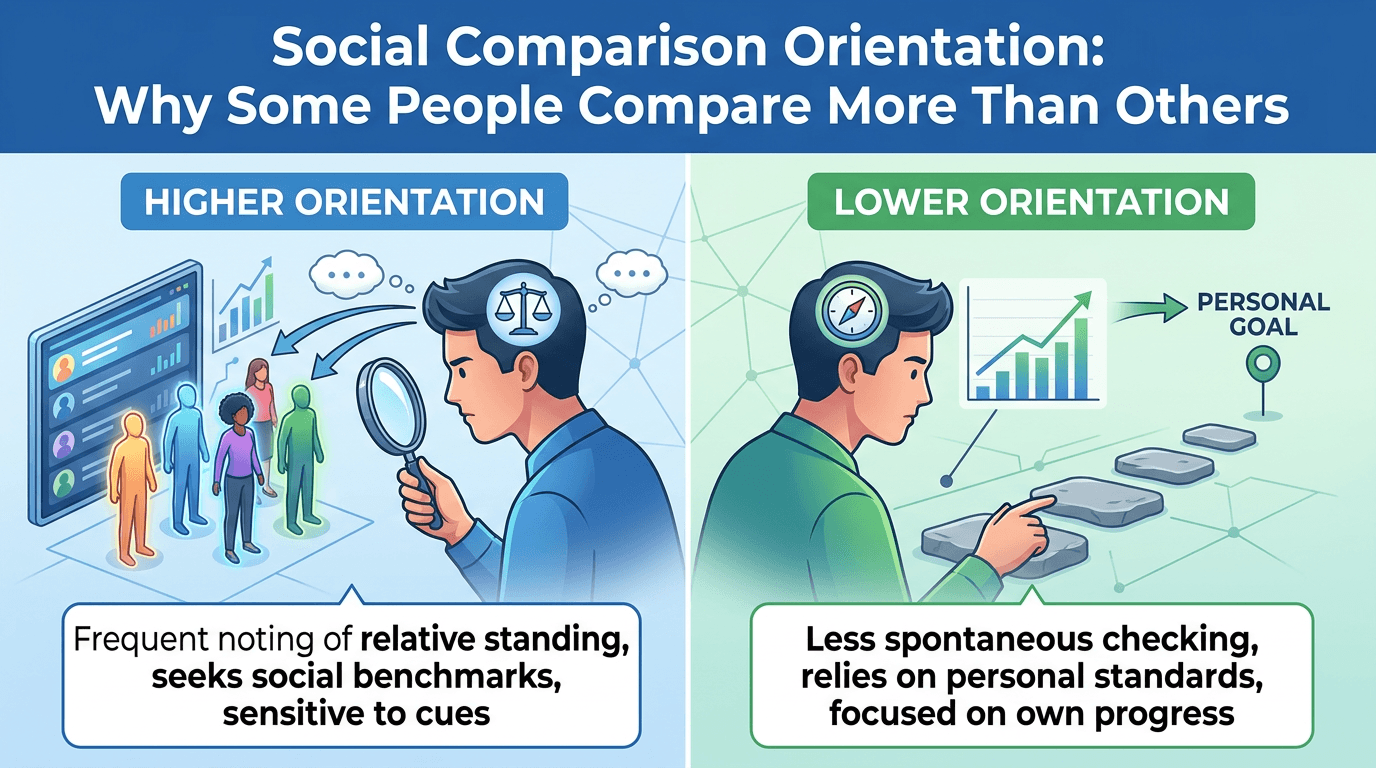
Social Comparison Orientation: Why Some People Compare More Than Others thumbnail

Two people can walk into the same room, see the same group of coworkers, hear the same performance numbers, and leave with very different amounts of comparison in their heads. One person may immediately notice who seems more skilled, more confident, or more successful. Another may register the same information but barely use it to … Read more

Upward vs Downward Social Comparison Explained

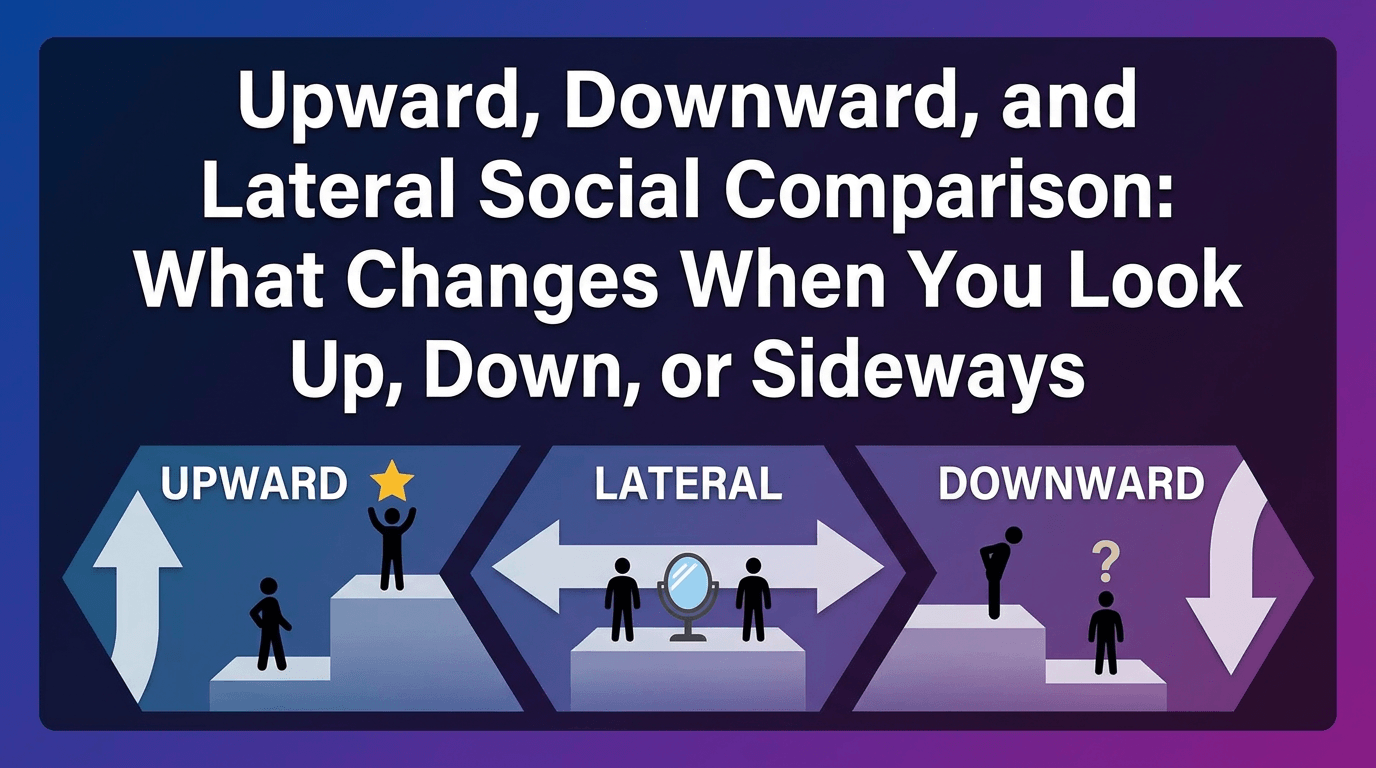
Upward, Downward, and Lateral Social Comparison: What Changes When You Look Up, Down, or Sideways thumbnail

You can compare yourself with the same person three times and reach three completely different conclusions. A coworker may earn more than you, have roughly the same amount of experience, and know less than you about a particular technical tool. On salary, that person is an upward comparison. On experience, the comparison is lateral. On … Read more