Reactive vs Proactive Aggression: Two Different Paths to Harm

Reactive vs Proactive Aggression: Two Different Paths to Harm thumbnail
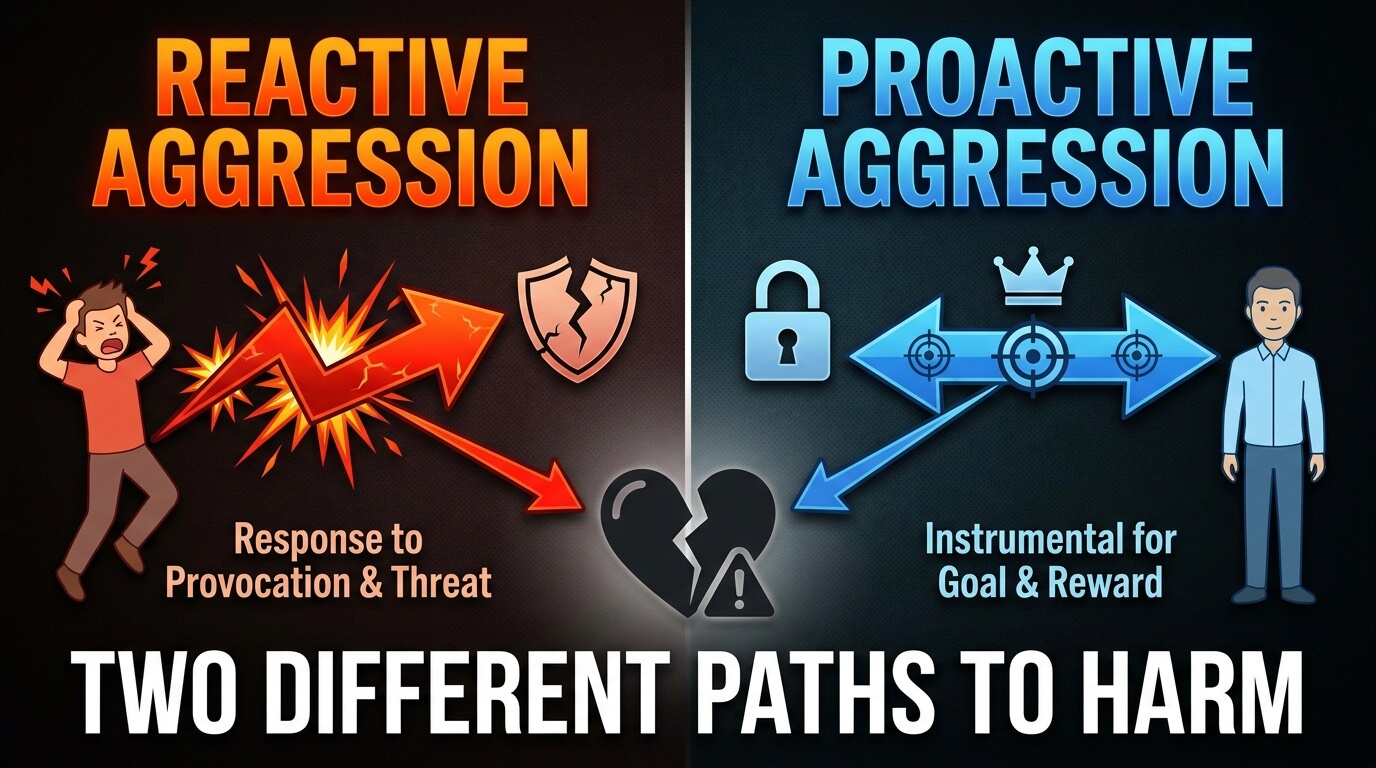
Two aggressive acts can look similar from the outside and still serve very different immediate purposes. One person may lash out seconds after feeling threatened or insulted. Another may use intimidation because they expect it to produce compliance, status, access, or some other advantage. The behavior in both cases may be harmful, but the pathway … Read more
Aggression vs Anger: The Psychological Difference

Aggression vs Anger: The Psychological Difference thumbnail

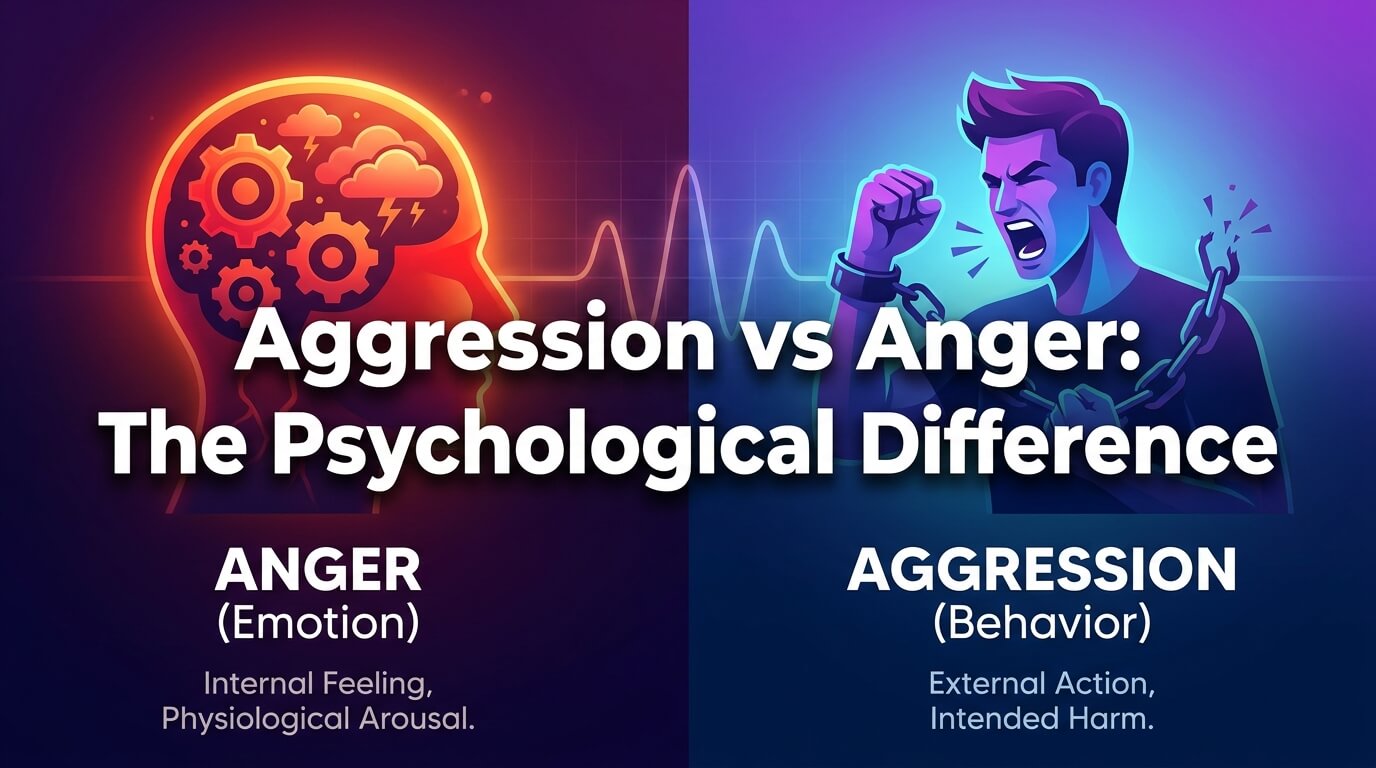
You can be furious and still choose not to harm anyone. You can also behave aggressively while sounding controlled, speaking quietly, or showing very little obvious anger. That is why treating anger and aggression as interchangeable creates confusion. Psychologically, the distinction is useful because it separates an internal emotional state from an observable form of … Read more

Aggression Psychology: Why People Become Aggressive and How Escalation Happens

Aggression Psychology: Why People Become Aggressive and How Escalation Happens thumbnail

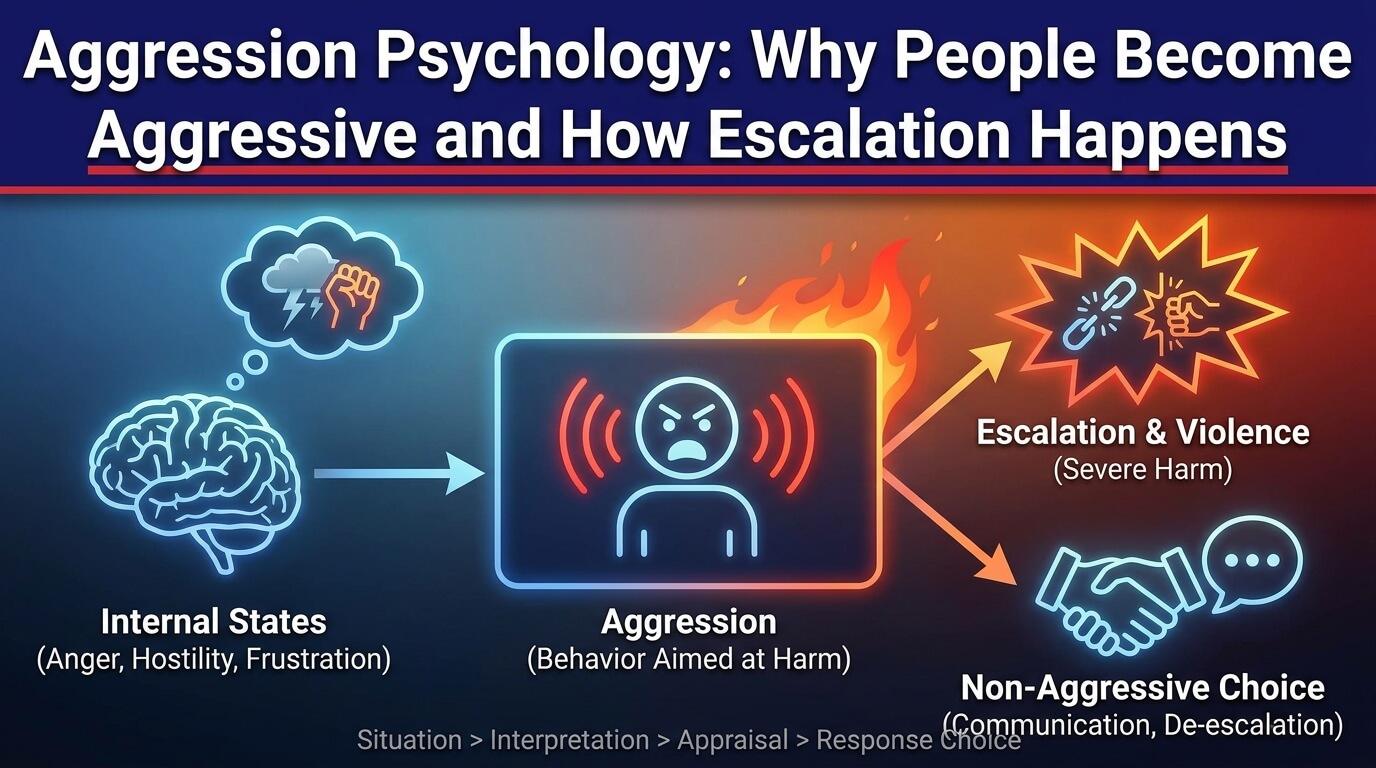
Aggression is often confused with anger, hostility, conflict, or violence. Those concepts can overlap, but they are not interchangeable. A person can feel furious and still choose not to harm anyone. Two people can disagree strongly without either one becoming aggressive. Harmful behavior can also be deliberate and controlled rather than visibly angry. Understanding aggression … Read more

Prejudice Reduction Psychology: What Research Suggests

Prejudice Reduction Psychology: What Evidence Suggests Can Help thumbnail

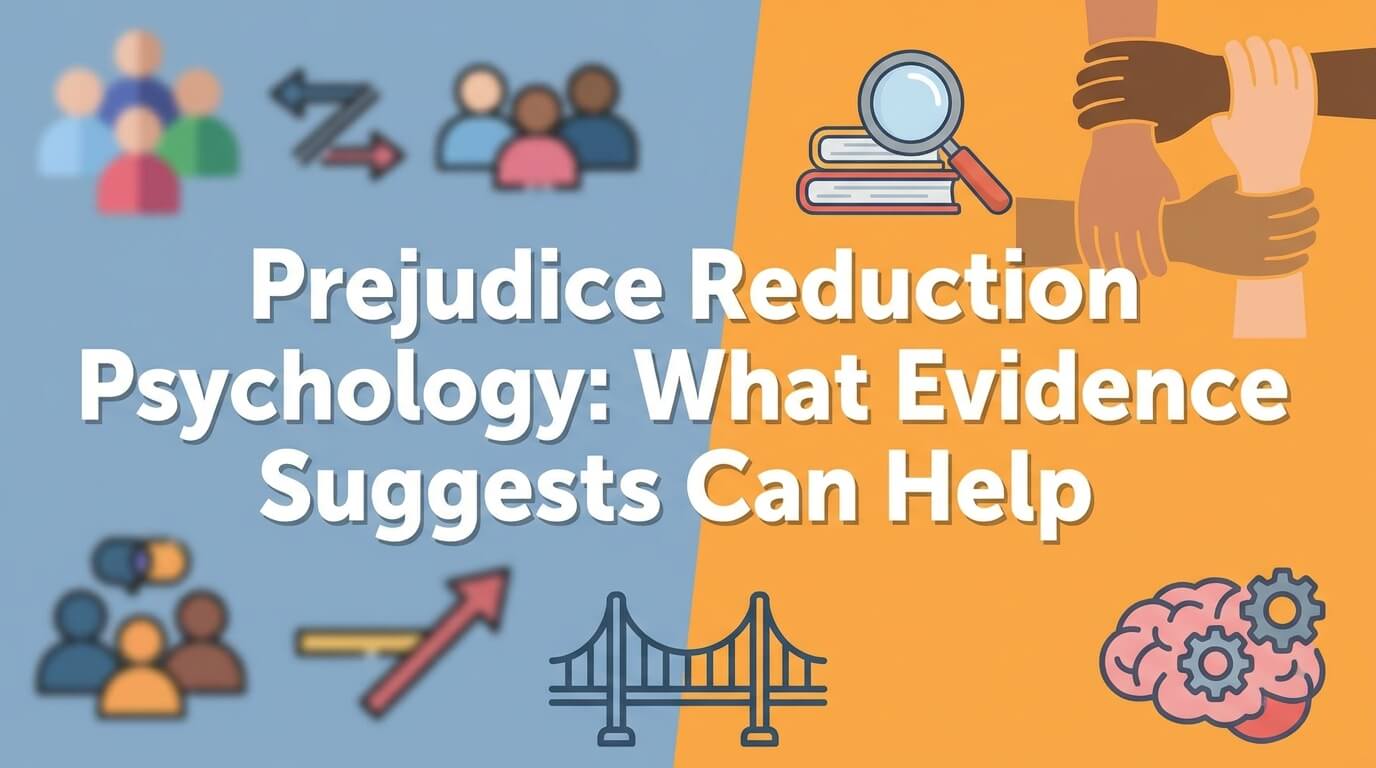
People often want a single answer to prejudice: one conversation, one training session, one positive encounter, or one moment of awareness that makes biased judgment disappear. Psychology offers a less dramatic picture. Group-based evaluations and unequal treatment arise through several processes, so the useful question is which process is operating in the situation at hand. … Read more

Contact Hypothesis Psychology: When Contact Reduces Bias

Contact Hypothesis Psychology: When Intergroup Contact Can Reduce Prejudice thumbnail

Putting people from different groups in the same room does not automatically reduce prejudice. Sometimes contact creates familiarity, corrects exaggerated expectations, and makes another group feel less abstract. In other situations, it is brief, unequal, competitive, humiliating, or openly hostile, which can leave old assumptions untouched or even strengthen them. Contact hypothesis psychology asks a … Read more

Realistic Conflict Theory: How Group Competition Works

Realistic Conflict Theory Explained: How Competition Can Intensify Group Conflict thumbnail

Two groups do not need to dislike each other from the beginning to become rivals. Give them a reason to believe that only one side can get the budget, the best schedule, the limited places, the recognition, or the outcome they value, and ordinary differences can start to feel threatening. Expectations harden, mistakes are interpreted … Read more

Scapegoating Psychology: Why Groups Become Targets

Scapegoating Psychology: Why Complex Problems Get Blamed on Convenient Targets thumbnail

When a complicated problem has many causes, people often want a simple answer to a difficult question: who is responsible? Sometimes that search is careful and evidence-based. Other times, responsibility gets compressed onto one visible person or group that becomes an easier target than the full system of causes. Scapegoating psychology helps separate careful responsibility … Read more

Stereotype Threat Psychology: How It Affects Performance

Stereotype Threat Psychology: How Social Expectations Can Add Performance Pressure thumbnail

A difficult test, interview, presentation, audition, or competition can already demand a lot of attention. Sometimes another layer is added: a person becomes aware that people like them are stereotyped as weak in that exact domain. The concern is not simply, “What if I do badly?” It may also become, “What if my performance is … Read more

Illusory Correlation Psychology: Why False Links Feel Real

Illusory Correlation Psychology: Why Memorable Group-Behavior Links Can Feel Real thumbnail

A few striking examples can make a relationship feel obvious. You hear about two project failures involving the same department, notice several rule violations by fans of one team, or repeatedly see unusual stories tied to one neighborhood. Soon the mind may begin treating the pairing as a pattern, even when the full evidence does … Read more

Outgroup Homogeneity Effect: Why They Seem the Same

Outgroup Homogeneity Effect: Why “They All Seem the Same” thumbnail

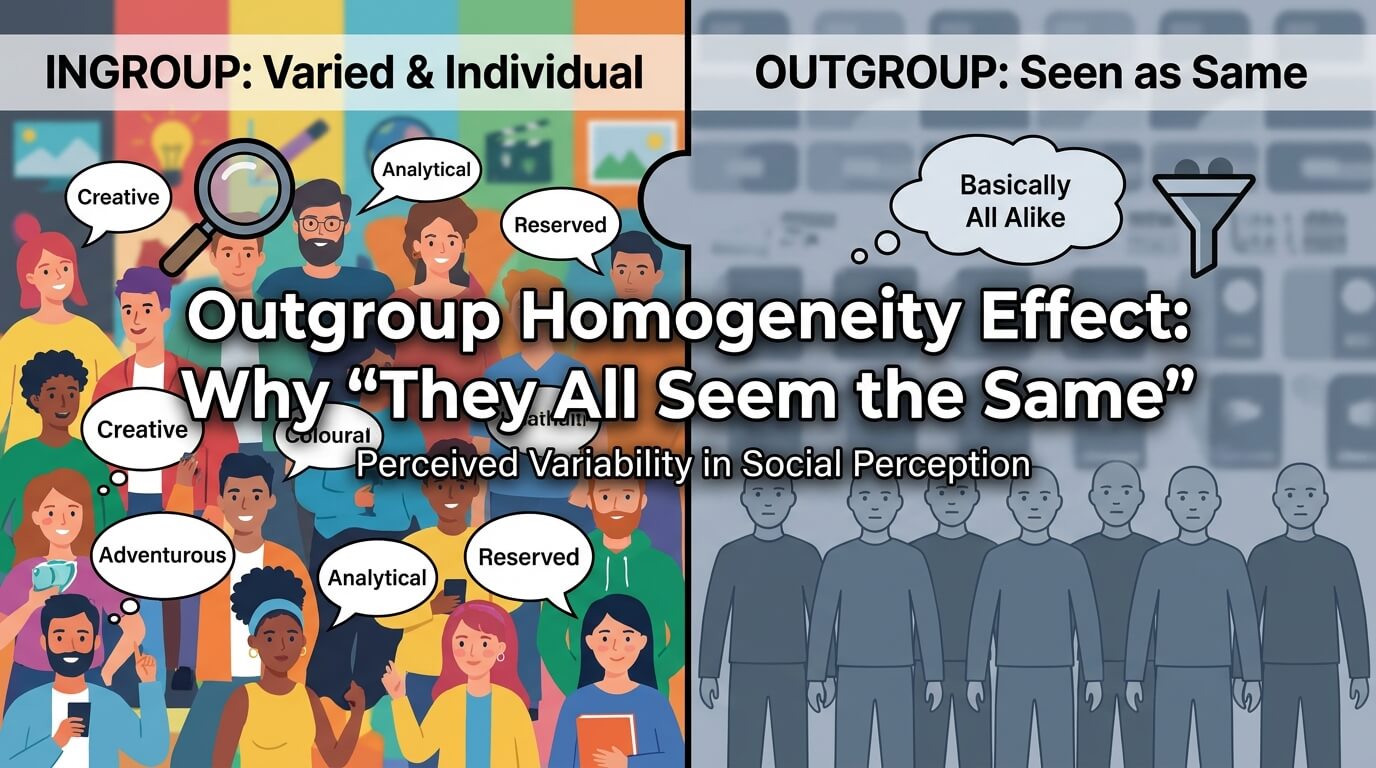
You may know ten people in your own department well enough to describe how different they are, yet think people in another department are basically alike. Psychology calls this tendency the outgroup homogeneity effect: under some conditions, members of an outside group are perceived as more similar to one another than members of a familiar … Read more